
If you're looking for a guide for the Pyramids of Giza, you're usually asking the question the wrong way around. It's not whether you need a companion, but whether you want to be part of the small minority who go without.
That can be quantified. For this page, all 252 bookable offers related to the plateau in the partner catalog were analyzed. Of these, 237 include a live guide, which is just under 94 percent. Only fifteen offers come without one, and most of those aren't tours at all but an entry ticket, a quad bike excursion with an instructor, or a ride with pickup.
The market is thus almost entirely geared toward guided tours. That's no coincidence and no conspiracy by providers, but has to do with the site itself: There's hardly any signage on the grounds, no numbered paths, and no explanatory boards at the structures. What you see doesn't explain itself.
The real decision therefore lies elsewhere: between a group, a private tour, and good self-preparation. This page helps with that.
First, a reassurance for those asking out of concern: A guide is never required. There's no rule, no gate, and no area on the plateau that demands a companion. If you want to go alone, you go alone, pay the entrance fee, and you're in.
Languages Offered for Tours
Share of guided offers in percent
German ranks fourth, ahead of French. If you're looking for a German-speaking tour, you have about three-quarters of the offers to choose from and don't have to fall back on English.
Own analysis of the 237 offers with a live guide in the partner catalog, as of August 2026.
Tour Guide Is a Profession in Egypt
Before getting to the selection, it's worth a look at the profession, because it's more strictly regulated in Egypt than most travelers assume.
A tour guide in Giza isn't a casual job but a licensed profession. The Law No. 121 of 1983 regulates it and requires two things: a license from the Ministry of Tourism and Egyptian nationality. In addition, membership in the professional association, which has existed since 1984, is required. Anyone wanting to guide at a site of the Antiquities Authority also needs its own permission.
Two things follow from this, and both are useful. First: The person guiding you through the site in German is Egyptian and has learned the language, usually through study. That explains why German-speaking tours have a different tone than in Europe, and why they often tell you more about the country's present than is in the program.
Second: If someone offers their services on the site without being able to show a license, they're not a guide but someone posing as one. You're allowed to ask to see the card, and that's not rudeness but the usual way.
Distinct from these are the people who offer services on the site without meaning a tour: someone who takes your phone and takes a photo, someone who takes you to a supposedly unknown spot, someone who shows you a path you'd have found anyway. These aren't tour guides, and they usually don't claim to be, but they expect money afterward. The line isn't drawn at friendliness but at the license.
Three levels of the same decision, from no guide at all to a private tour. All three cover the entrance fee for the site.
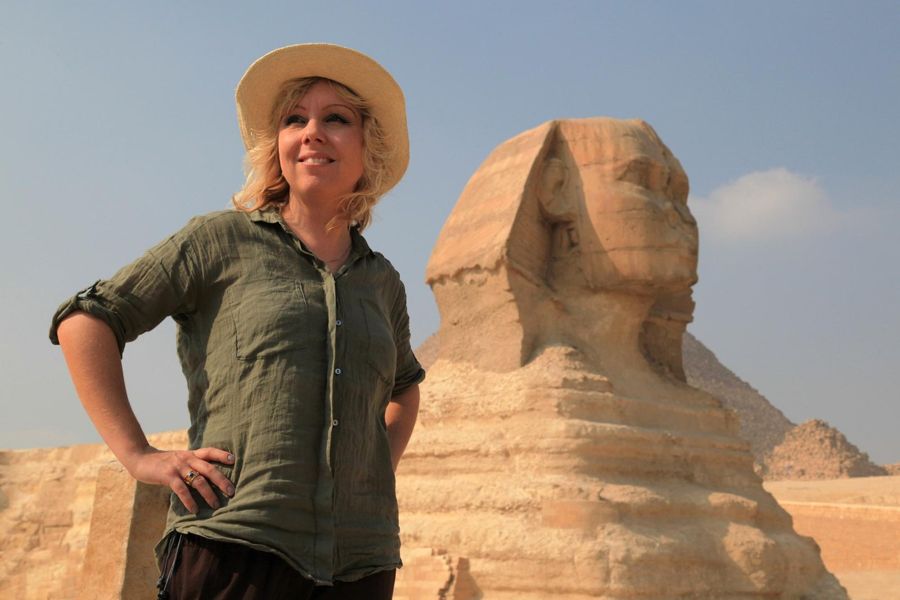 Without a guide
Without a guide, just the ticket
- Plateau entry
- Guide
- Hotel pickup
- Lunch
- Pyramid interior
- Free cancellation up to 24 hours before
Those who prepare themselves and want to plan the day freely
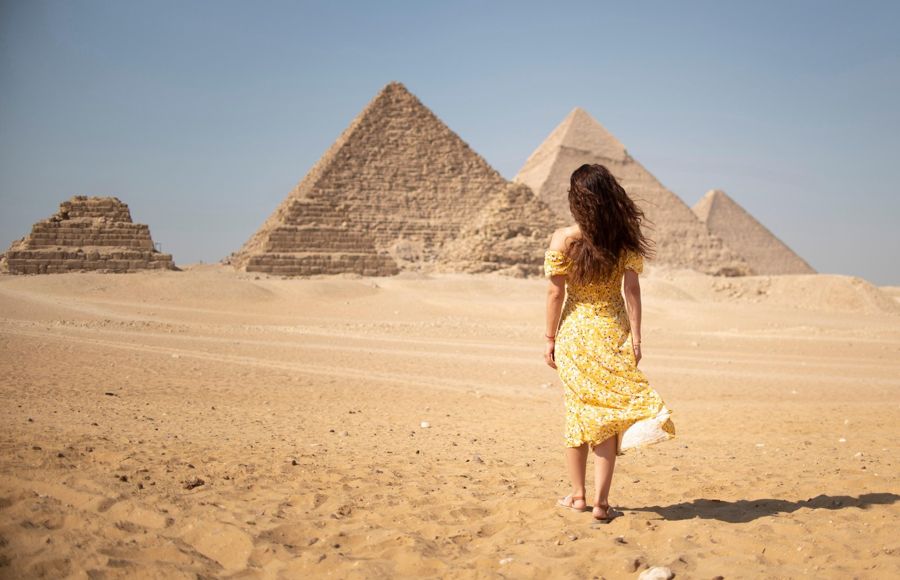 Most booked
Guided half-day in a group
- Plateau entry
- English-speaking guide
- Hotel pickup
- Lunch as an add-on
- Pyramid interior
- Free cancellation up to 24 hours before
For the first visit, when context matters more than pace
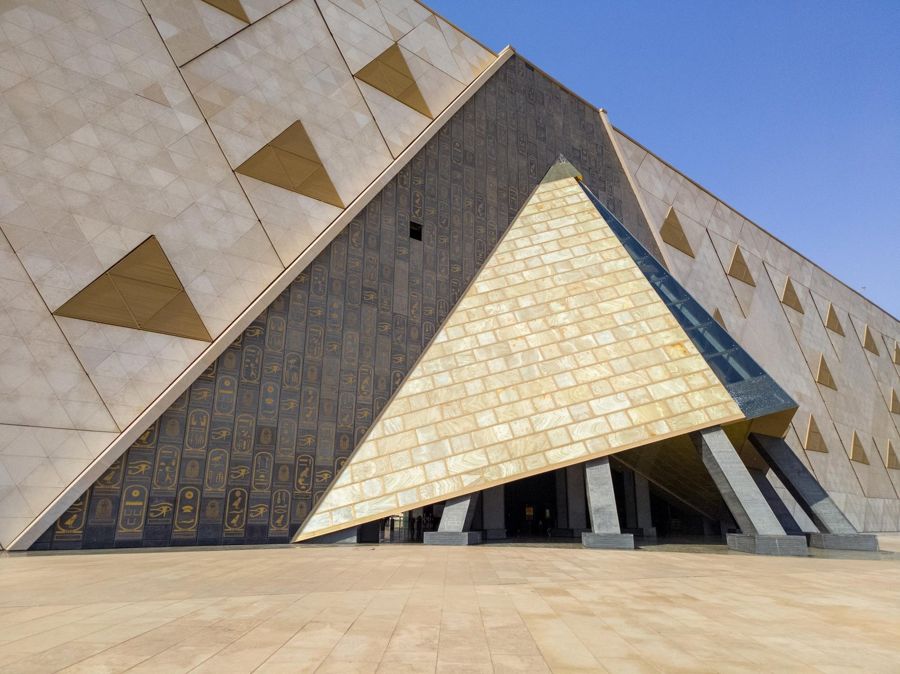 Private tour
Private tour, full day
- Plateau entry
- English-speaking guide
- Hotel pickup
- Lunch
- Free cancellation up to 24 hours before
Those who have questions and want to keep their own pace
With and Without a Guide
Pros
- Context instead of enumeration: What you see gets a connection
- The order is right. Someone who knows the site positions viewpoints, sun, and the Sphinx correctly
- Sales pressure largely disappears because providers avoid guided groups
- Pickup, entrance, and paths are organized, which is worth more in summer than it sounds
- You can ask questions, and the answers are locally informed
Cons
- The pace isn't yours, especially in a group
- Photo stops are where everyone stands and last as long as everyone needs
- A weak guide is worse than none, and you only notice that on site
- The price is significantly higher than the mere entrance fee
- There's no silence, and this place suits silence well
A middle path is rarely mentioned and works well: book a short tour in the morning and then stay alone. Both gates are entrances and exits, and the ticket is valid all day.
What a Tour Can't Do
Now to the sober question: Do you need a tour in Giza to get in at all or to see something? No. And it's worth knowing exactly what a companion can't do.
A guide doesn't grant access. The entrance to the site is a ticket anyone can buy, and the official overview lists the areas that require separate tickets. A guide can't replace these tickets or procure additional ones if the quota for an interior is exhausted.
A guide doesn't open closed areas. What's cordoned off stays cordoned off, and anyone promising otherwise is promising something they can't deliver.
A guide also doesn't enter every chamber with you. In the narrow ascents of the structures, a companion is sometimes not even intended, so you'll walk the last stretch alone anyway.
However, a companion does have an effect that isn't in any list of services: It changes how other people approach you. Sales pressure and demands for money are, according to the analyzed feedback, the most common criticism of this place, and a guided group is noticeably less often approached than a couple that's visibly there for the first time and looking around uncertainly. That's not an argument against visiting independently, but it's one of the reasons tours are more popular here than at comparable sites in Europe.
What remains is what a tour is actually good for: context, order, and local knowledge. That's a lot, but it's not access and not a shortcut.
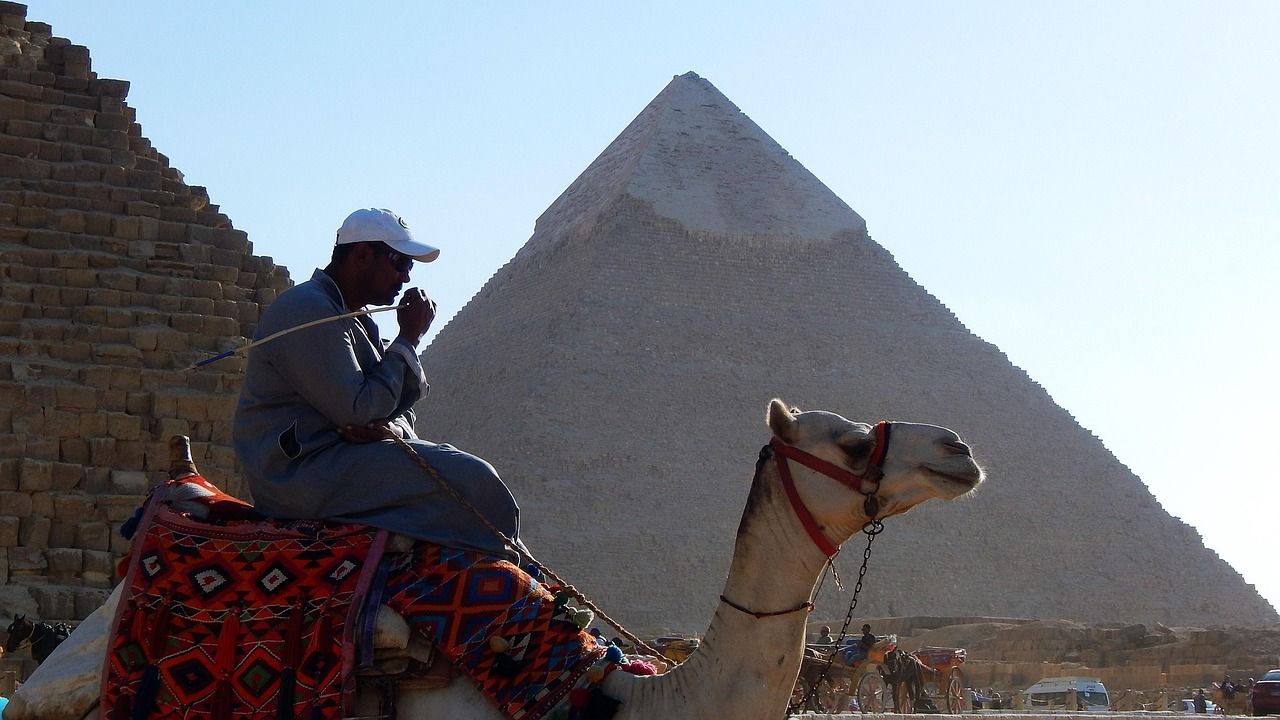
Going Alone Has Become Much Easier
That leaves the case this page is actually written for: You want to go alone. That's very doable, and it's become much easier since the site was redesigned.
Orientation is now handled by the shuttle. It runs a circular route with fixed stops, and if you follow it, you'll pass all the key points without needing a map. That was different before the reorganization of visitor operations, when visitors had to navigate an unsignposted site on foot and therefore booked a guide.
What you have to bring yourself, on the other hand, is the content. Without preparation, you see three big piles of stones, a Sphinx, and lots of sand, and that's exactly how the disappointed reviews sound. With two hours of reading beforehand, you see a construction site, a necropolis, and an administrative achievement that had no comparison back then.
Practically, that means: If you go without a guide, you should know beforehand what a valley temple is, why the second pyramid appears higher than the first, and what was found in the workers' settlement. Then you don't need anyone to tell you on site.
And there's another thing in favor of your own rhythm: This place rewards staying. If you stay in the same spot for an hour, you see how the light moves across the stone layers and notice things that don't come up in any lecture. A tour delivers knowledge, time delivers observation, and getting both in a single morning is rare.
A standard work for preparation
If you go without a guide, you replace it most cheaply with reading. The standard comprehensive works on the pyramids do more for a day at the site than any online summary.
Frequently asked questions
Can you get onto the site without a guide?
Yes, without any problem. You just need a ticket. A companion is never required.
How do I recognize a licensed companion?
By the Ministry of Tourism license, which you're allowed to ask to see. Licensed individuals are, under Egyptian law, nationals and members of the professional association.
Are there enough German-speaking offers?
Yes. About three-quarters of the guided offers in the catalog list German as a language, more than French.
Will a guide get me a spot inside a pyramid?
No. The interiors have separate tickets and fixed daily quotas. If the quota is gone, it's gone even for a tour.
Is a private tour worth it compared to a group?
If you have questions or want to set the pace, yes. For a mere overview, the group suffices, and it costs significantly less.
Can I book a tour in the morning and then stay?
Yes. The ticket is valid all day, and both gates are entrances and exits. This mix is rarely mentioned and works well.