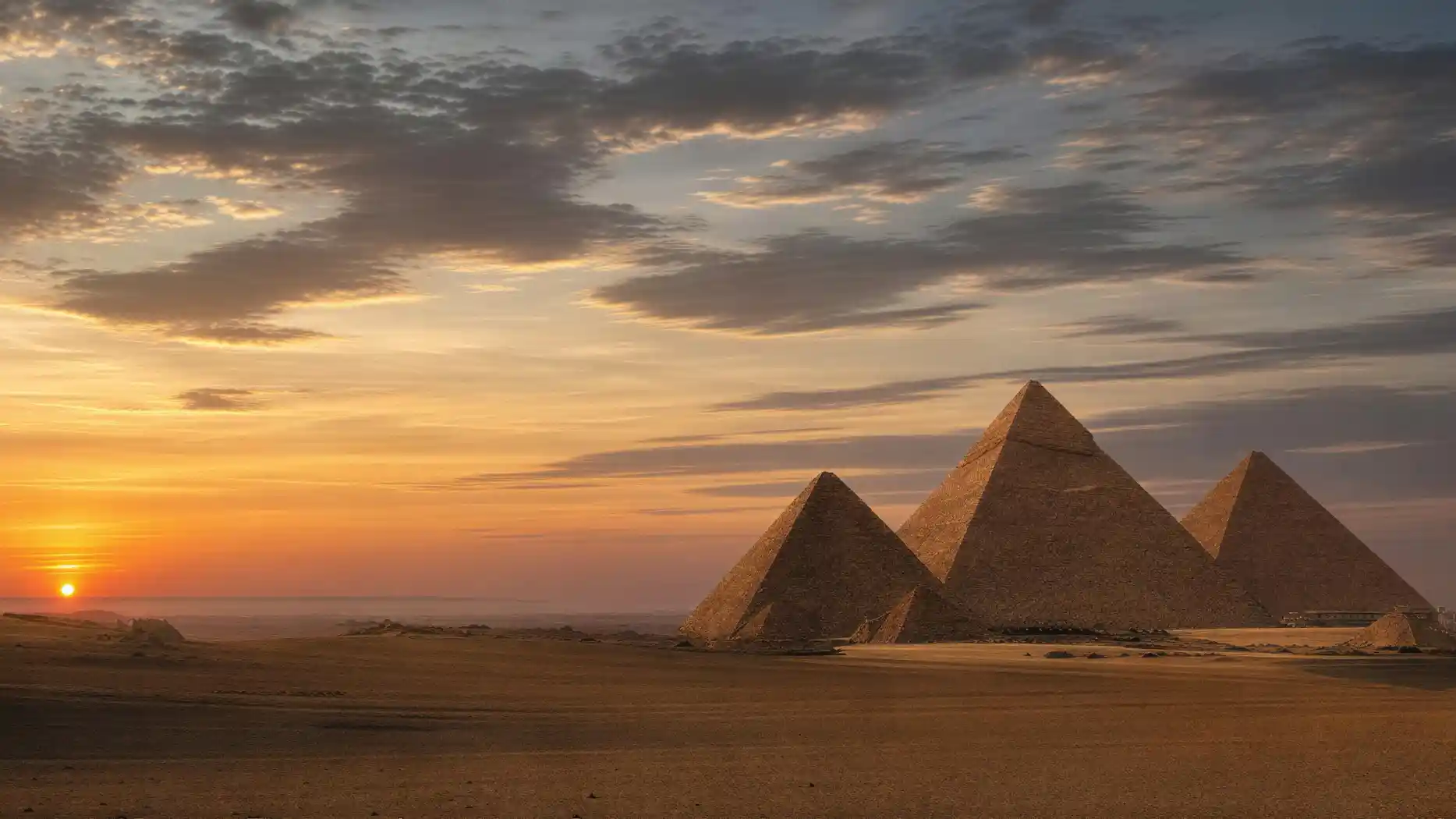
The question of why the Pyramids of Giza are important is usually answered with a list: the largest, the oldest, the last surviving wonder of the world. This list is partly wrong and also explains the wrong thing.
For here two things coincide that have nothing to do with each other. Fame arises from visibility, size, and endurance. Significance arises from what an object proves that cannot be proven anywhere else. A structure can be very famous and scientifically unproductive, and there are sites of enormous significance that no one photographs.
In Giza, both come together, but for different reasons, and the reasons for significance are the lesser known. They lie not in the height, but in what was necessary for that height in terms of administration, planning, and measurement technology. And they lie in a second circumstance that hardly anyone mentions: It is at these structures that archaeology became the science it is today.
This page separates the two strands. First, the fame, because it is quickly explained. Then the significance in two parts, once as a testament to the time in which it was built, and once as a touchstone for the methods with which we investigate the past. And at the end, the reasons that are often cited and do not hold up.
The Four Numbers That Matter
- Original height of the largest pyramid
- 146.6 m
- Tallest structure in human history
- about 3,800 years
- Deviation of the sides from true north
- less than one-tenth of a degree
- Time from construction to Cleopatra
- about 2,500 years
Famous Because They Were Never Gone
Whoever asks why the Pyramids of Giza are famous gets an unromantic but complete answer: because they were never gone.
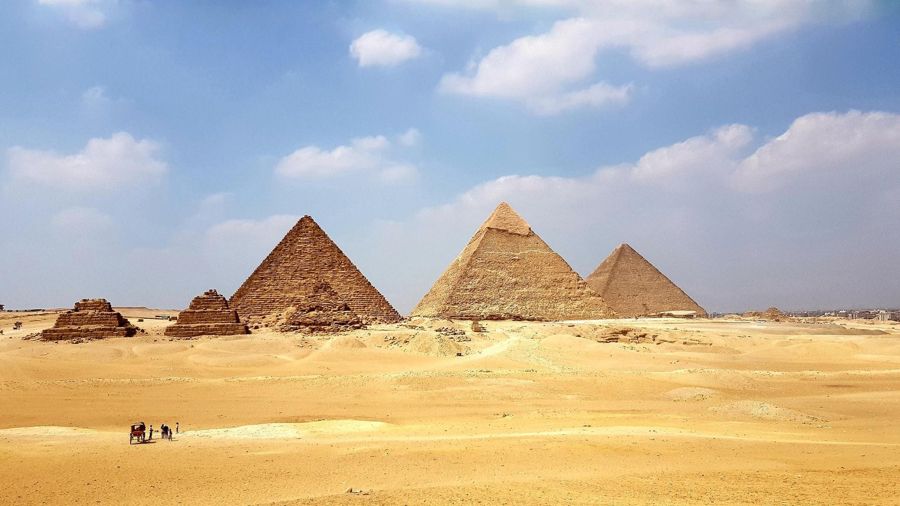
Most ancient structures have become ruins, built over, dismantled, or buried. These stood continuously visible at the edge of a densely populated valley, on one of the most traveled routes of the ancient world. For about 3,800 years, the largest of them was the tallest structure in human history, until the central tower of an English cathedral surpassed it in the early 14th century. Its height is an estimate, and it collapsed in 1548. The pyramid still stands.
What is remarkable is less the duration than the continuity of attention. Already in the New Kingdom, more than a thousand years after construction, the complexes were a destination for travelers and a place of veneration. In Greek and Roman times, visitors came from the entire Mediterranean and left inscriptions with names and places of origin, the precursor of the guest book. There is hardly another structure that has been visited without interruption for four and a half millennia.
How great the distance is becomes clear with a single calculation. Between the construction of the largest pyramid and the reign of Cleopatra lie about 2,500 years. Between Cleopatra and the first moon landing lie about 2,000. The last queen of Egypt lived closer to space travel than to the erection of the structure that was already ancient to her. Standing before the complex, you are not looking at antiquity, but at something that was already unimaginably distant to antiquity itself.
Today this continues in numbers. The site counts several million paying visitors annually, and the silhouette has become a symbol understood without a caption. That fully explains the fame. It says nothing about significance.
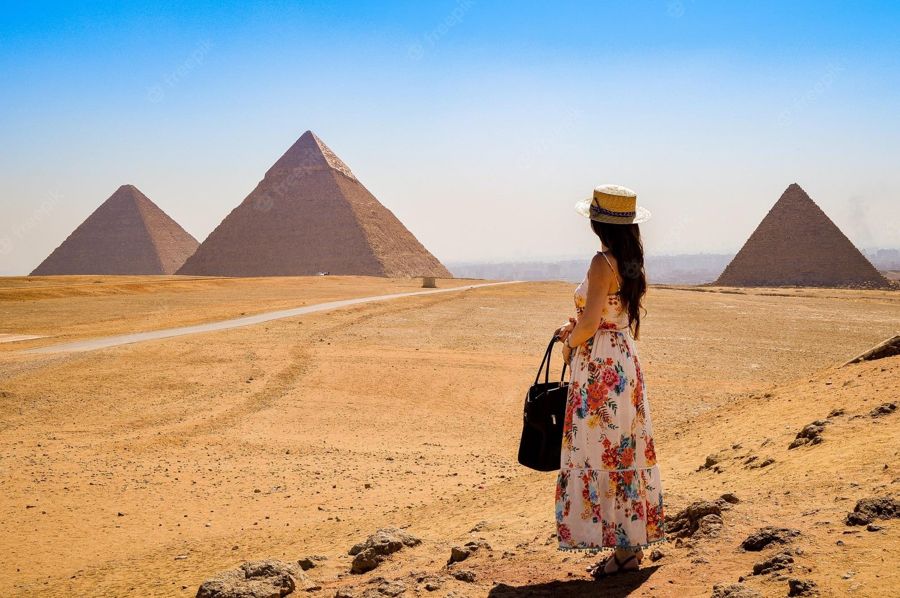
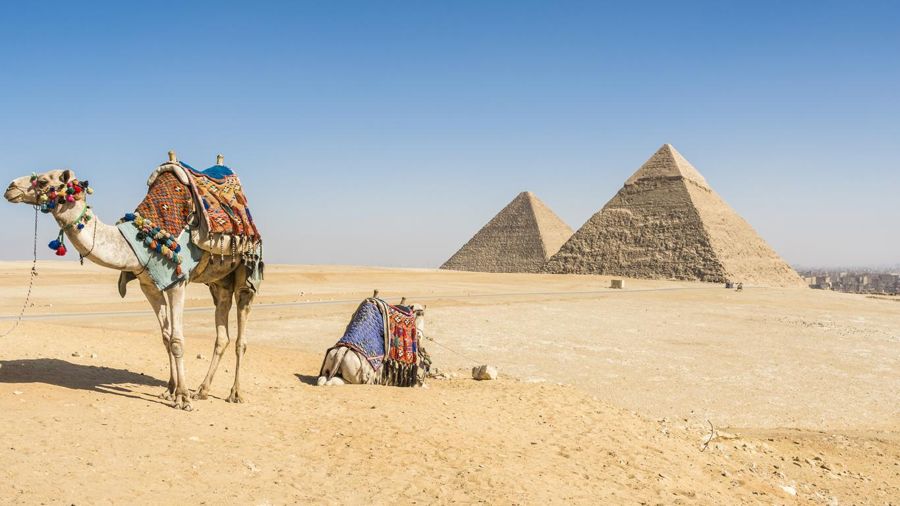
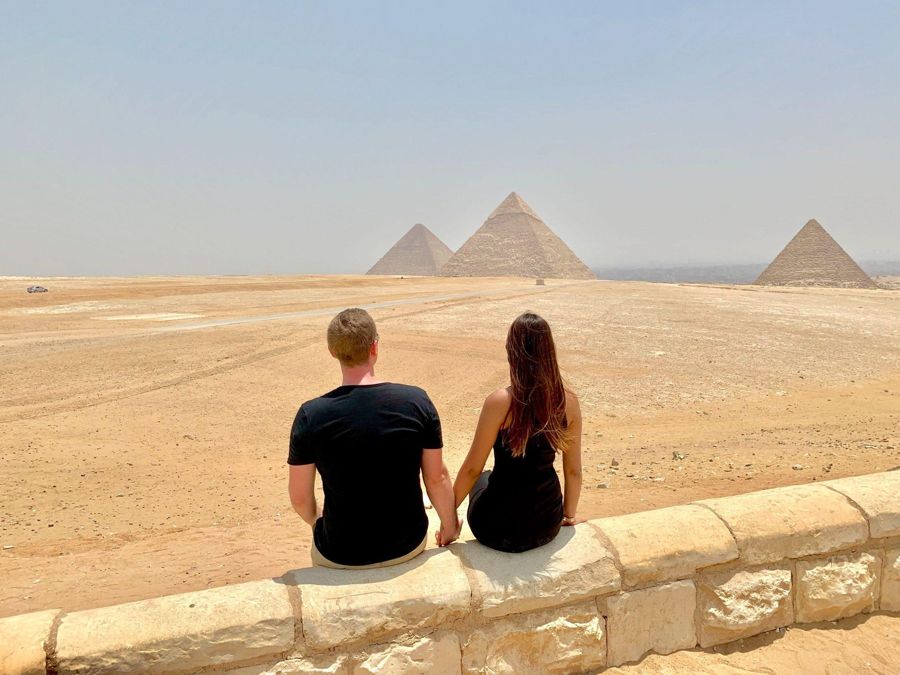
Giza together with Saqqara and Memphis in one day
- Shows the development and not just the result: the older step pyramid and the remains of the ancient capital on the same day
- Seven hours with a German-speaking guide, because the connection between the sites is not self-evident
- Pickup and lunch are included according to the provider
- Free cancellation up to 24 hours before, according to the provider
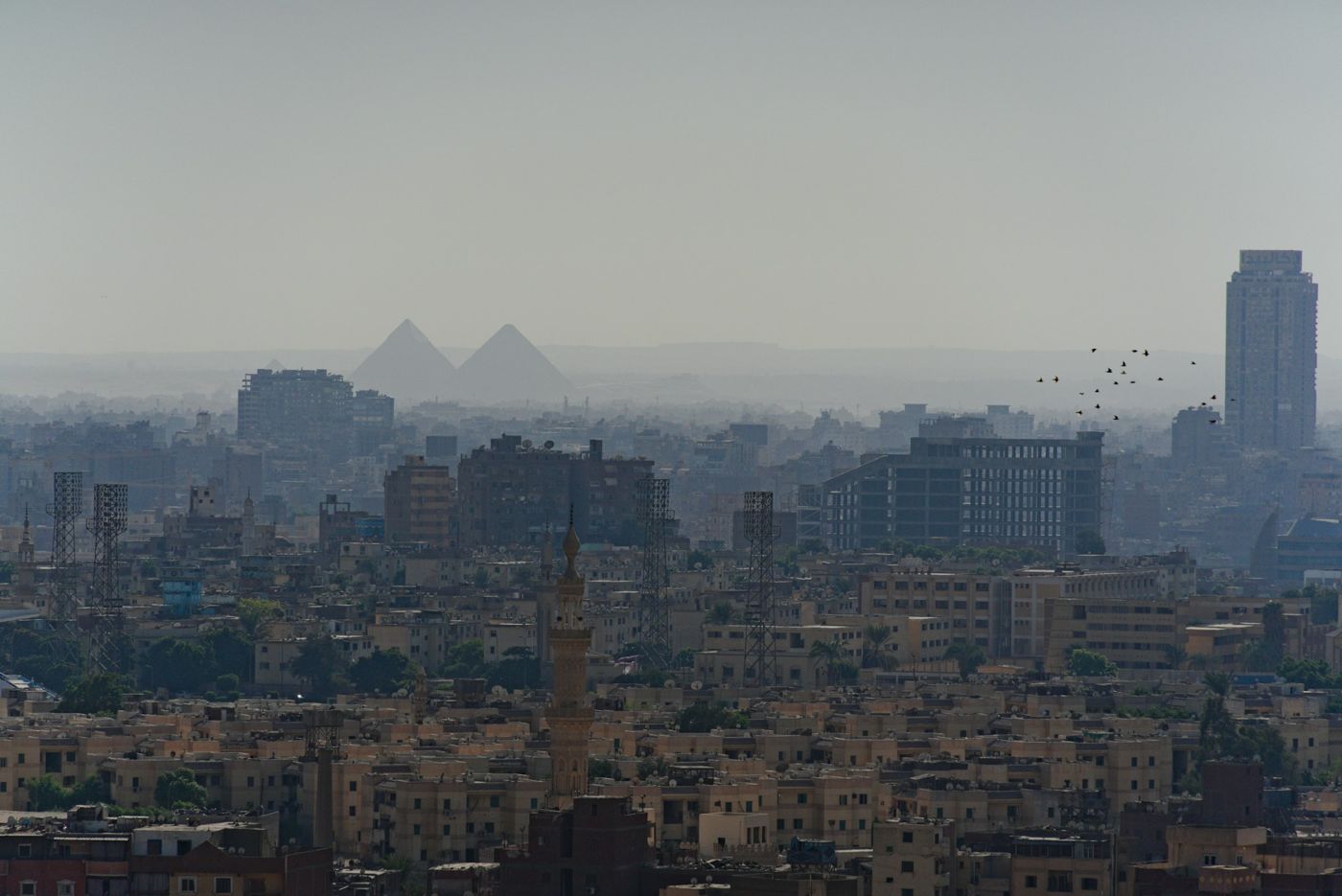
Not the Height, but the Precision
Let's come to the first of the two serious reasons. Whoever wants to know why the Great Pyramid of Khufu is important must look away from the height and toward the precision.
The four sides of the largest pyramid are aligned with the cardinal directions, and the deviation from true north is, depending on the measurement, three to six arcminutes, i.e., less than one-tenth of a degree. Even more telling is a second finding: The neighboring pyramid and an older complex further south deviate according to the same surveys by a similar amount and in the same direction. A single lucky hit looks different. The pattern speaks for a method that was repeatable and passed on.
That is the real point. This precision was achieved without iron tools, without the wheel as a means of transport, without a compass, and without optics. What was needed was not secret knowledge, but organization: an administration that plans over decades, brings in labor in shifts, feeds and houses them, transports material from several hundred kilometers away, and documents the process so that it remains controllable.
How far this organization reached is shown by a single material. The beams of the burial chamber inside are made of granite, and granite in Egypt is not found near Giza, but only about eight hundred river kilometers further south at Aswan. Blocks weighing many tons had to be quarried there, loaded, brought down the Nile, unloaded, and moved onto the plateau, in the rhythm of a construction schedule that could not wait. That is not a question of muscle power, but of scheduling.
Thus, the structures are the earliest surviving proof that a state could do such a thing. Not the proof that humans can move heavy stones, that was known before. But the proof that a society can sustain a project of this size over two generations without breaking apart. The structure is, so to speak, the byproduct. The actual find is the administration behind it.
The Place Where a Theory Collapsed
The second reason is the more surprising one, because it lies not in the past, but in the history of science of the 19th and 20th centuries.
In 1864, the Scottish court astronomer Charles Piazzi Smyth traveled to Giza to prove a thesis: In the measurements of the largest pyramid, a divinely given unit of measurement was hidden, from which the British inch was derived. He published extensive measurements and became very successful with them. In 1880, a young surveyor followed, whose father was convinced of the same thesis, and measured again. Over two years, he systematically recorded the complex, more accurately than anyone before him.
The result went against the thesis. The measurements could according to the new recordings be most simply explained by the Egyptian cubit, i.e., the measure that the builders themselves used. The young surveyor was named Flinders Petrie, and from the working method he developed in the process, field archaeology emerged: record everything, even the inconspicuous, date everything, read nothing into it.
Concretely, that meant three things: record everything, including fragments and seemingly worthless items; record exactly where everything lay; and date finds based on their typological development rather than the excavator's estimate. Before Petrie, excavation was largely a search for displayable objects; after him, it was a recording of the entire evidence. That this turning point took place precisely at a structure where a mystical theory was to be tested is one of the useful ironies of the history of science.
This role has been retained by the site. Because so much is known and so much is unknown about the structures, new methods are regularly tested here first. Muon radiography, which uses cosmic particles to scan rock, detected a large void above the Grand Gallery here in 2017; a second passage behind the stone beams on the north side was confirmed in 2025 through the combination of several methods. The structures are thus not only a find, but a permanent testing ground.
Reasons That Do Not Hold Up
Remaining are the reasons one often hears and that do not hold up.
It is not the oldest pyramid. About a century earlier, a step pyramid was built in Saqqara, and the father of the builder of Giza had already erected three large complexes before that, in which the geometric form was first developed. Giza is the culmination of a development, not its beginning. That is not a downgrade, quite the opposite: The comparison with the predecessors makes visible how much was learned there.
The argument of uniqueness also holds only to a limited extent. Aligned monumental structures exist in several cultures. What sets Giza apart is the combination of size, precision, state of preservation, and datability in a single place.
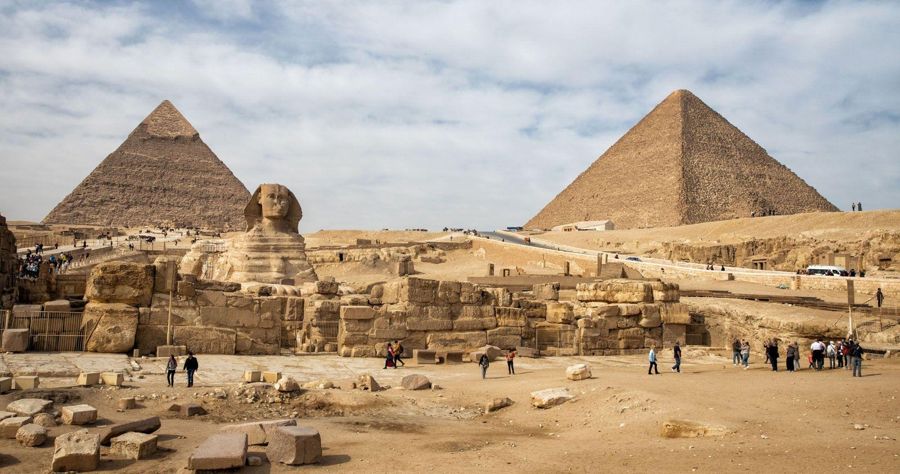
A special case is the figure in front. Whoever asks why the Great Sphinx is important gets an answer that has less to do with art than with layers of time. The figure was already buried up to its neck in sand in the New Kingdom, more than a thousand years after its creation. A king had it excavated and placed a stele between its paws that records this event. Thus, the site documents its own rediscovery, and from antiquity itself. Such self-testimonies about a culture's handling of its own past are extremely rare.
And finally: Significance is not something a structure possesses. It arises from the questions that can be answered at it. In Giza, there are unusually many, and some are still open.
Stay close enough to go twice. What this page describes is not seen on the first pass: The first visit shows the size, the second the details, and for that you don't need a second journey through the city. Three houses that cover this:
 At the Sphinx
Giza Pyramids View Inn
- Good breakfast
- Airport shuttle
- Two restaurants
- 24-hour reception
- Free Wi-Fi
For those who want to see the Sphinx from their breakfast chair
 Most reviewed
Great Pyramid Inn
- Fabulous breakfast
- Rooftop terrace restaurant
- Bar
- Airport shuttle
- 24-hour reception
Most who want to stay in the neighborhood
 Garden & pool
Marriott Mena House
- Excellent breakfast
- Outdoor pool
- Spa and wellness center
- Three restaurants
- Fitness center
For those who want space, garden, and pool instead of a rooftop terrace
Frequently asked questions
What makes the Pyramids of Giza special?
The combination of size, precision, good state of preservation, and secure dating in a single place. Each of these properties exists elsewhere, but all four together hardly.
Are they the oldest pyramids?
No. The Step Pyramid of Saqqara is about a century older, and the predecessor of the builder had already erected three large complexes.
Why are they considered a technical achievement?
Because of the precision without iron tools, wheel, compass, and optics. The sides deviate by less than one-tenth of a degree from true north, and neighboring complexes show the same deviation.
What does archaeology have to do with them?
The systematic survey from 1880 was meant to prove a mystical theory of measurement and refuted it. The working method developed in the process became modern field archaeology.
Are there still open questions?
Yes. Two voids inside the largest pyramid were only detected in 2017 and 2025, and nothing is known about their purpose.