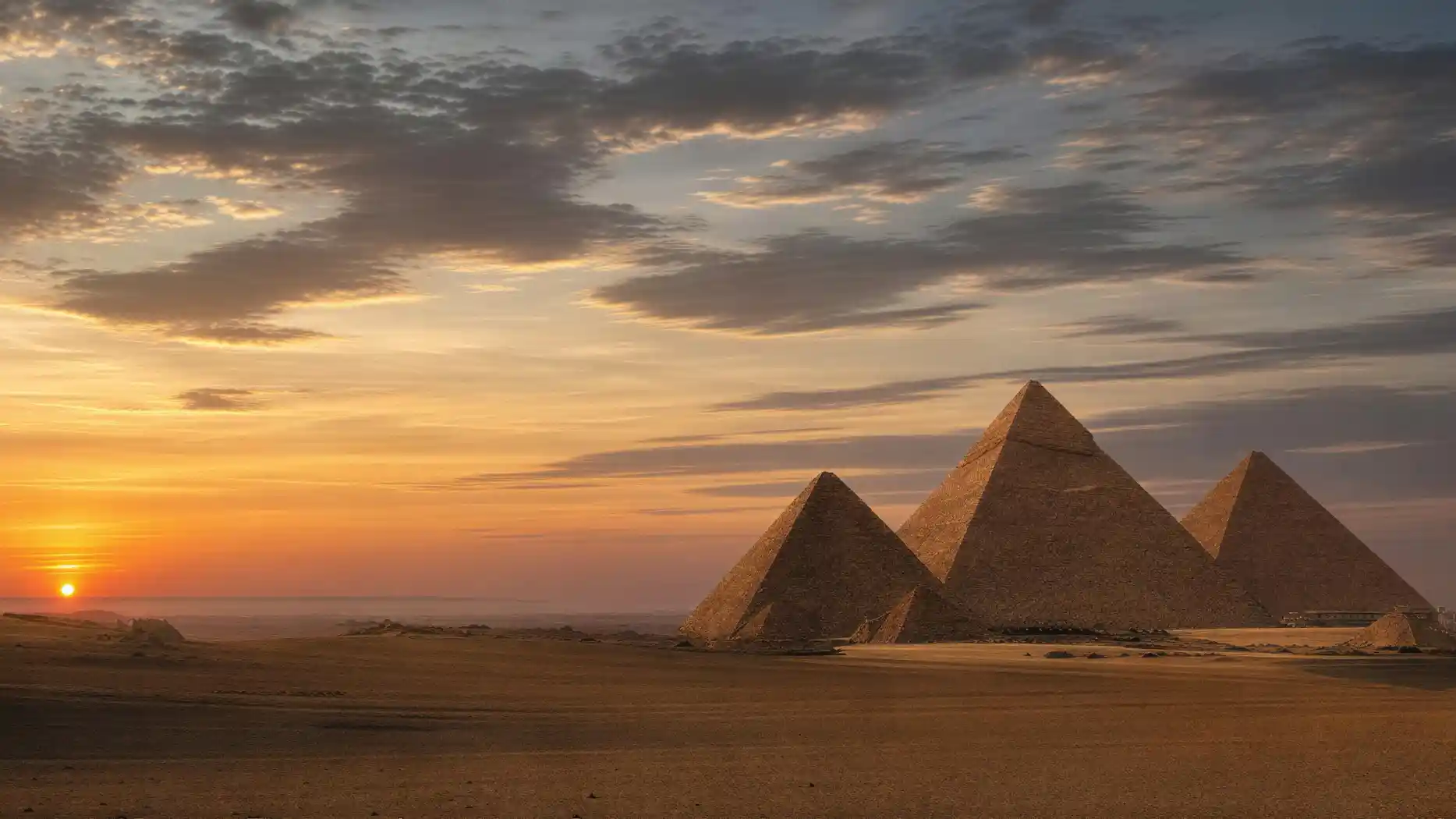
The weather in Giza can be summed up in two sentences, both of which are misleading.
First: it's dry and warm. Second: it's hot in summer. Both are true, and neither is helpful, because the number you see in a weather app applies to a city, not to the place where you'll be standing. In summer, there's a world of difference between a street with building shadows and an open desert plateau without a single tree, and the app won't tell you that.
The weather at the Pyramids of Giza and the weather in the city are therefore two different things, even if every weather app only knows one. This page breaks down two things: the official climate data that actually exists, and what those figures mean on a specific morning on the plateau. The recommendation on when to travel is deliberately not here, but on a separate page. This is about the weather itself.
The reliable figures come from a single source: the Egyptian Meteorological Authority provides its climate averages to the World Meteorological Organization, which publishes them. These are multi-decade averages, not a forecast, and they apply to the Cairo station. Giza is less than twenty kilometres away on the same side of the Nile in the metropolitan area; the difference between the two points is small compared to the difference between shade and full sun.
Climate Averages for Greater Cairo and Giza
Official figures from the Egyptian Meteorological Authority, published via the World Meteorological Organization.
| Month | Average daily high | Average daily low | Days with precipitation |
|---|---|---|---|
| January | 19.0°C | 9.7°C | 3,7 |
| February | 20.3°C | 10.3°C | 3,8 |
| March | 23.4°C | 12.3°C | 2,5 |
| April | 28.2°C | 15.4°C | 1,2 |
| May | 31.9°C | 18.4°C | 0,5 |
| June | 34.6°C | 21.4°C | 0,0 |
| July | 34.8°C | 22.9°C | 0,0 |
| August | 34.5°C | 23.3°C | 0,0 |
| September | 33.1°C | 21.7°C | 0,1 |
| October | 29.7°C | 19.0°C | 0,6 |
| November | 24.7°C | 14.6°C | 1,5 |
| December | 20.4°C | 11.0°C | 2,5 |
- Average daily high
- 19.0°C
- Average daily low
- 9.7°C
- Days with precipitation
- 3,7
- Average daily high
- 20.3°C
- Average daily low
- 10.3°C
- Days with precipitation
- 3,8
- Average daily high
- 23.4°C
- Average daily low
- 12.3°C
- Days with precipitation
- 2,5
- Average daily high
- 28.2°C
- Average daily low
- 15.4°C
- Days with precipitation
- 1,2
- Average daily high
- 31.9°C
- Average daily low
- 18.4°C
- Days with precipitation
- 0,5
- Average daily high
- 34.6°C
- Average daily low
- 21.4°C
- Days with precipitation
- 0,0
- Average daily high
- 34.8°C
- Average daily low
- 22.9°C
- Days with precipitation
- 0,0
- Average daily high
- 34.5°C
- Average daily low
- 23.3°C
- Days with precipitation
- 0,0
- Average daily high
- 33.1°C
- Average daily low
- 21.7°C
- Days with precipitation
- 0,1
- Average daily high
- 29.7°C
- Average daily low
- 19.0°C
- Days with precipitation
- 0,6
- Average daily high
- 24.7°C
- Average daily low
- 14.6°C
- Days with precipitation
- 1,5
- Average daily high
- 20.4°C
- Average daily low
- 11.0°C
- Days with precipitation
- 2,5
In total, that's about 25 millimetres of precipitation and just over 16 rainy days per year. The figures refer to the Cairo station and are averages over a longer period, not the values of a single year.
Why the Table Doesn't Answer the Question
How hot is it at the Pyramids of Giza? The table doesn't answer that question, for three reasons.
The first is statistical. An average daily high of 34.8 degrees in July doesn't mean it will be 34.8 degrees in July. It means that's where daily highs average out over many years, so roughly half of July days will be hotter. If you plan with the table value, you're planning with the better half.
The second reason is on the plateau itself. The measuring station is on grass or concrete, two metres high in the shade, as the standard requires. You, on the other hand, will be on light limestone and sand that reflects a significant portion of the radiation, in full sun with no escape. There's no significant shade between the structures, and the paths between them are long enough that you'll feel it.
The third reason is the radiation itself. With the sun near its zenith, as it is from May to August, the direct solar radiation on your head and shoulders adds to the air temperature. That's the difference between a number on a screen and the moment you realize the next patch of shade is two hundred metres away.
There's also a fourth point, often confused with heat: humidity. Giza is in the Nile Valley, but on the edge of the desert, and the air is very dry for much of the year. That has a pleasant effect—sweat evaporates and actually cools you—and an unpleasant one: you barely notice the fluid loss. People from Central Europe regularly underestimate how much they need to drink in dry heat.
In practice, that means: in summer, don't expect the table value, but several degrees more, and plan your time accordingly.
The Only Rule That Really Matters in Summer
Between about eleven and three o'clock, the sun is so high that being out in the open from May to September is strenuous to risky. If you come in summer, plan your visit for the early morning hours and bring significantly more water than you think you'll need. Two litres per person for a morning is not an exaggeration.
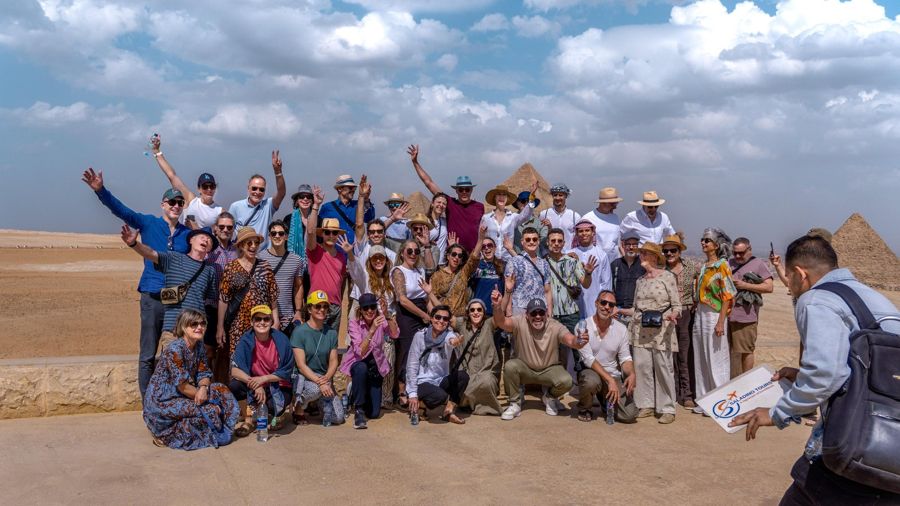
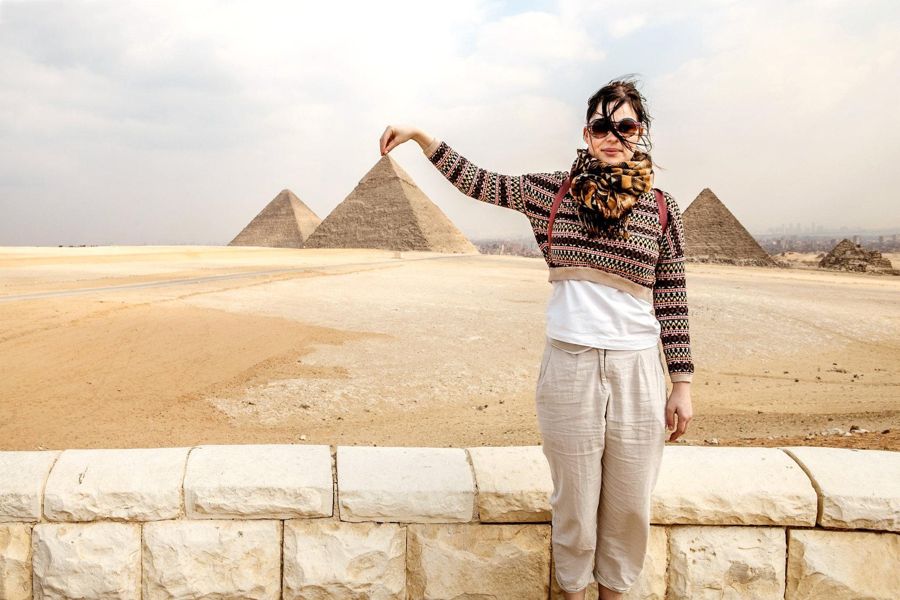
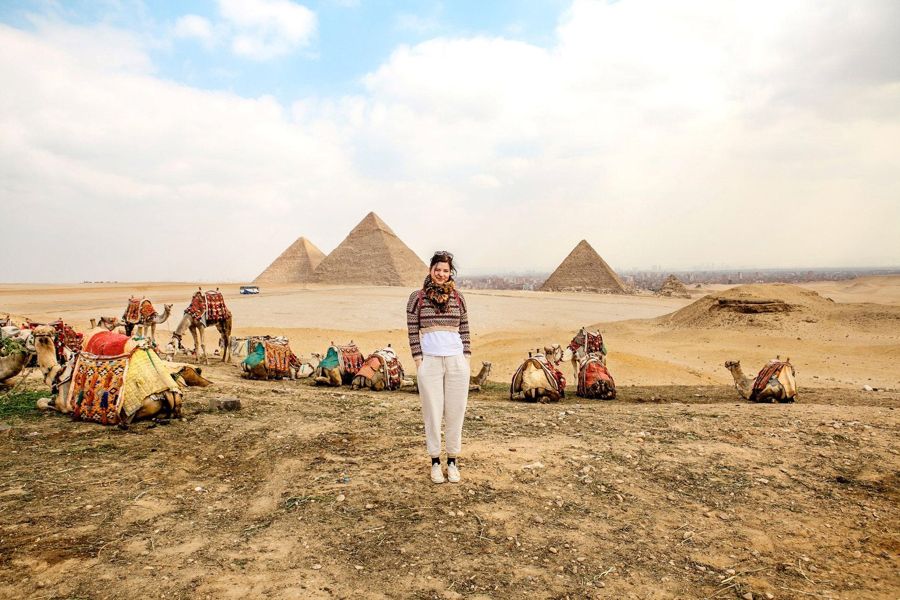
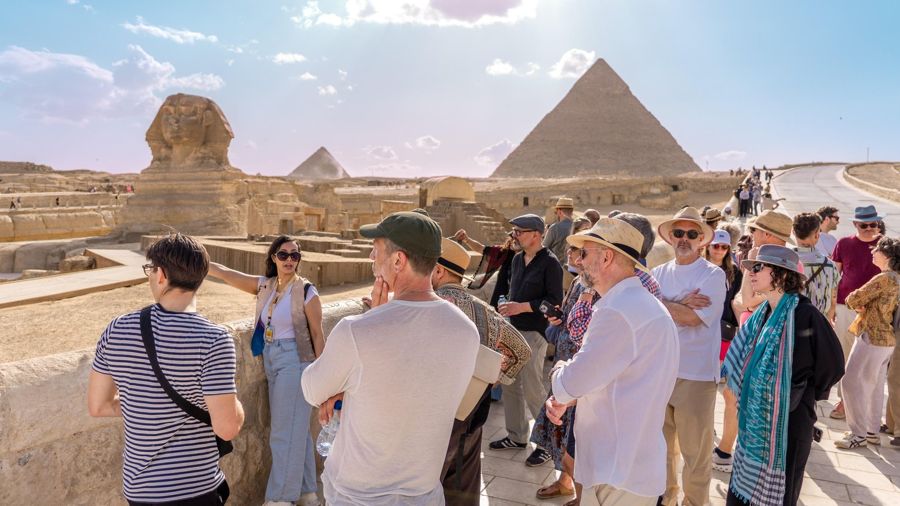
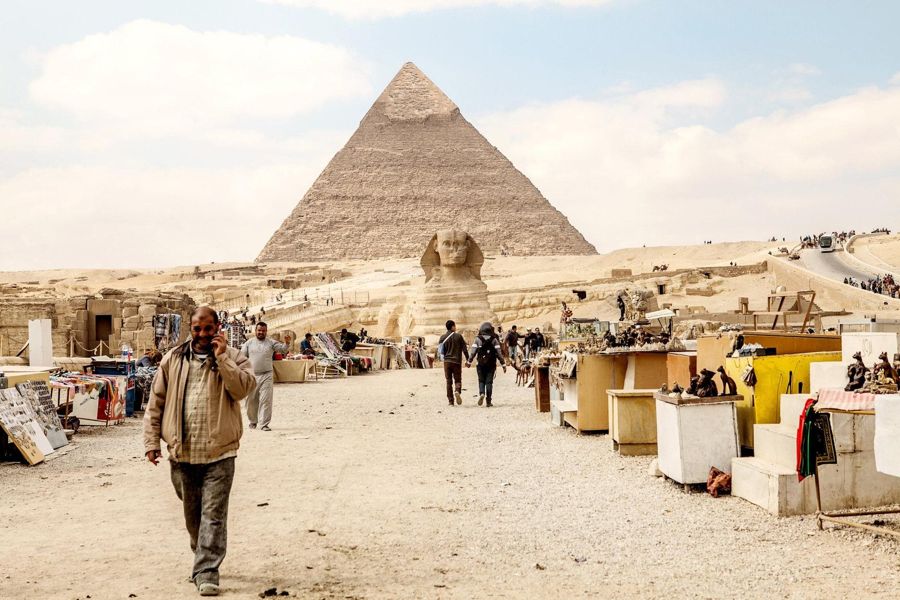
Half-day tour to the plateau and the Sphinx
- Four hours total instead of a whole day in the sun
- Hotel pickup, so you avoid the wait at the gate in the midday heat
- German-speaking guide, plateau entry, and fast-track entry included
- Access to the interior of the pyramid can be added as an option
Two Seasons and Two Short Transitions
The year in Egypt has only two real seasons, with two short transitions in between.
From December to February, it's mild. Daytime highs are around twenty degrees, nights cool down to ten degrees, and this range of about ten degrees between day and night is the real surprise for Central Europeans. Early morning on the plateau is cold enough for a jacket, and by noon that same jacket is in the way. It's also the time when it can rain at all, though rarely.
These months are also the only ones when the nights on the plateau can get genuinely uncomfortable. Desert soil doesn't store heat well and releases it quickly after sunset, and on clear nights, radiation cooling adds to the effect. If you're planning an evening event on the site, don't dress for a mild winter's day in January.
From March to May, temperatures rise steeply, from 23 to almost 32 degrees on average. This is also the dustiest time of year, more on that shortly.
From June to September, the thermometer stands still. Monthly averages are between 33 and 35 degrees, there's practically no precipitation, and nights are warm too: over 23 degrees on average in August, which significantly shortens the morning cool-down.
From October to November, the curve drops again, and quickly. Temperatures in Giza in November average 24.7 degrees during the day and 14.6 at night. That's the month statistics paint most favourably: warm enough for a full day outdoors, cool enough to last, and with 1.5 rainy days on average, practically dry.
What this list doesn't show are the outliers. In spring 2026, the climate information centre of the Egyptian Agricultural Research Centre warned of an unusually early heatwave with over 42 degrees in Greater Cairo. Such conditions are far above any monthly average and are becoming more frequent. A look at the forecast in the last few days before your trip doesn't replace a climate table, but the climate table doesn't replace it either.
The Khamsin Isn't on Any Climate Table
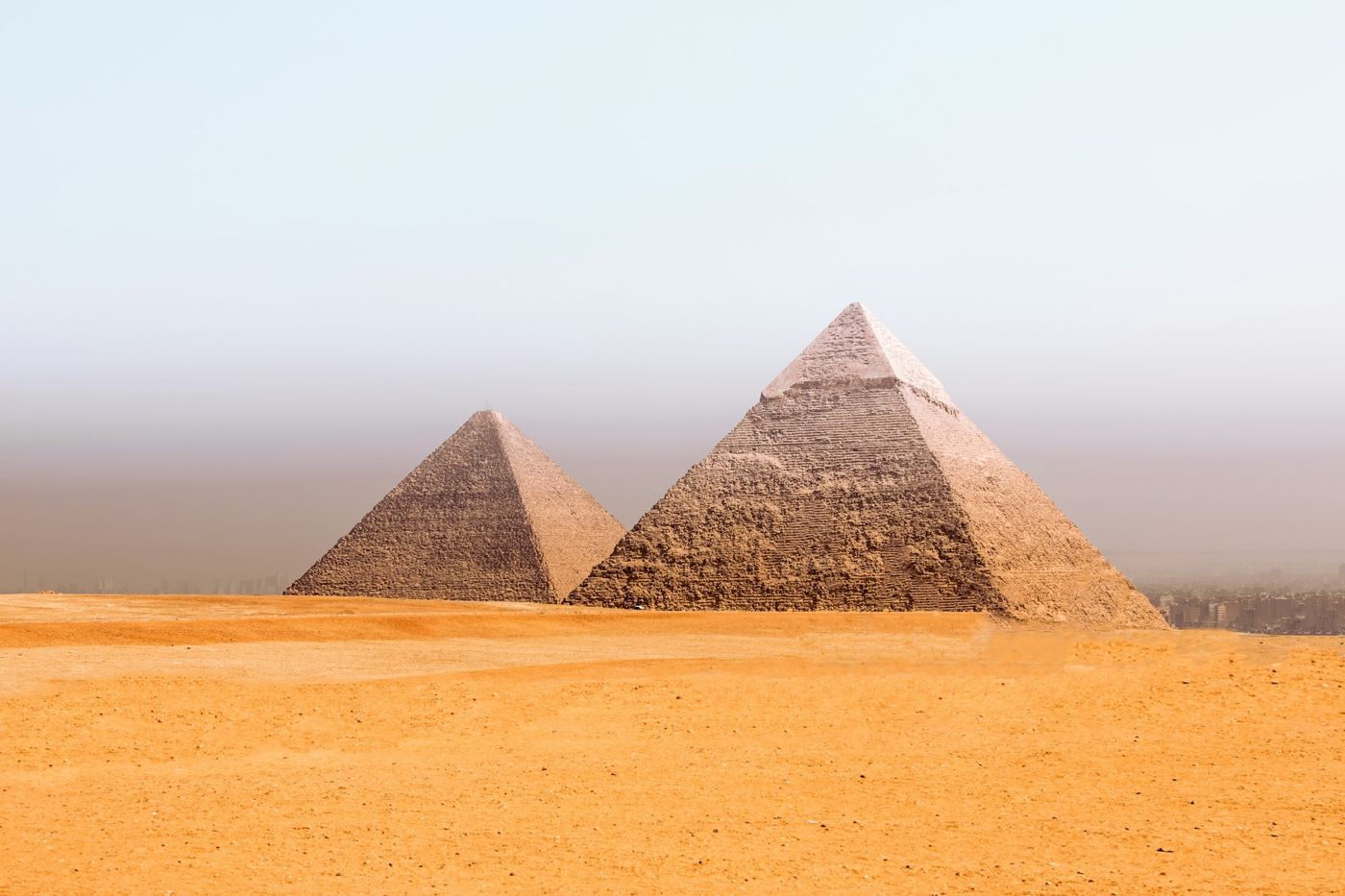
The Khamsin is the weather phenomenon that doesn't appear on any climate table but can still shape a trip.
It's a hot, dry desert wind laden with dust and sand that blows in from the south to southeast out of the Sahara. The name comes from Arabic and means fifty, after the roughly fifty-day period after the equinox in which it occurs. In practice, that means mainly in spring, between March and May.
During a Khamsin event, temperatures above 40 degrees are not uncommon, humidity drops to single digits, and the air fills with fine dust. For visitors, that means three things: visibility collapses, photos become hazy and yellowish, and fine sand finds its way into cameras, lenses, and lungs in ways you wouldn't have thought possible.
Most people underestimate how far this dust travels. It's carried as far as Central Europe, where it settles as a fine film on cars. If you've ever found a yellowish crust on your car bonnet after a rain shower in Germany, you might have been looking at Saharan dust that took the same route as the one that sweeps over the plateau in spring.
There's a second source of dust, unrelated to the Khamsin, that's active year-round: the site itself. Where people, camels, and vehicles walk over dry sand, dust hangs in the air, and that's more visible on a still summer afternoon with many visitors than on a fresh winter morning. That's another argument for the early hours.
It's only possible to forecast this a few days in advance. Postponing a trip in April because of it would be an overreaction; carrying your camera in a closed bag on such days is not.
Guided day on the plateau, duration selectable
In the cool half of the year, a whole day outdoors is doable. This tour can be tailored from three to eight hours, guided in German, with pickup and plateau entry included.
It's Not Cooler Inside
A common misconception concerns the interiors. Standing in front of the Great Pyramid at 35 degrees, you might think going inside is the cool alternative. The opposite is true.
The corridors and chambers trap heat, there's no air conditioning, humidity is high from many people's breath, and the ascending passage is walked bent over for a considerable stretch. If you have circulation problems, claustrophobia, or respiratory issues, you should seriously consider whether to go inside on a hot day. On cool winter days, it's much more pleasant.
For photos, a different logic applies. The clear, dry winter sky provides the harshest shadows and the best visibility, while the spring haze gives the softest, flattest light. Wind also plays a role, less for the cold and more for the sand on the ground, which drifts knee-high in gusts.
Weather-related closures of the site are rare but do happen, for example during very strong winds or the rare heavy rain events when water doesn't soak into the poorly absorbent desert surface but runs off. The travel and safety advice from the German Foreign Office lists such events as a risk for road traffic rather than for the structures themselves.
Frequently asked questions
When is it hottest in Giza?
In July and August, with average daily highs around 35 degrees. Individual days are significantly hotter, and on the open site it feels warmer than the measured air temperature.
Does it rain in Giza?
Hardly. Over the year, it adds up to about 25 millimetres over 16 days, almost exclusively between November and March. From June to September, there's practically nothing.
How cold does it get at night?
In winter, it averages around ten degrees, in high summer over twenty. The difference between day and night is about ten degrees all year round, so it's correspondingly fresh on the plateau in the morning.
What is a Khamsin?
A hot, dusty desert wind from the Sahara, mainly in spring. It brings temperatures above 40 degrees, very dry air, and poor visibility.
Is it cooler inside the pyramid?
No. The passages are warm, humid, and unventilated. On hot days, going inside is more strenuous than being outside.
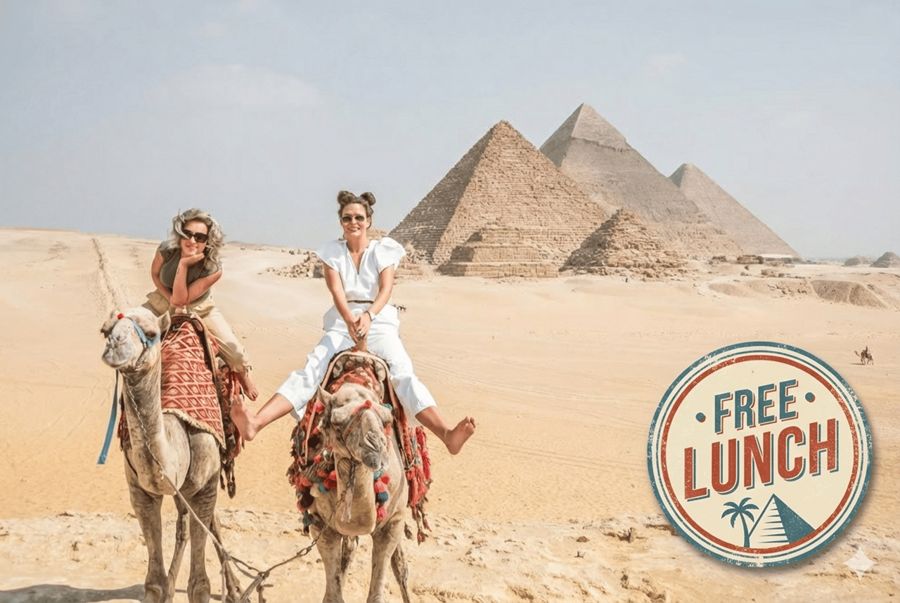
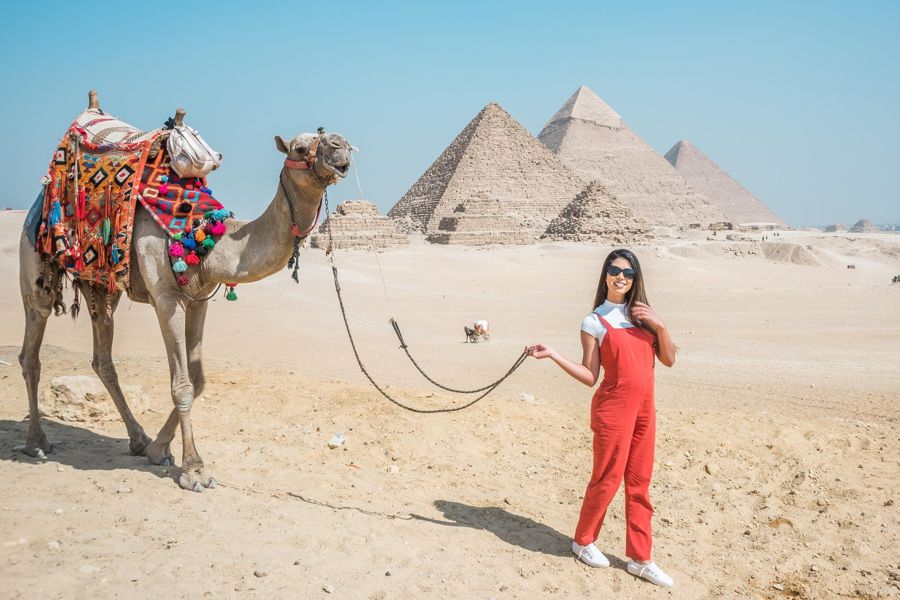
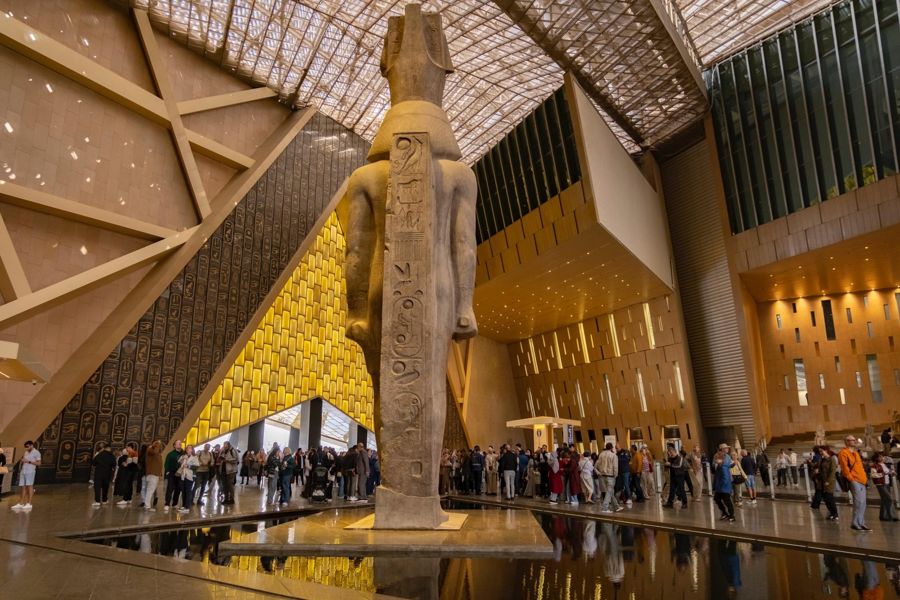
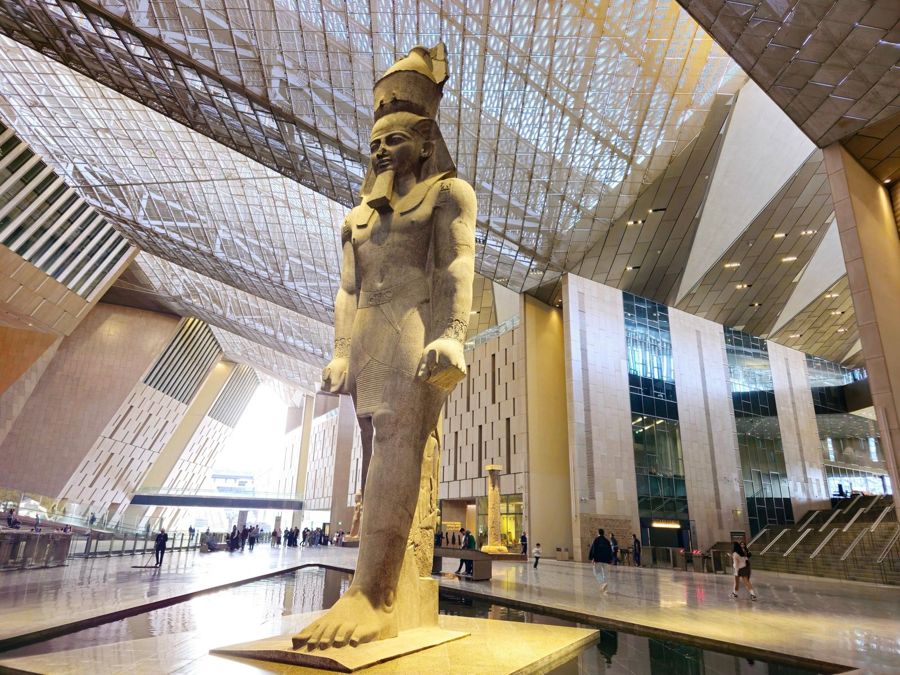
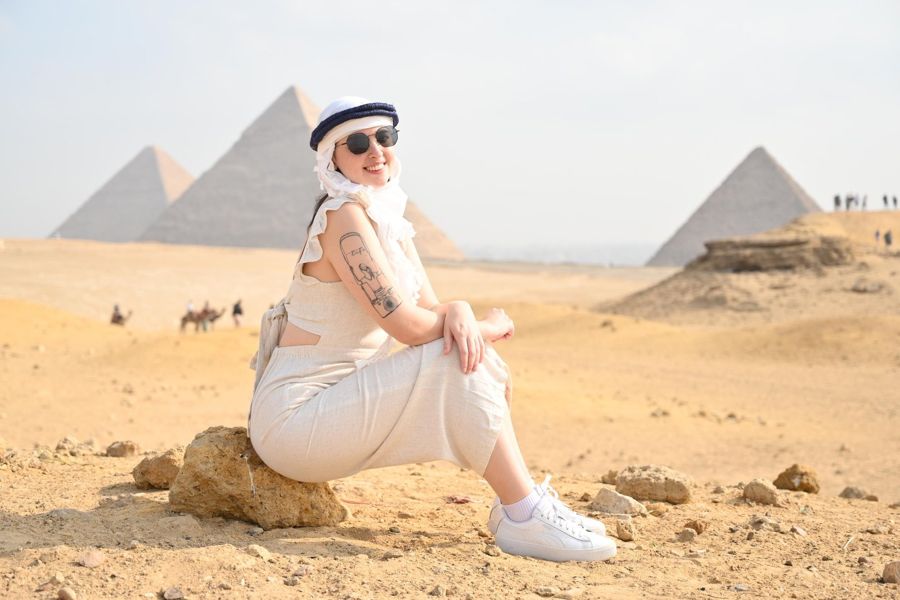
Day tour with guided visit to the plateau, Sphinx, and museum
- Combines the open site with indoor spaces, taking the midday hours out of the sun
- German-speaking guide, hotel pickup, and lunch included
- Plateau entry and fast-track entry included; the pyramid interior available as an add-on
- Free cancellation up to 24 hours in advance in case the forecast changes