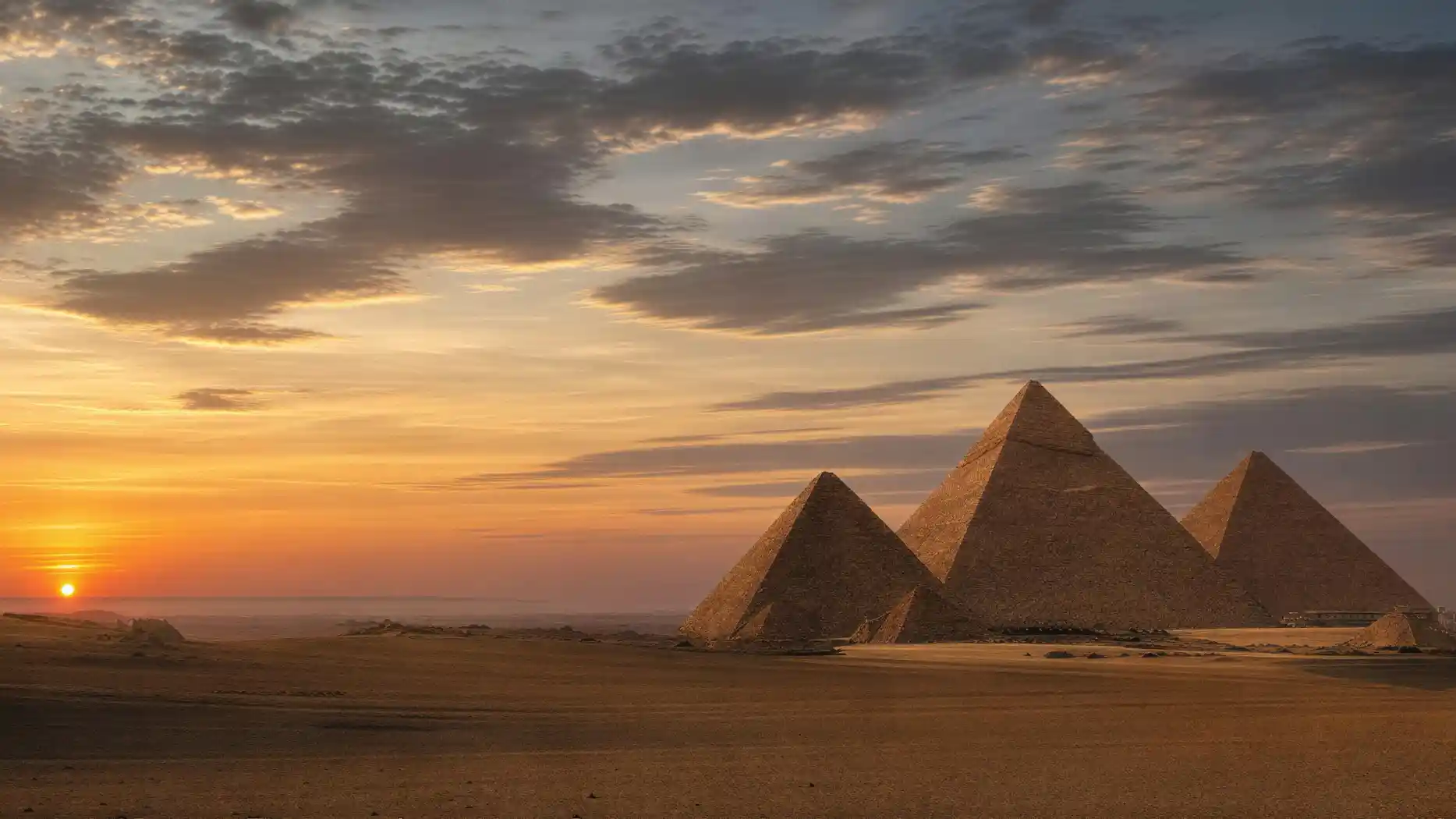
How many tourists visit the Pyramids of Giza each year? The question sounds like it should have a single number. It has four, and they vary by more than a factor of five.
In circulation are 2.5 million, 3.5 million, just over 5 million, and 14.7 million. All four appear in seemingly serious contexts, and none is simply invented. They each count something different.
This is not a statistical detail but the real point of this page. When you read a number about the pyramids, you should first ask who counted and what: the people entering Egypt, the people entering any archaeological site in the country, or the people buying a ticket at the gate of the plateau. These are three different groups, and only the last answers the question most people are asking.
The fact that this question is so often asked has a practical core. Hardly anyone cares about statistics. People ask because they want to know how crowded it will be, whether a certain month is worthwhile, and whether the images of crowds at the Sphinx are the rule or the exception.
After that, things get practical. From the right annual figure, you can calculate how many people you can expect on an ordinary day, and this calculation explains a lot of what visitors experience on site.
The four numbers and what they count
Same question, four answers. The middle column resolves the contradiction.
| Figure | What is actually counted | Works as an answer? |
|---|---|---|
| around 19 million | All people who entered Egypt in 2025 | No, that is the whole country |
| 18.6 million | Foreign entries into all archaeological sites and museums in Egypt in 2025 | No, that is all sites combined |
| 14.7 million | Probably one of the two upper figures from an earlier year, attributed to the plateau | No, not verifiable |
| around 3.5 million | Visitors to the Giza Plateau, figure from the operating company in January 2026 | Yes, that is the best available figure |
- What is actually counted
- All people who entered Egypt in 2025
- Works as an answer?
- No, that is the whole country
- What is actually counted
- Foreign entries into all archaeological sites and museums in Egypt in 2025
- Works as an answer?
- No, that is all sites combined
- What is actually counted
- Probably one of the two upper figures from an earlier year, attributed to the plateau
- Works as an answer?
- No, not verifiable
- What is actually counted
- Visitors to the Giza Plateau, figure from the operating company in January 2026
- Works as an answer?
- Yes, that is the best available figure
The 2.5 million often read as well were the scale before the site's redevelopment. That figure is not wrong, only outdated.
Where does the figure of 3.5 million come from
The most reliable figure comes from the company that manages visitor operations at the plateau, and it has the advantage that counting actually takes place there: at the gate.
In early 2026, its representative cited around 3.5 million visitors for the last full operating period, along with a stated target of about five million. During the trial period, the number had risen by about thirty percent, and in recent months by sixty to sixty-five percent.
Two things go along with this figure. First, it is an operator's figure, not an official statistic, and an operator promising growth has an interest in the direction. Second, the reference period is vague.
There is currently no independent verification. The ministry publishes totals for the whole country and for museum groups, but not breakdowns by site. So if you want to verify the plateau's visitor figures, you have nothing but the operator's word. That is not a criticism but the state of publication practice, and it is why this page gives an order of magnitude rather than a precise decimal.
For context: the Ministry of Tourism reported for 2025 just under nineteen million entries and 18.6 million foreign admissions to the country's archaeological sites and museums, each showing significant growth. The plateau accounts for about a fifth of that. This comparison is also imperfect, because the ministry's figure explicitly counts only foreigners, while the plateau also counts Egyptians, for whom a separate, much lower rate applies. But as an order of magnitude, it is still useful.
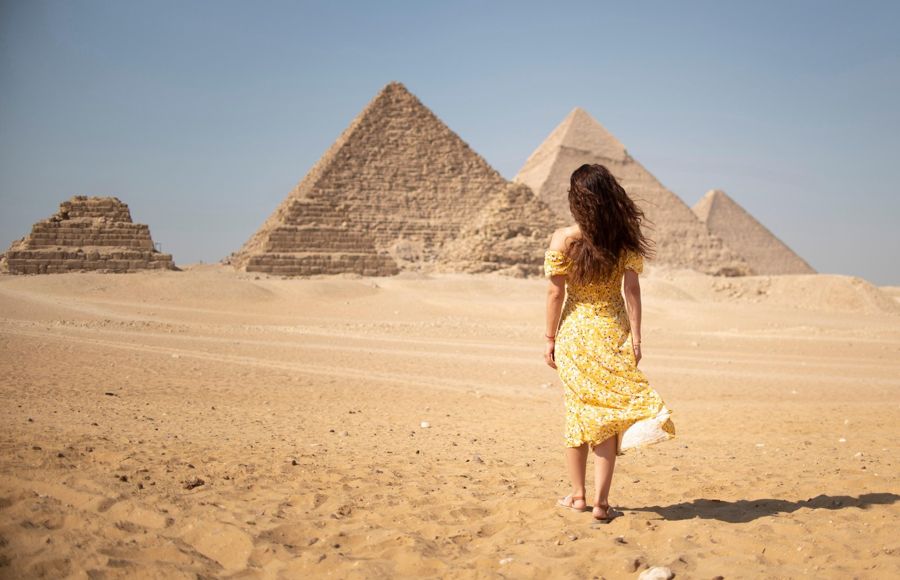
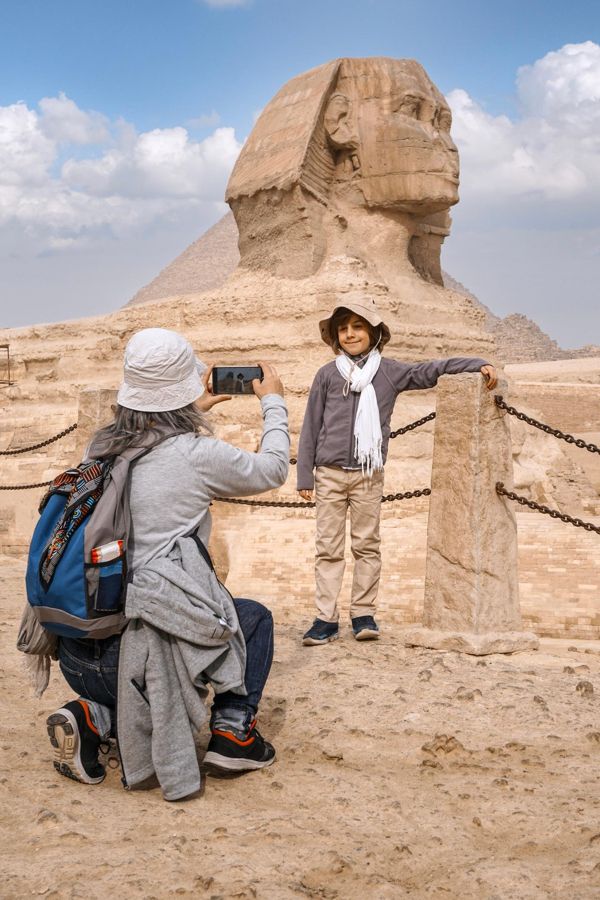
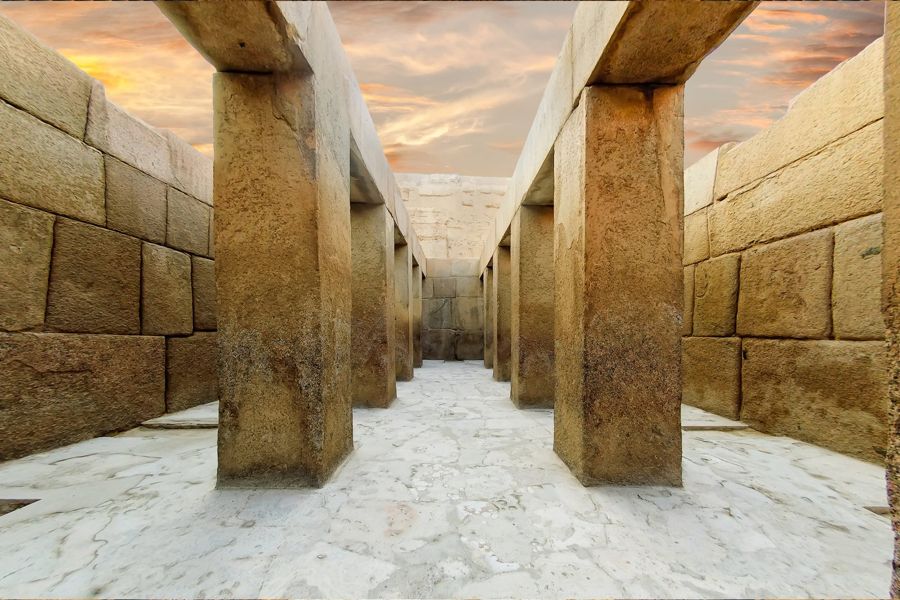
Guided half-day with morning pickup
- Pickup from your accommodation, so an early arrival doesn't depend on a taxi
- Five to six hours with a German-speaking guide
- Site entry is included, lunch as an add-on, interior access not included
- Free cancellation up to 24 hours before the start
Egypt, its sites, and the plateau
- Entries to Egypt 2025
- Entry to sites and museums 2025
- Visitors to the Giza plateau
Figures in millions. The first two values come from the Tourism Ministry and count only foreign guests. The third comes from the site's operator and counts all visitors. The bars are therefore not strictly comparable and show orders of magnitude, not shares.
What does this mean for a single day?
More interesting than the annual figure is what it means for a single day, and you can do the math yourself.
The per-day visitors to the Pyramids of Giza is 3.5 million divided by 365. That is about 9,600 people. The plateau is open about eight hours, so on average about 1,200 people per hour. At the stated target of five million, that would be just under 13,700 per day.
These numbers seem huge at first glance and harmless at second. Huge, because 9,600 people equates to a lot. Harmless, because the plateau measures two kilometers and most people disperse over an area where you rarely cross paths.
Another figure makes it tangible. Of the about 9,600 people on a day, only a small fraction goes inside the Great Pyramid, because there is a separate ticket with a fixed daily amount: two time slots, each with a low three-digit number of tickets. As a share of the plateau's visitors, that's only a few percent. Those who wish to enter the interior do not compete against 9,600 people, but for one of the few tickets, and on busy days these are gone by the morning.
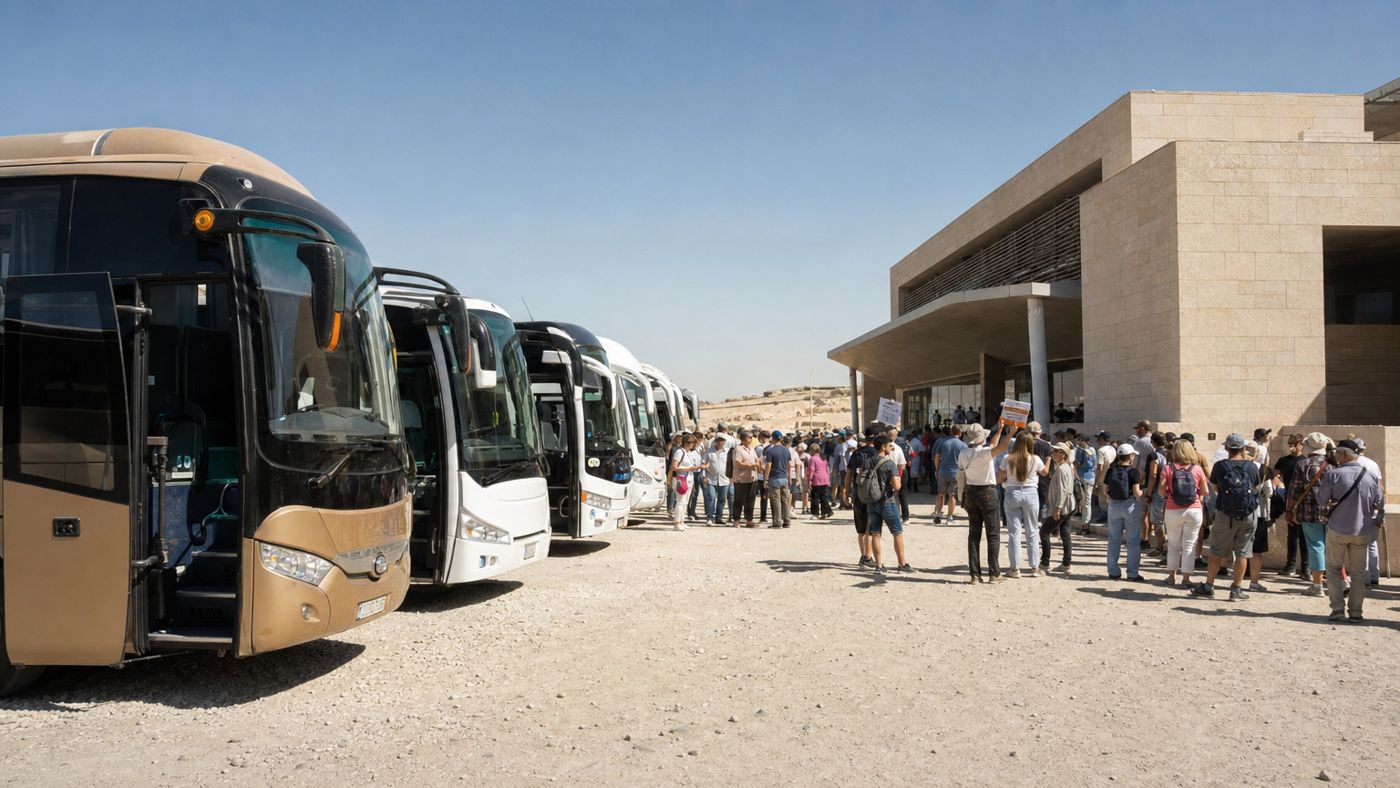
Both impressions miss the point, because the average is particularly misleading here. People do not arrive evenly. They arrive by bus, and the buses come between nine and ten. Moreover, they do not spread across the plateau but concentrate on three points: the viewpoint, the base of the Great Pyramid, and the terrace at the Sphinx. The actual crowds at these three points are therefore several times higher than the average suggests.
How crowds distribute throughout the day
This allows you to plan your own day, even more precisely than with any general advice.
The tourists at the Pyramids of Giza follow a pattern that has hardly changed in years. Before opening, there is no one. In the first hour, it is the individual traveler and a few early small groups. Between nine and ten, the majority arrives at once because the buses from Cairo and the Red Sea follow driving times, not uniform spread. In the afternoon, it slowly thins out.
It follows from the calculation: if you use the first hour, you share the plateau with perhaps a tenth of the people who will be there an hour later. That's a bigger difference than between high and low season.
The same pattern exists across the year, but weaker. From October to April, it is more pleasant and therefore more crowded; in high summer, it is emptier but hotter. If you have the choice, you gain more with the early time of day than with the month. A planning tool converts month and time of day into two key figures and answers the question, when should I go to the pyramids?
Then what happens if the operator reaches its goal? Five million a year would be just under 13,700 per day, about forty percent more than today. On the open plateau, that would hardly be noticeable. At the three known spots, at the entrance, and in the interior, it would be, because their capacity does not grow with it. The redevelopment has focused on the paths and the entrance, not the bottlenecks behind them.
How many people are there at the same time?
The factors for the time of day are an informed estimate based on the observed arrival pattern of tour buses, not a measured distribution. The result is an order of magnitude, not a forecast.
Sleep within walking distance of the plateau. The first hour after opening is the biggest lever of the whole day. If you stay in the district near the plateau, you reach the gate without driving through Cairo first. Three hotels that cover this:
 At the Sphinx
Giza Pyramids View Inn
- Good breakfast
- Airport shuttle
- Two restaurants
- 24-hour reception
- Free Wi-Fi
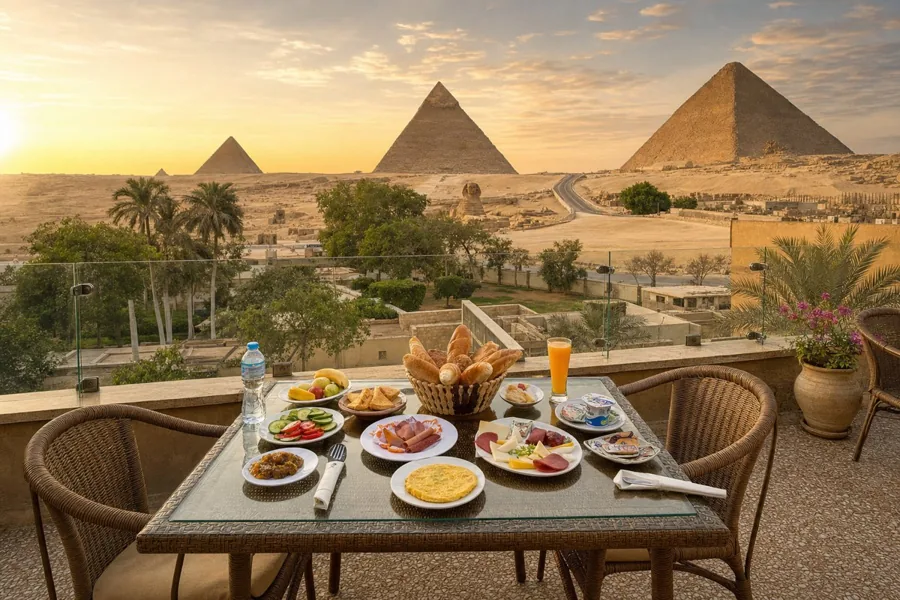
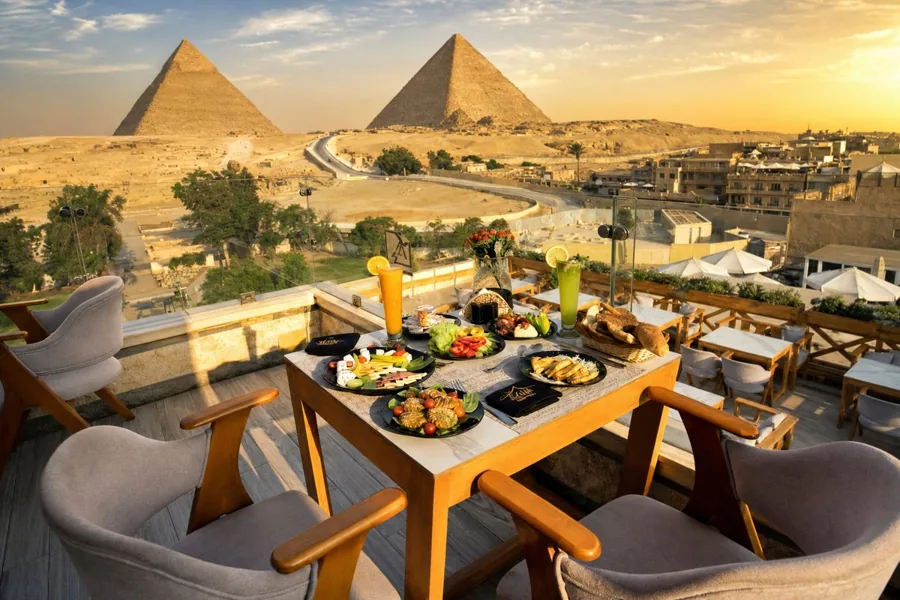
For those who want to see the Sphinx from their breakfast chair
 Most reviewed
Great Pyramid Inn
- Fabulous breakfast
- Rooftop terrace restaurant
- Bar
- Airport shuttle
- 24-hour reception
Most who want to stay in the neighborhood
 Garden & pool
Marriott Mena House
- Excellent breakfast
- Outdoor pool
- Spa and wellness center
- Three restaurants
- Fitness center
For those who want space, garden, and pool instead of a rooftop terrace
Frequently asked questions
What is the annual visitor number at the Giza Plateau?
The operating company reports about 3.5 million for the most recent full operating period, with a stated goal of about five million.
Why are there so many higher numbers online?
Because they usually count something else: either the total entries to Egypt or the entries to all sites and museums in the country. Both were around nineteen million in 2025.
How many people are there on an average day?
On average, about 9,600. However, the average can be misleading because the bulk arrives between nine and ten.
When is it least crowded?
In the first hour after opening, far and away. The difference from the time after nine is greater than the difference between seasons.
Are the numbers still increasing?
The operator reports strong growth and names five million as a target. That is an intention, not a forecast, and operator figures are not official statistics.