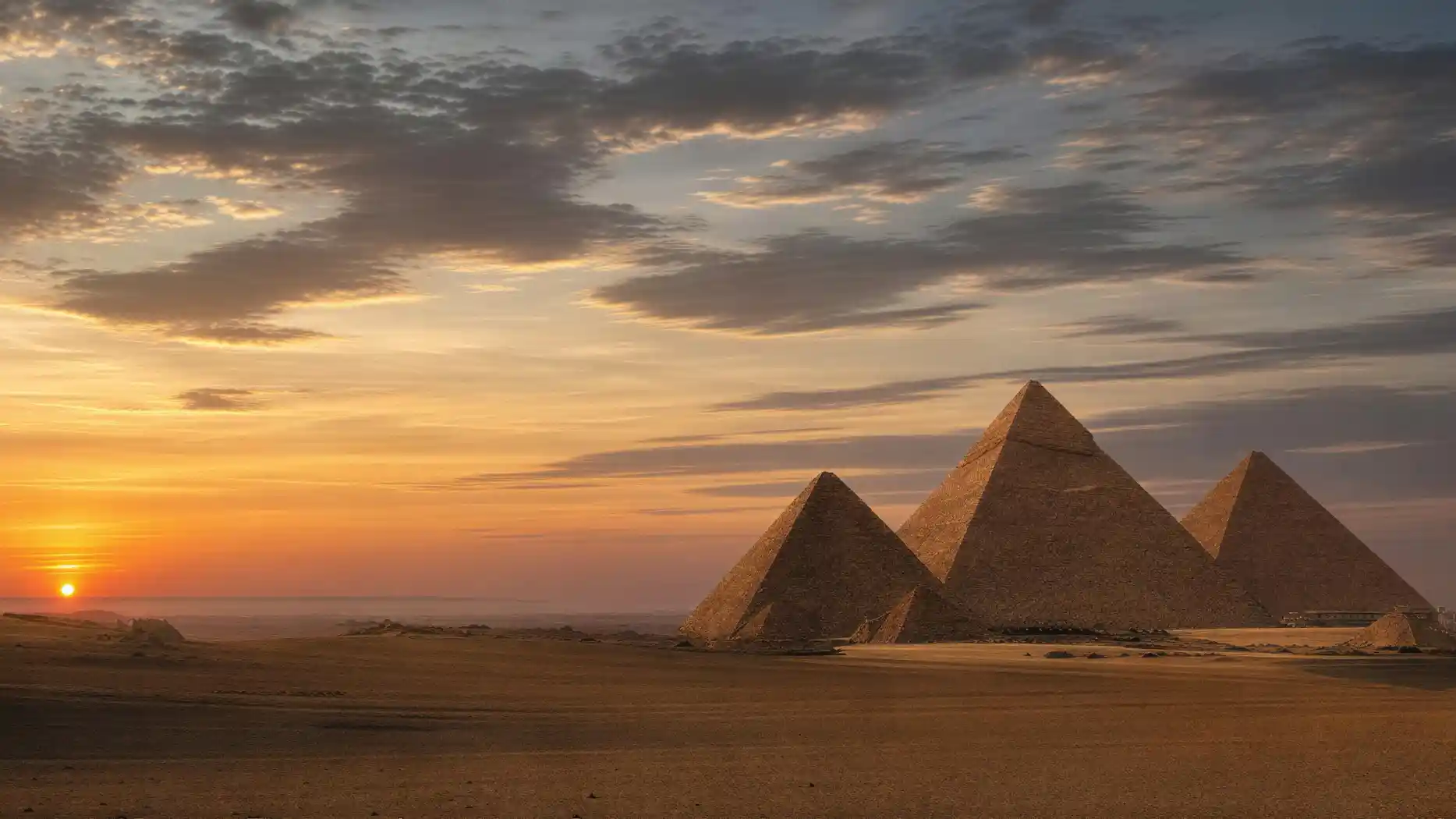
Visiting the Pyramids of Giza with family works well. It only works under three conditions, and those who know them will have an easy morning instead of a difficult one.
The first condition is the time. The second is water. The third is giving up what adults consider the highlight, namely going inside a pyramid.
Basically, the situation for families has improved significantly in recent years, for a reason that is not in any family guide: since the renovation, an electric shuttle bus runs on the site, and its use is included in the entrance fee. Previously, a visit meant a two-kilometer walk over soft sand without shade, and that is exactly why family visits used to fail. Today, the long part is a bus ride.
The second gain is less visible. Because private vehicles are no longer allowed on the site, the traffic between the buildings has disappeared. Where buses, taxis, and carriages once jostled, people now walk. For parents with a child by the hand, that is the difference between watching out and watching.
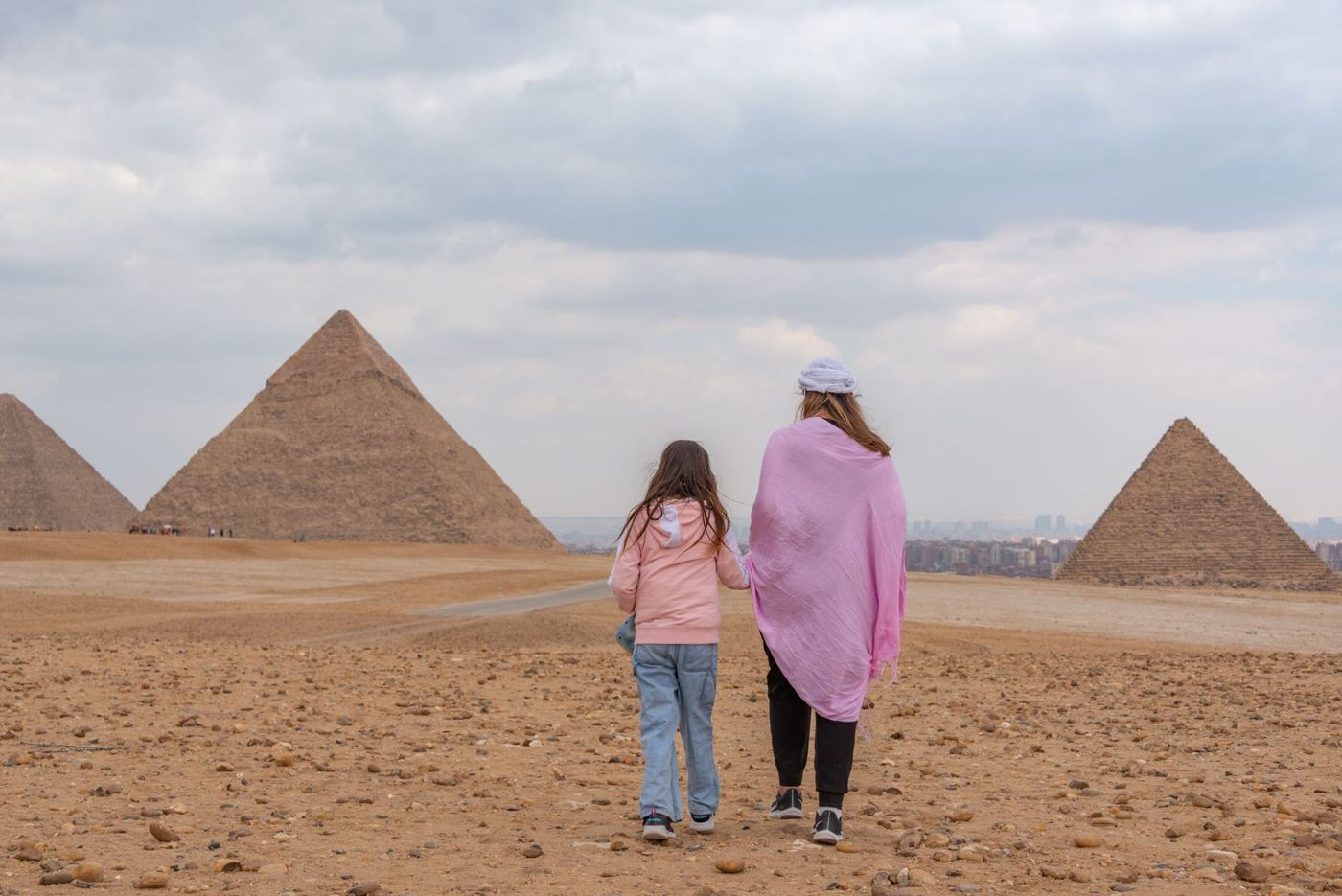
What remains is heat, dust, and the fact that there is nothing here that you may touch except stones. That is less bad than it sounds, because stones of this size are usually enough.
What Makes the Difference for Families
- Paths on the Site
- a good two kilometers, with shuttle included in the entrance fee
- Shade
- practically none between the buildings
- Stroller
- useless on sand, better to use a carrier
- Entrance for Children
- no separate child rate in the official price list
- Interior
- narrow, steep, warm, unsuitable for small children
- Best Time
- the first hour after opening
Come at Opening Time
The first condition comes first, because everything else depends on it. Come at opening time, not later.
That applies to adults too, but doubly to children. The reason is not the crowds, but the heat: small bodies heat up faster, cool down slower, and get thirsty sooner than necessary. Between eight and ten o'clock on a summer day, there is a noticeable difference, and at noon, on open sand with children, it is simply over.
As for water: there are no drinking fountains on the site, but you may bring your own drinks. Be generous, more than you would pack for yourself, and let children drink at intervals, without waiting for thirst. A hat with a brim is more important than any other equipment, because the bright sand reflects the sun from below.
As for dust: fine sand is everywhere, and it reliably finds eyes and airways. In windy weather, especially in spring, a light cloth over mouth and nose is not a luxury, and for sensitive eyes, sunglasses help. Contact lenses and desert dust do not go well together.
And a word about strollers: they are useful on paved paths and useless in sand. If you have a small child, a carrier is much better, especially since the distances between the stop and the monument are short.
Private Tour at Your Own Pace
- With children, your own pace makes all the difference: breaks when needed, and stop when it is enough
- Seven hours, private, with German-speaking guide and hotel pickup
- Entrance to the site and lunch included
- Free cancellation up to 24 hours before, which rarely hurts with children
A Family Morning That Works
- Be at the Gate Before Opening
At the main entrance in the southwest, with your ticket on your phone. The security check is quick then, and you start in the coolest hour.
- Take the Shuttle to the Viewpoint
First stop, all three monuments in view. Get the overview first, so children understand what they are looking at.
- Look at One Pyramid from Below
Walk to the foot and let children touch the stone blocks. A single block reaches many children up to the chest, and that is what stays with them.
- Ride Instead of Walk
The shuttle covers the long distances. Save the children's energy for the short walks where there is something to see.
- End at the Sphinx
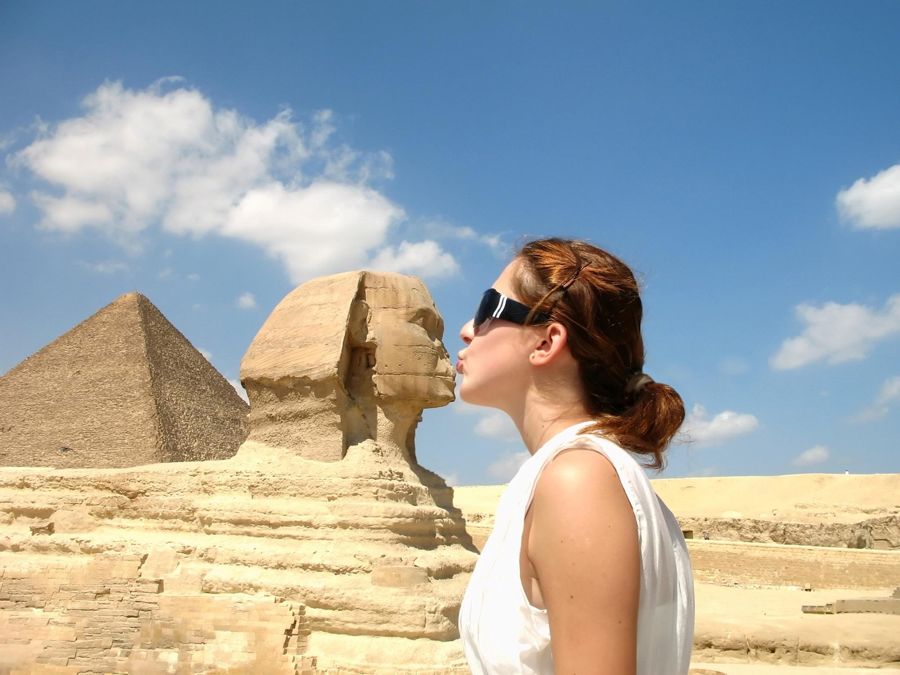
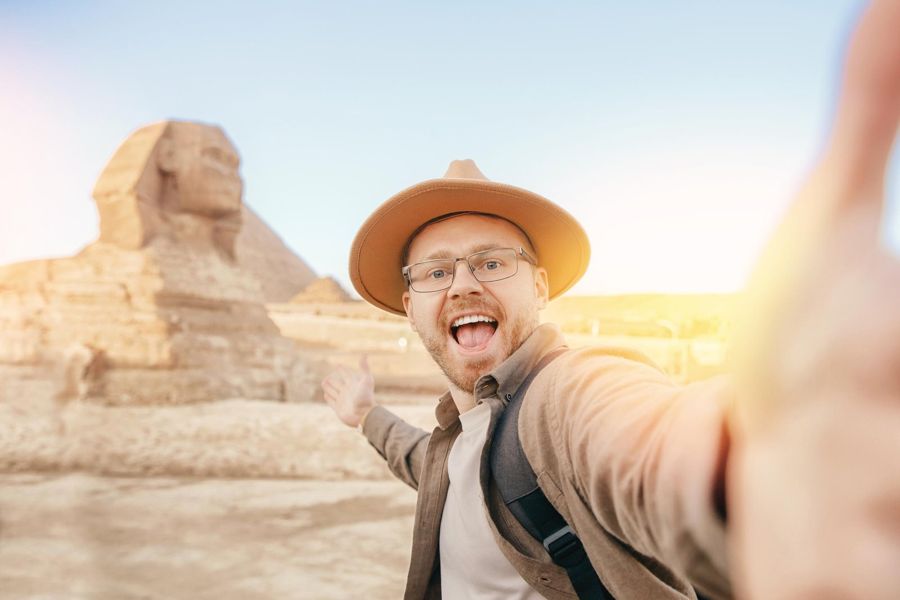
From the terrace, with the pyramid behind it. A creature with a lion's body and a human head explains itself to children.
- Stop After Two and a Half to Three Hours
Stop before exhaustion, not after. The rest of the site will not run away, and a second morning is better than a long, strained afternoon.
What Children Pay at the Entrance
That leaves the question of entrance fees for children, and here the honest answer is a shrug.
The official price list of the Ministry for the site has exactly four categories: Egyptian adults, Egyptian students, foreign adults, foreign students. There is no child category, and the site overview also only mentions adult and student rates. The often-repeated rule on the internet that under six is free and up to twelve half price could not be found in any official source.
In practice, this means: ask at the ticket office, and plan for the full price just in case. No one will be disappointed if they are pleasantly surprised.
For students, the matter is clearer and relevant for families with older children: the reduced rate is about half, but it requires an international student ID. A German school ID is not reliably accepted, according to circulating reports.
A second rule appears in searches and regularly scares parents: in 2022, the ministry announced banning entry for those under 16 to the pyramid area on Fridays, Saturdays, and public holidays. The crucial clause is in the same report: except for those with ID and those accompanied by a guardian. For a child with their parents, the rule changes nothing. Whether it is still enforced is unclear.
Skip the Interior
Now to the third condition, and it is the one where most people get stuck. If you want to visit the Pyramids of Giza with children, you should skip the interior.
The way in leads through a low, steep passage where you walk bent over for long stretches. It is warm, stuffy, narrow, and loud, with no way to turn back and no exit halfway. At the end, you stand in an empty stone room. For adults interested in construction techniques, that is an experience. For an eight-year-old, it is a long, unpleasant walk to an empty room, and for a younger child, it can be frightening.
Add the price. The interior costs many times the site entrance, per person, and tickets are limited.
What actually captivates children at this place is something else, and it costs nothing. First, the size of the individual blocks, which they are allowed to touch. Second, the Sphinx, because a hybrid of lion and human needs no explanation. Third, the sand itself, which is available in abundance. And fourth, surprisingly reliably, the electric bus.
One last note that often surprises parents: this place tolerates boredom poorly, but time well. Children who are allowed to sit in the sand for twenty minutes and sort stones will take more from such a morning than children who are led to the next sight every twenty minutes. The place is old enough not to wait for anyone, and a morning with three stops and breaks beats one with six.
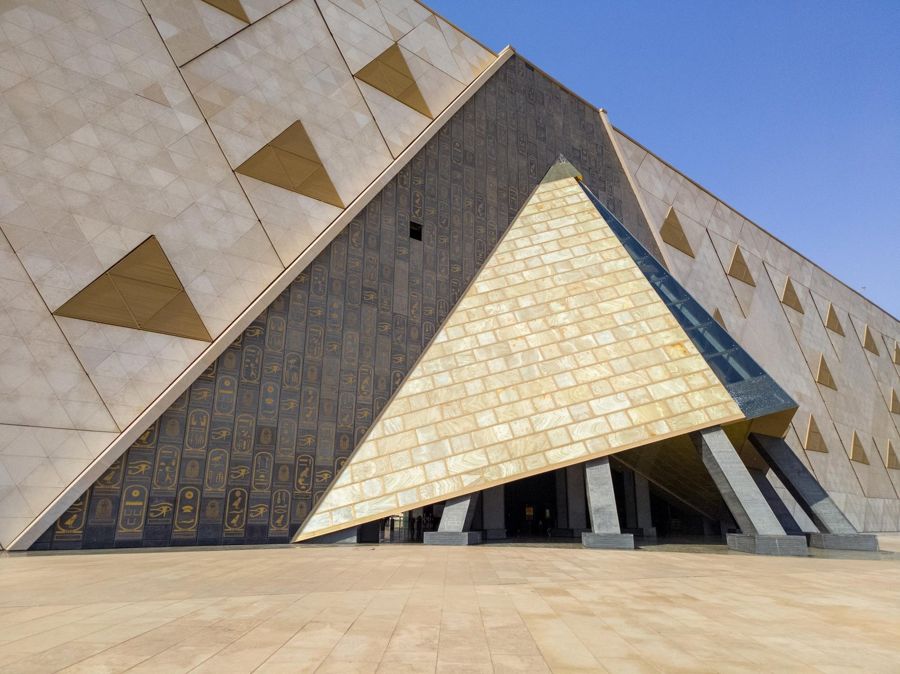
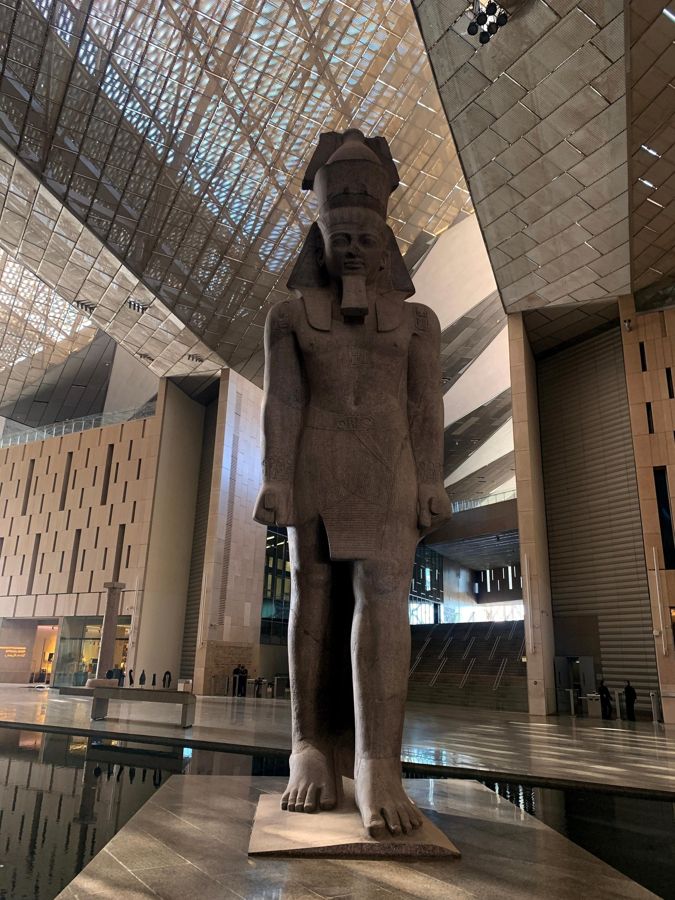
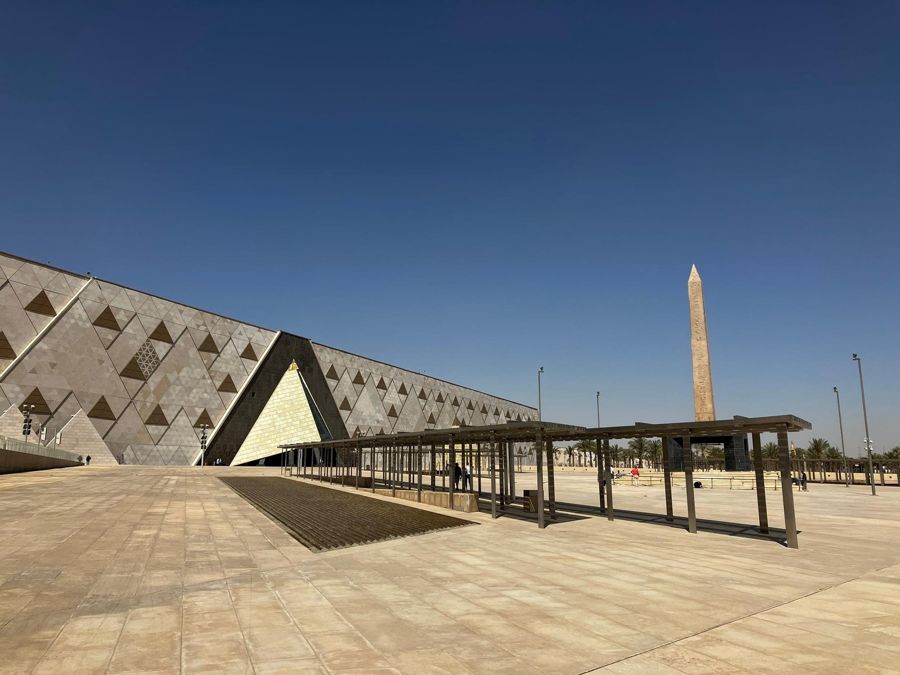
And an alternative that is worth a lot in summer: two kilometers northwest stands the Grand Egyptian Museum, air-conditioned and step-free. If you notice in the morning that it is no longer bearable outside, you have an afternoon there that works without sun and, according to experience, better with children than another hour on the site.
What you should not book, because children will ask about it: the camel or horse ride. There is a separate page about the conditions for the animals, and the decision is one of the few at this place that you should make beforehand, not in the crowd.
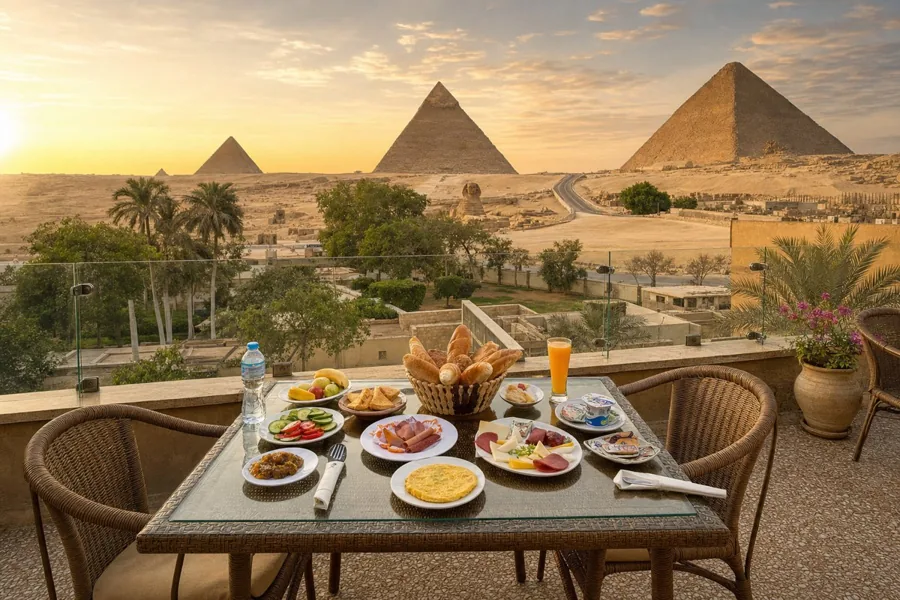
Accommodation within walking distance of the site. With children, the short journey pays off doubly: early at the gate without a car ride in the dark, and a room you can return to at midday instead of pushing through the afternoon. Three houses that cover this:
 At the Sphinx
Giza Pyramids View Inn
- Good breakfast
- Airport shuttle
- Two restaurants
- 24-hour reception
- Free Wi-Fi
For those who want to see the Sphinx from their breakfast chair
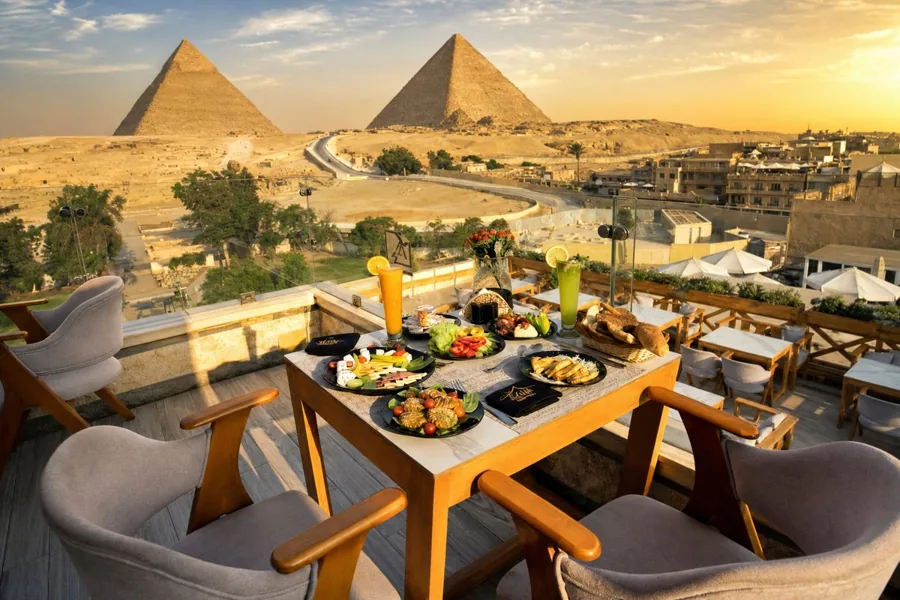 Most reviewed
Great Pyramid Inn
- Fabulous breakfast
- Rooftop terrace restaurant
- Bar
- Airport shuttle
- 24-hour reception
Most who want to stay in the neighborhood
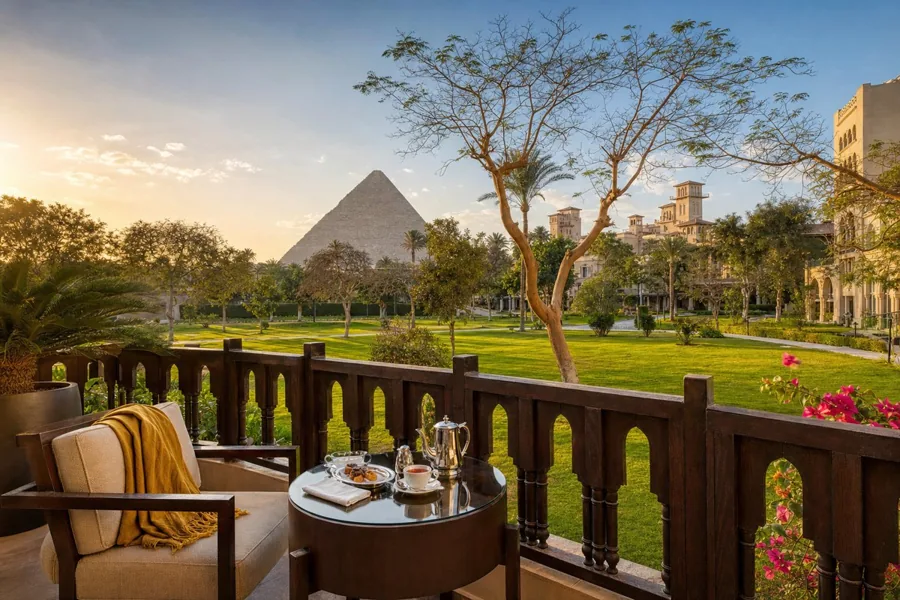 Garden & pool
Marriott Mena House
- Excellent breakfast
- Outdoor pool
- Spa and wellness center
- Three restaurants
- Fitness center
For those who want space, garden, and pool instead of a rooftop terrace
Frequently asked questions
From what age is the visit worthwhile?
From about five to six years, when children can grasp the scale. Younger is possible, but then it is more of a trip to the sand than a monument visit.
Do children pay entrance?
The official price list has no child category. Common claims of free entry under six could not be verified. Ask at the ticket office.
Are children allowed inside a pyramid?
Formally, there is no age limit. But it is rarely sensible: narrow, steep, warm, no turning back, and at the end an empty room.
Does a stroller work?
On paved paths yes, in sand no. A carrier is the better choice.
How long can children last?
Two and a half to three hours in the morning are realistic. After that, enthusiasm fades faster than the heat.
Are there toilets?
Yes, at the gates and near the visitor center. They cost a small fee, paid in cash, and you should bring your own paper.