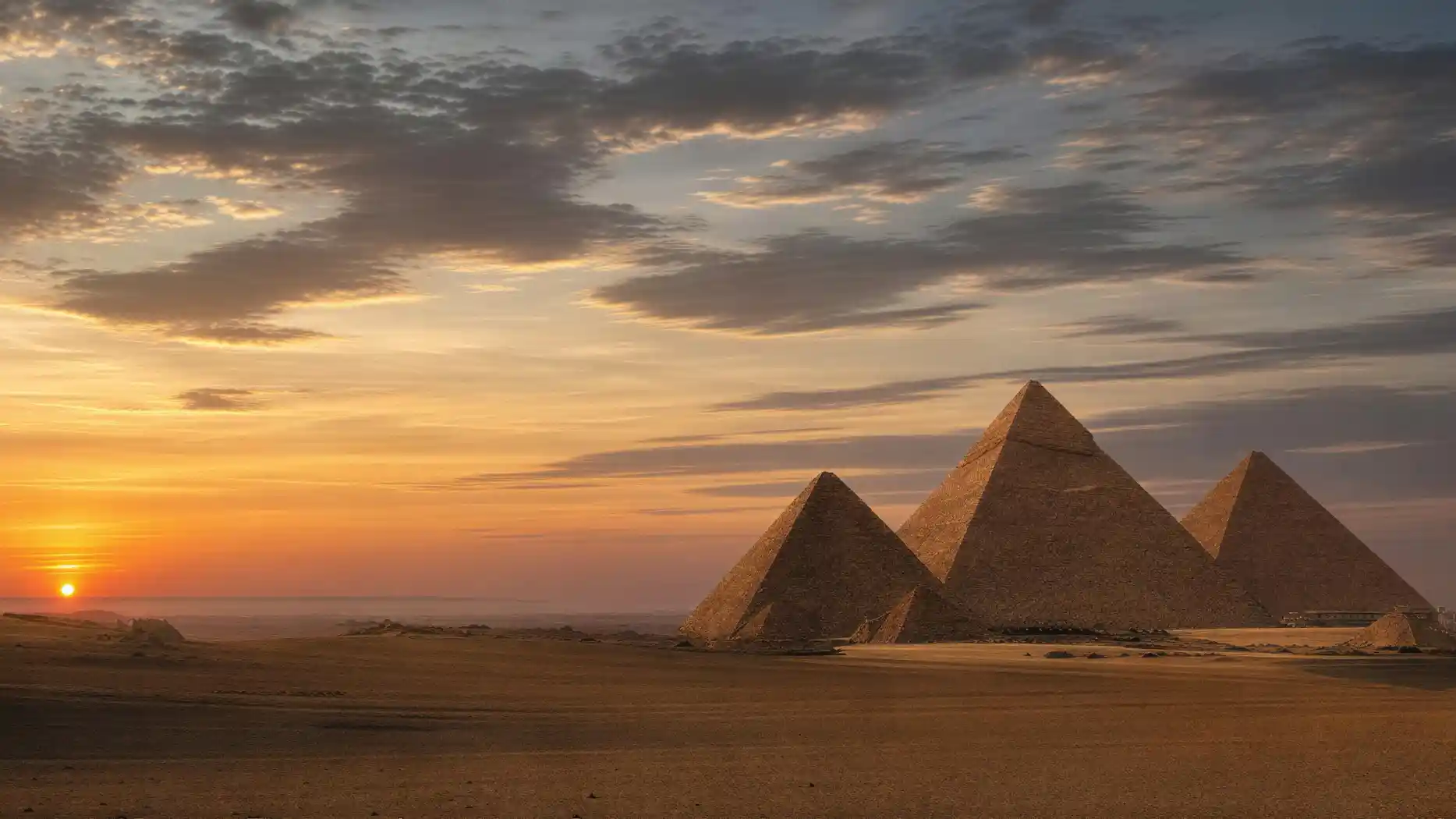
What you can do in Giza can be listed faster than the offer pages suggest. The plateau is an excavation site, not an amusement park, and most of the advertised experiences take place either outside the fence or not at all.
This is not criticism but a useful adjustment of expectations. Those who arrive with the idea of a program are disappointed. Those who know that three or four things carry the day and the rest is incidental will have a very good day.
This page therefore sorts into three categories: what is already included in the entrance fee and thus possible without extra cost, what comes at an additional charge, and what simply does not work. The third category is fuller than most expect, and knowing it saves trouble at the gate.
A word about the source of this list. It does not come from a tour but from what can be verified: the official overview of the site, the verified offer inventory of our partner, and the regulations that apply to the site. Where something could not be verified, it is not listed here.
A preliminary note on the location. Since the reorganization of visitor operations, private vehicles and tour buses are no longer allowed inside the fence. You move on foot and with an electric shuttle, which is included in the entrance fee. Everything with a motor takes place outside.
Already Included in the Site Ticket
- Free access to the site with the three great pyramids, the queen's pyramids, and the burial fields in between.
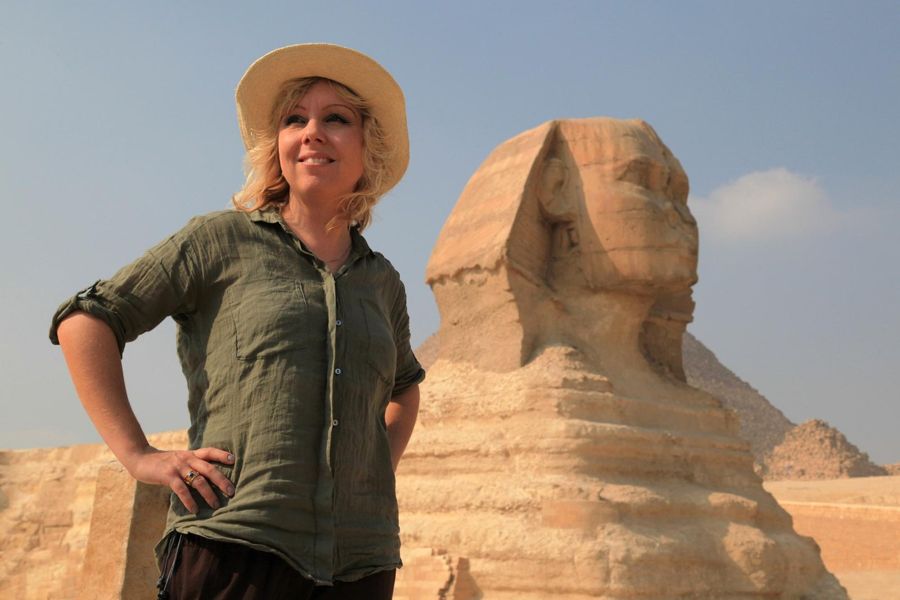
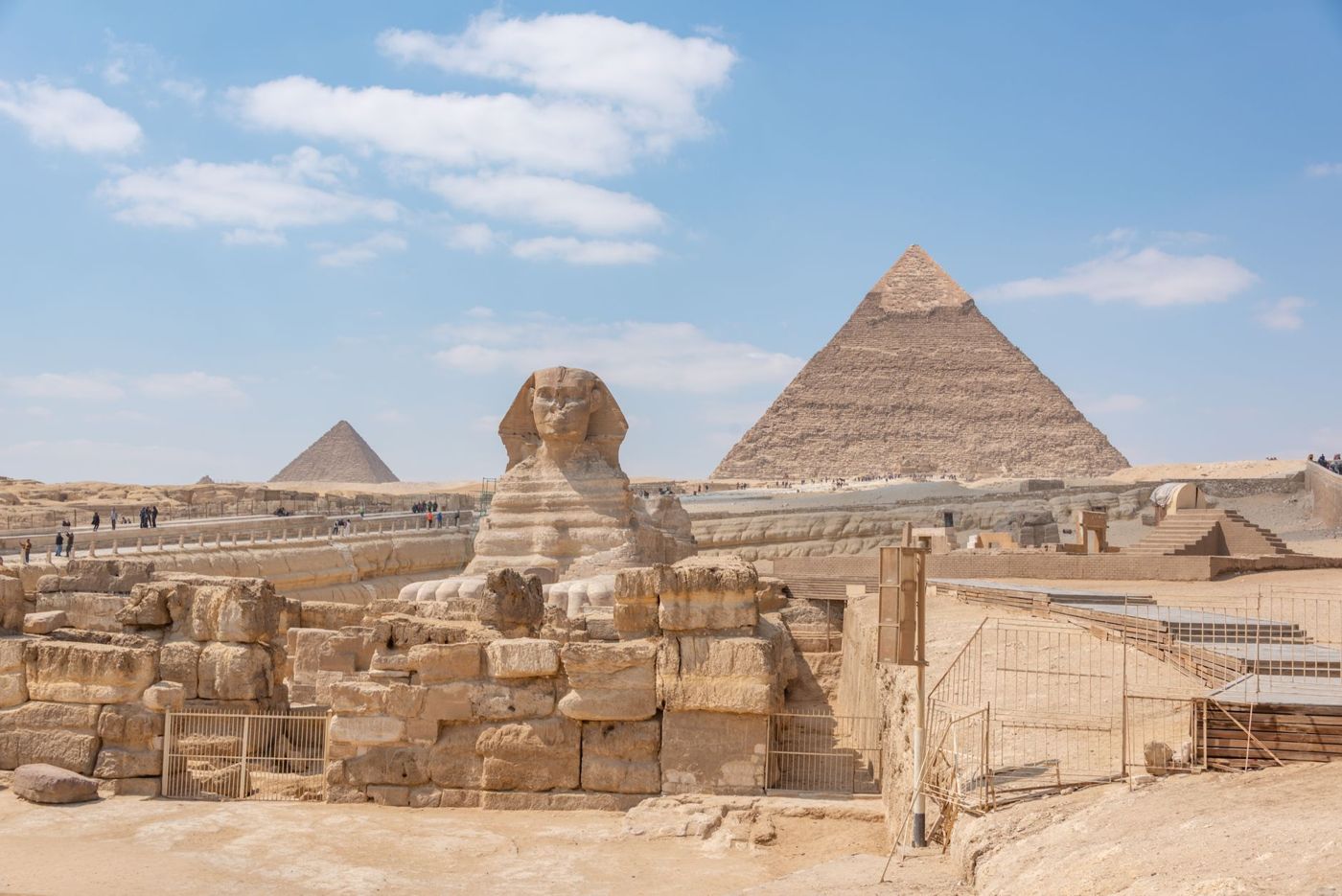
- The Sphinx and the Sphinx Terrace, from which the well-known frontal shots are taken.
- The viewpoint in the southwest, where all three structures stand staggered one behind the other.
- The electric shuttle between the stops, without a separate fare.
- The boat pits next to the largest pyramid, now empty but visible.
- As much time as you want to stay within opening hours.
The Three Best Things Cost Nothing Extra
The most worthwhile activities at the Giza Plateau cost nothing extra. Three of them deserve your time especially.
The first is walking to the foot of the largest pyramid. From a distance it looks like a geometric shape, from two meters like a quarry. The blocks of the lowest layers reach an adult above the hip, the joints are wide, the surface is rough. Exactly this contradiction between the distant image and the close-up is the strongest impression of the whole visit, and it is free.
The second is the viewpoint. It lies in the southwest at the highest point of the access road, and from there the three structures stand staggered one behind the other in the picture. It is the only place where the complex can be grasped as a whole, and it is reachable with the shuttle in a few minutes.
The third is the Sphinx Terrace, for a reason that is rarely mentioned: from there you see the Sphinx and the Pyramid of Khafre in a line. This line of sight is not accidental but part of the original complex, which also included the valley temple and a causeway. That the necropolis is to be read as a coherent ensemble and not as a collection of individual buildings is also the reason why it is listed together with Memphis and the fields up to Dahshur as a single World Heritage site.
A fourth point should be mentioned because it costs nothing and is almost always overlooked: the burial fields between the pyramids. What looks like rubble from a distance are the rows of mastaba tombs of officials and relatives, laid out in a grid like streets. Once you have understood that a whole city of the dead lies here and not three individual buildings, you see the site differently.
Whoever walks only these three points and takes time for them has seen more than someone who books four additional offers in the same time.
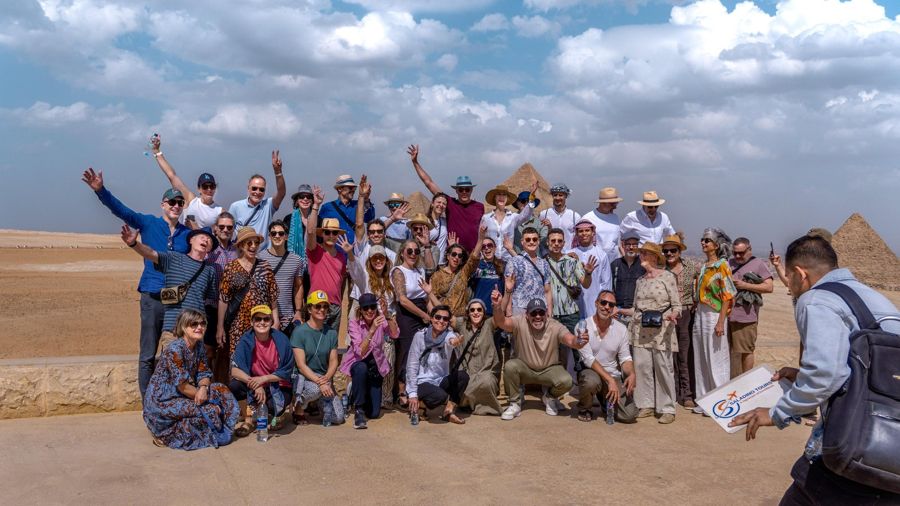
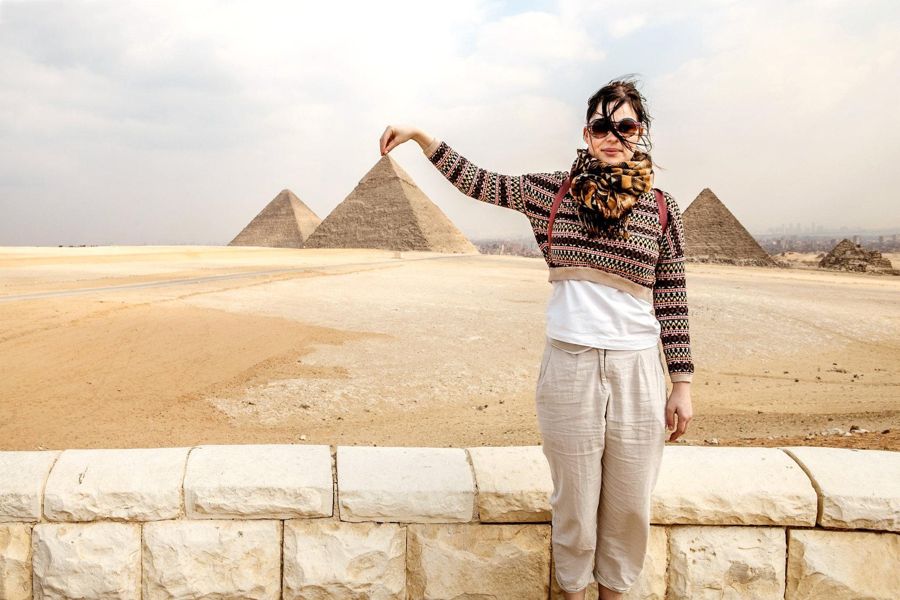
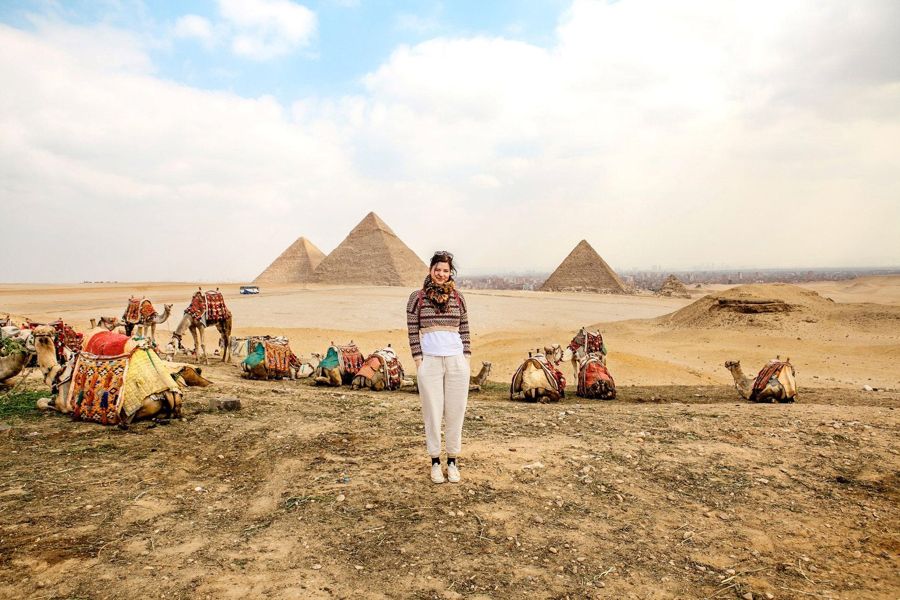
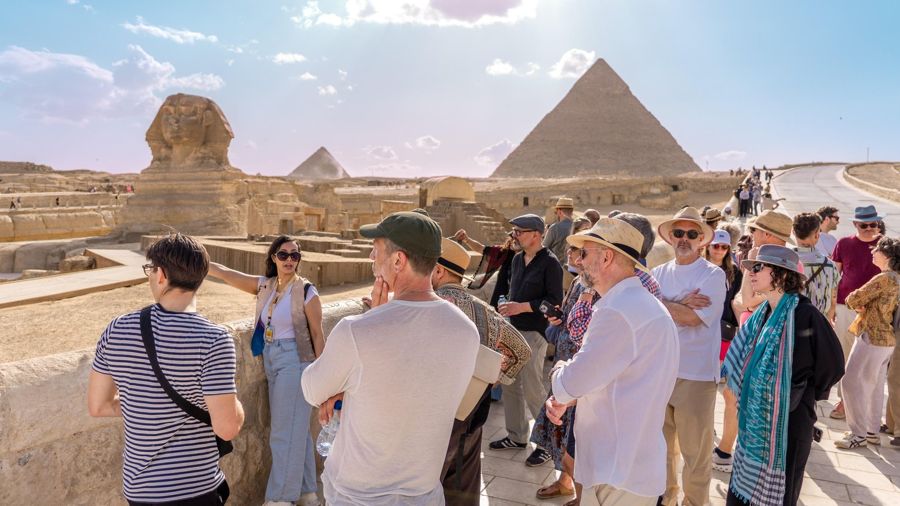
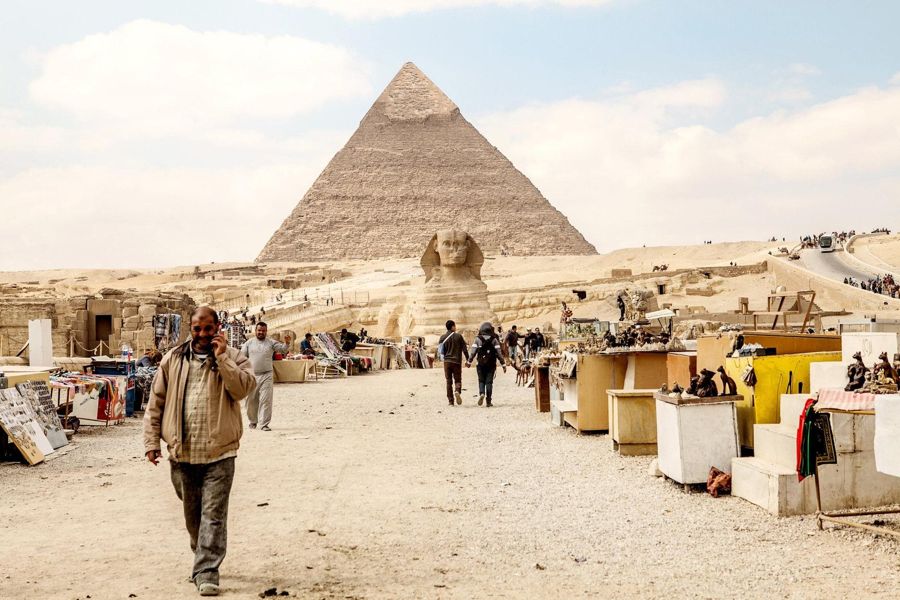
Half-Day Tour to the Plateau and Sphinx
- Four hours, which is enough for the three most worthwhile points
- German-speaking guide, hotel pickup, and preferred entry
- The plateau entrance is included, access to the pyramid interior as an add-on
- Free cancellation up to 24 hours before start
Four Things That Don't Work
Now to the third category, which saves most trouble. Four common ideas cannot be realized at the plateau.
You cannot climb up. Climbing has been prohibited since the 1980s and explicitly punishable since a law change in 2020. Offers that promise something else do not exist legally.
You cannot easily enter a tomb. There are hundreds of mastaba tombs on the plateau, most are closed, and no verified tour offer includes access to them. The one offer with explicitly included tomb access concerns the Serapeum in Saqqara, a different place.
You do not automatically get inside a pyramid. The site ticket explicitly does not cover the interiors; separate tickets are required, and they are almost never included in guided day tours.
You also cannot use a drone, and that is not due to the plateau but to the country. Operating drones is prohibited in Egypt without a permit; the approval must be applied for before entry from the aviation authority, and even importing without papers regularly leads to confiscation. For travelers, this path is practically not feasible.
And you cannot drive onto the site. No rental car, no taxi, no tour bus. The driver drops you off at the gate and waits outside.
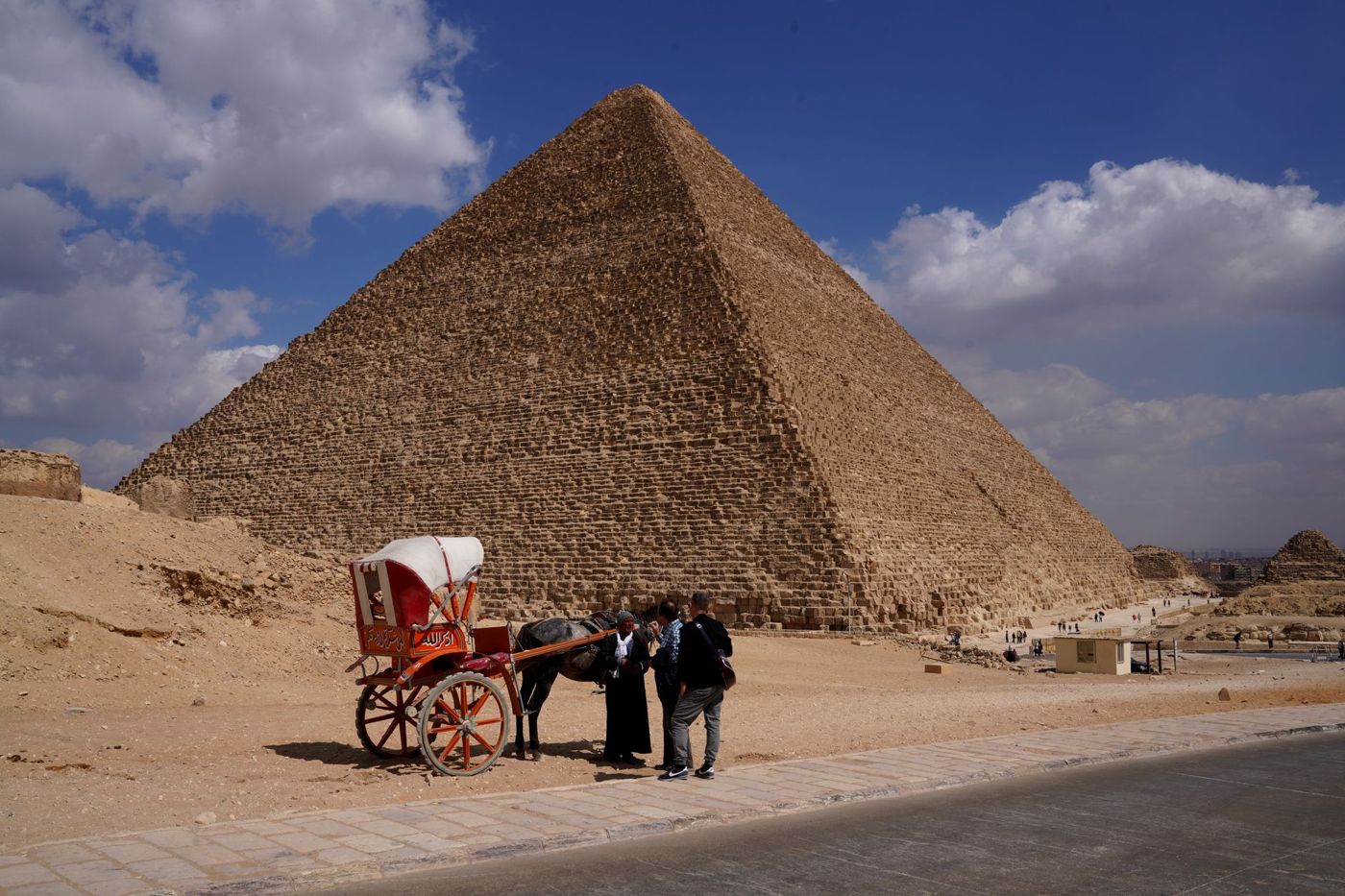
What Goes Beyond Looking
Remains the question: what can you do at the Pyramids of Giza that goes beyond looking? The answer almost always leads outside.
Quad tours take place in the open desert terrain west and south of the fence, not between the structures. Camel and horse rides are offered both inside and at the edge; they come with a series of questions that deserve their own page, which is why they are only mentioned here and not recommended. Riding offers directly at the fence are often aggressively pushed, and the negotiated price is rarely the one paid.
There is also an evening program, but with reservations. The sound and light show has been running for about four decades in essentially unchanged form and is currently being revised. Performances are canceled at short notice, and a reliable date for a new production is not known. As a fixed program point of a short stay, it is therefore not suitable.
For photography, on the other hand, there is an offer that actually takes place on the site and is rarely advertised: the early two hours after opening. They are not a product but a decision, and they change the result more than any equipment. Later in the day the sun is high, the haze increases, and so does the number of people in the picture.
The most content-rich additional offer finally lies not on the plateau but next to it: the Grand Egyptian Museum, open since November 2025. There stands what once lay here, including the solar boat of Khufu, which until 2021 was visible in its own building at the plateau. Whoever wants to see the find site and the finds on the same day has here the shortest connection that exists in Egypt.
Three Offers That Are Different Than Expected
- False
On a quad tour you ride between the pyramids.
Motorized vehicles are not allowed inside the fence. You ride outside, with the structures in the distance.
- False
The sound and light show is a reliable evening program point.
The show is being revised, performances are canceled at short notice. Whoever builds the evening on it plans on uncertain ground.
- False
With a more expensive tour you get to places that are closed to others.
Access and tickets are the same for everyone. What a higher price buys is time, pace, and care, not access.
Entrance ticket for the plateau as a QR code
If you want to walk the three most worthwhile points yourself, you do not need a guide, only the entrance. There is no ticket office at the eastern gate; there the ticket on your phone helps.
Half Day or Full Day?
What is there to see at the pyramids if you have half a day, and what if you have a full day? The answer differs less than you think.
The difference lies not in the number of sights but in whether you enter the site once or twice. Because entry and exit cost time and the path from the gate to the structures is not short, a second attempt on the same day rarely pays off.
A half day is enough for the site. Arrival at opening, foot of the largest pyramid, shuttle to the viewpoint, then down to the Sphinx Terrace, and by noon you are back. That is not a compromise but the form that suits most people best, because the heat from late morning onwards overlays everything else.
A full day is worth it if you add a second stop. Two are sensible: the museum next door, or the trip to Saqqara, where the older step pyramid stands and the development of the building form becomes readable. Both together in one day is possible but tight.
For the itinerary itself, a simple order applies, based on light and crowds. First the site, because it is most pleasant early. Then interiors, if booked, because the corridors are warm anyway and the difference to outside becomes smaller later. Last the museum or second stop, because both are air-conditioned and take the midday hours out of the sun.
What rarely works, on the other hand, is stacking experiences. Plateau in the morning, camel ride at noon, quad tour in the afternoon, and show in the evening results in a day where you have been everywhere and nowhere. Two things thoroughly beat four things fleetingly, and clearly.
Frequently asked questions
How long do you need for the site?
Three to four hours are enough for the three most worthwhile points, without rushing. More time is worthwhile mainly for photography and for walking instead of taking the shuttle.
What costs extra beyond the entrance fee?
The interiors of the pyramids, individual special areas, and all offers outside the fence. The site itself and the shuttle are covered by the site ticket.
Is a guided tour worth it?
For the first visit, usually yes, because otherwise the complex is hard to grasp. If you have prepared, you can manage very well with just the ticket.
Can you go onto the site in the evening?
Only as part of the sound and light show, and that is currently unreliable. The site regularly closes in the late afternoon.
What is the most common planning mistake?
Too many program points in one day. The second mistake is a late start, because heat and group crowds both increase in the morning.