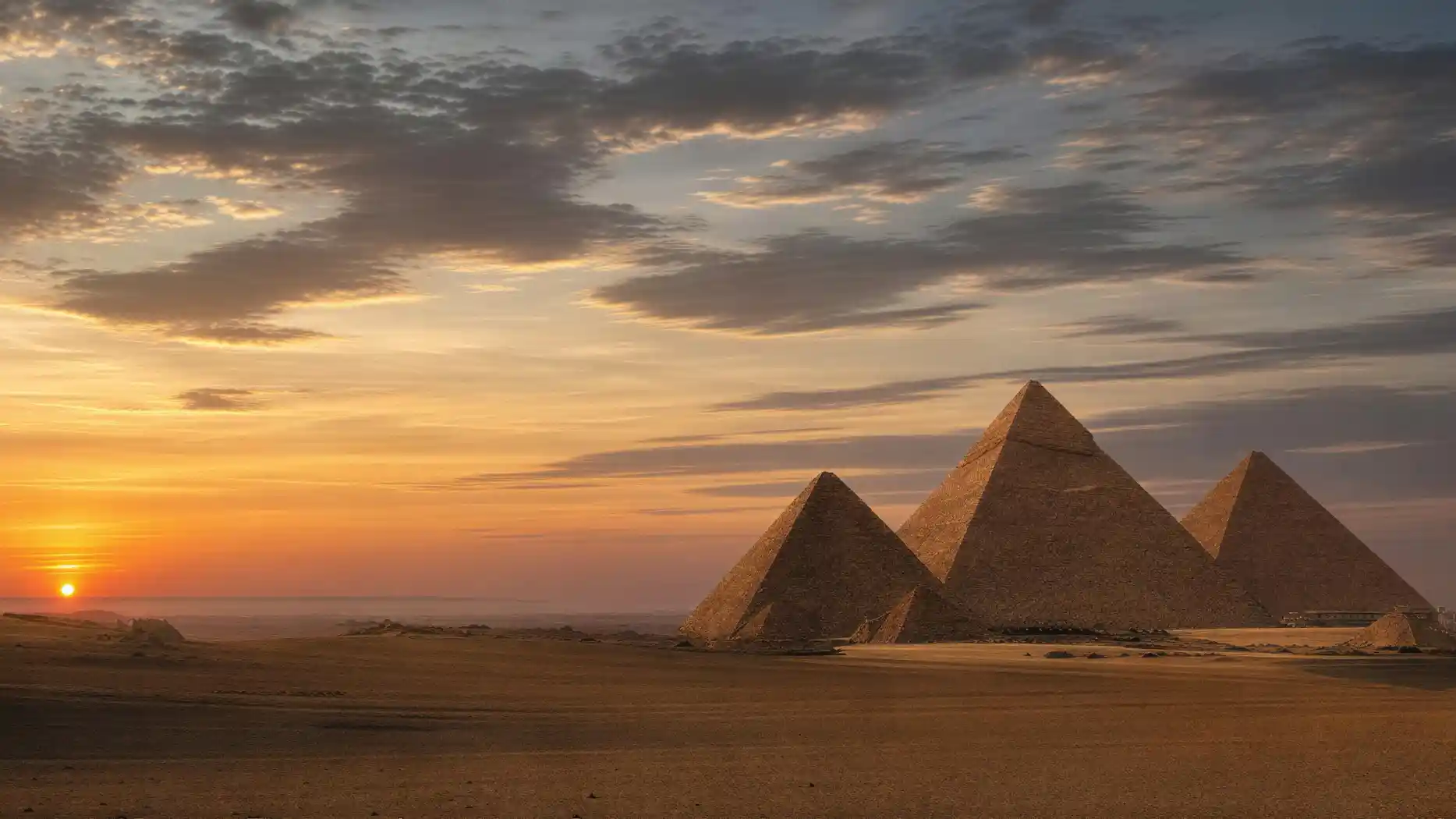
If you remember just one practical detail from all this information, make it this: The main entrance to the Giza Plateau is no longer where it was for decades.
Until recently, you approached from the northeast via Pyramid Road, through a gate right next to the historic hotel at the foot of the site. That gate is now closed as a main entrance. The entrance is now in the southwest, on the desert road to Fayoum, at a newly built visitor center. It's called the Great Gate and has been in operation since 2025.
That sounds like a minor detail, but it's the most significant change at this site in decades. It affects where your driver drops you off, where you buy your ticket, the order in which you see the monuments, and where you exit at the end.
It also affects almost every printed or older description. Travel guides, blog posts, and videos made before 2025 describe an approach that no longer exists and send readers to a gate where they can't get in. That's the most common cause of wasted time at this site, and it's entirely avoidable.
- Where
- Southwest side of the plateau, on the desert road to Fayoum
- Name
- Great Gate, at the newly built visitor center
- In operation since
- 2025
- Old gate at the hotel
- permanently closed as a main entrance
- Sphinx Gate in the east
- still usable, but no ticket office
- Vehicles on the plateau
- no longer allowed, drop-off at the gate
- Continuing up
- electric shuttle, included in the ticket
The new gate is a whole complex
The new gate isn't just a turnstile in a fence—it's a full facility with its own infrastructure, and that's what made the relocation possible in the first place.
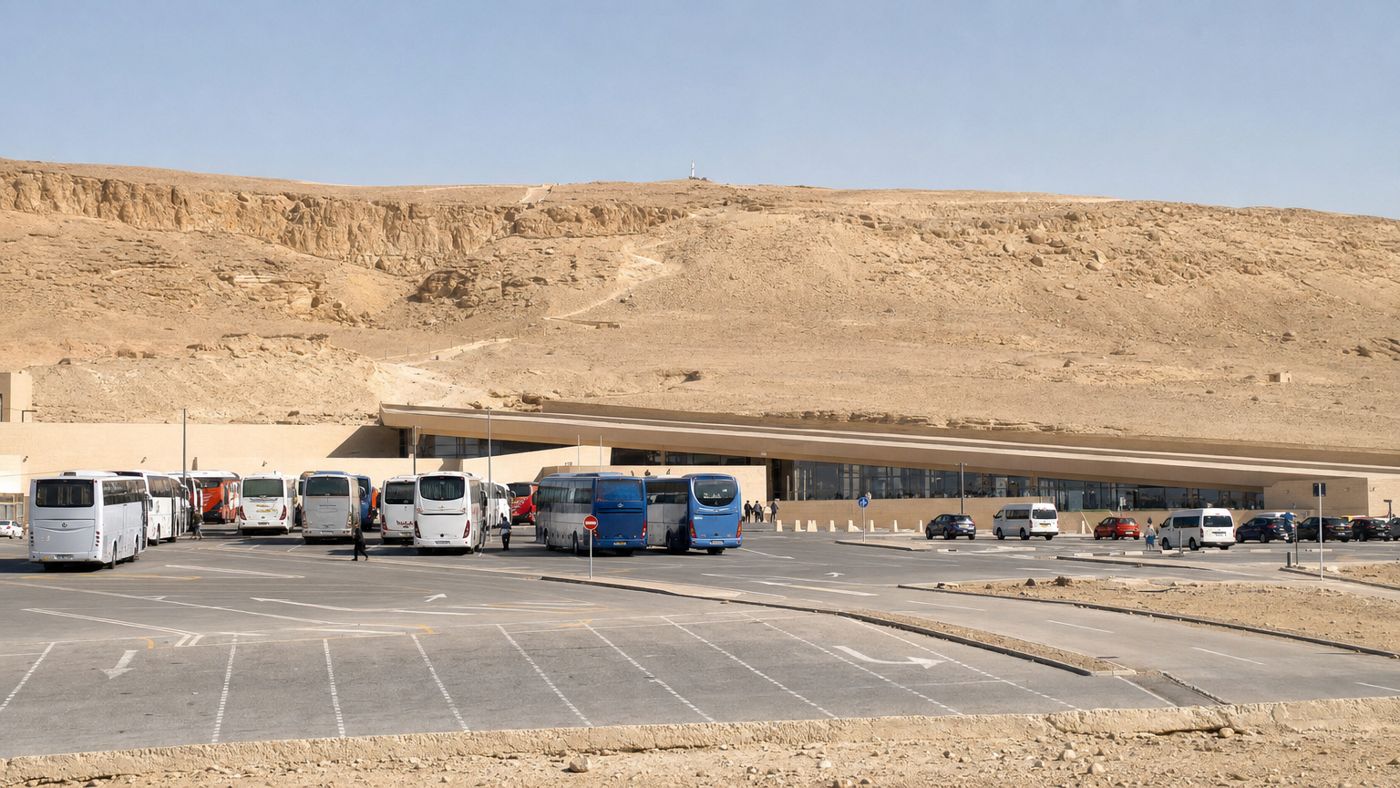
In front of the actual entrance, there are large parking areas designed for over a thousand cars and several hundred tour buses. That was exactly the problem at the old location: the approach ended in a narrow street in the middle of a residential area, where buses, taxis, horse carriages, camel handlers, and local traffic all blocked each other. There was simply no room to build a facility of this size there.
The new location, by contrast, is on the desert side. There's plenty of space, the access road is a highway rather than residential streets, and the entire check-in process happens outside the city. For residents of the neighborhood near the Sphinx, this has also changed a lot, because a significant portion of tourist traffic is now routed around the outside.
The renovation is part of a larger program that has been running since 2025 and has been closely followed by the Egyptian press. It's operated by a private consortium with a long-term concession, while ticket revenues still go to the state.
Private car with driver in Cairo and Giza
- The main entrance is on the desert road in the southwest since 2025, no longer at the old gate in the city center
- Older navigation devices and many drivers still head for the old gate; a local driver knows the current route
- The car waits outside the fence because vehicles are no longer allowed on the site
- Free cancellation, instant confirmation
The gates in comparison
Great Gate, southwest
The main entrance. Visitor center, ticket counters and machines, parking, shuttle start.
- Good for
- Practical for almost all arrivals, whether by private car, taxi, or tour bus.
- Watch out
- From here, it's the full length of the site to the Sphinx. The shuttle takes care of that.
Sphinx Gate, east
Still in operation, right by the residential area and the viewing terrace. No ticket sales.
- Good for
- Anyone staying within walking distance and already has a ticket on their phone.
- Watch out
- Without a pre-purchased ticket, you can't get in here. There's no ticket office.
Old gate at the hotel, northeast
The former main entrance on Pyramid Road, now closed as such.
- Good for
- Nothing anymore. It only appears in older descriptions.
- Watch out
- Drivers who rarely take tourists may still head here out of habit. State the destination explicitly.
Why it was moved: capacity
The reason for the move can be summed up in one word: capacity.
The plateau was never designed for the number of visitors it sees today. The old entrance dated from a time when travelers came individually or in small groups, and over the decades it became increasingly overloaded. In addition, vehicles used to be allowed onto the site, which brought dust, noise, and traffic right into the middle of a World Heritage Site.
The new arrangement solves both problems at once. The check-in process takes place at a purpose-built facility. Vehicles stay down below. And the routes up top are served by an electric ring bus, the use of which is included in the ticket.
The fact that such an intervention is even permissible is related to the site's status. As a World Heritage Site, it is subject to regulations, and major construction projects must be documented and justified. A visitor center on the desert side, outside the sensitive core area, was easier to justify than expanding within the existing urban fabric.
For visitors, what matters most is the result, and it's clear: anyone who was there before and after describes the difference as significant.
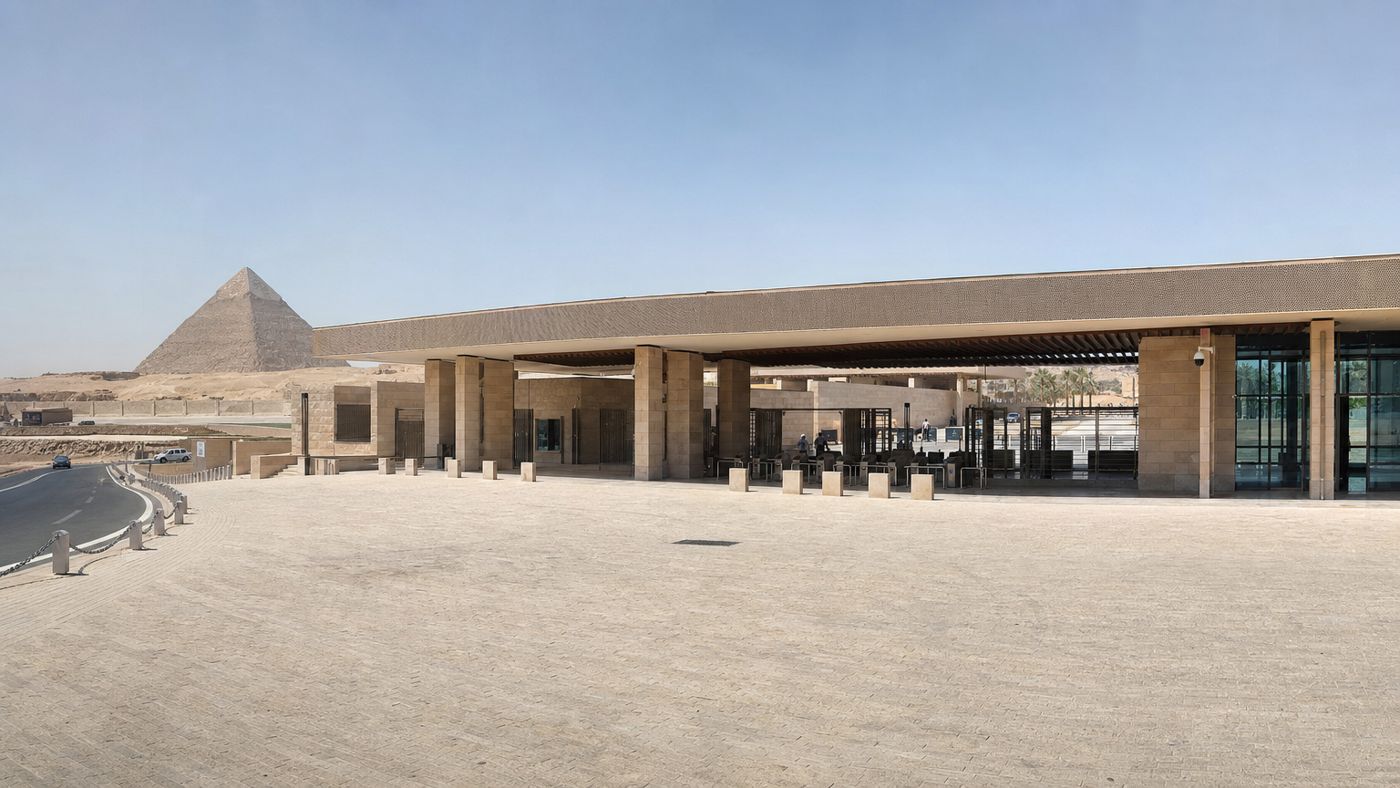
What's at the visitor center
What's actually at the visitor center surprises many who remember the old state of affairs.
There are staffed counters and ticket machines, which helps reduce queues. There are restrooms, lockers, shops, and food outlets. The shuttle departure point is right behind them, so the walk from ticket to bus is short. The facility is wheelchair accessible, which wasn't the case at the old gate.
In addition, there's an exhibition area with replicas, information boards, and films. It's not a substitute for a museum, but it's more useful than you'd expect: if you spend ten minutes there before your tour, you'll understand the layout of the site better and notice more once you're out there.
The lockers are the practically underrated part. Since the basic ticket is only valid for a single entry and large backpacks are cumbersome at the security check and in the narrow interior spaces, the ability to leave your luggage is worth more than it sounds. For travelers with a layover and suitcases, it's even essential.
You can buy tickets here or in advance through the official portal of the Ministry of Antiquities. The site opens around 8 a.m., and the check-in is fastest during the first hour.
The most common pitfall of the new system
That leaves the eastern gate, and that's where the most common pitfall of the new system lies.
The Sphinx Gate is still in operation. It's located in the residential area, right next to the viewing terrace, and for anyone staying within walking distance, it's the closest entrance. However, it has no ticket office. If you arrive there without a ticket, you can't get in and have to walk all the way around the site to the main entrance.
This situation has an unpleasant side effect. It provides a pretext for an offer that works particularly well right there: a ride to the supposedly correct entrance, sold by someone who happens to be standing nearby. The fact that the story has a kernel of truth makes it more effective than before.
The precaution is trivial and completely effective. Buy your ticket in advance, digitally, and set the destination in your navigation device yourself to the gate you want to use. Then any information from the roadside is irrelevant.
And one more tip that isn't on any sign: The shuttle stop at the Sphinx is next to the eastern exit. If you get off there and walk in the wrong direction, you've left the site and can't get back in with the same ticket.
Plateau entry as a QR code on your phone
Exactly the case for which the eastern gate has no ticket counter. Get the code in advance, then any gate is usable.
Frequently asked questions
Can you still enter at the old gate by the hotel?
Not as a main entrance. The access has been moved to the new visitor center in the southwest. Older travel guides still describe this route.
What do I tell my driver?
Name the gate explicitly, not just the pyramids. Set the destination yourself, because drivers unfamiliar with the area often head for the old gate out of habit.
Can my car go up to the site?
No. Private vehicles and tour buses stay below. An electric shuttle runs up top, and its use is included in the ticket.
Do I need a ticket in advance at the Sphinx Gate?
Yes, there's no ticket sales there. Without a ticket on your phone, you can't get in at that gate.
There's one aspect of this relocation that goes beyond logistics and that stands out once you've noticed it.
Until 2025, you approached from the city. You drove through Giza, through increasingly narrow streets, past residential buildings, and then suddenly stood in front of a pyramid. The transition was abrupt and a bit absurd, and many travel accounts describe exactly that moment.
Today, you come from the desert side. The approach is via a highway through open terrain, and the first thing you see isn't the city but the plateau. From the panoramic viewpoint, which is the first stop, you then look back at the site with the city behind it.
Both are valid ways to approach this place, but they tell different stories. The old route emphasized that the pyramids stand in the middle of a metropolis. The new one emphasizes that they lie at the edge of the desert.
Practically, this means for your visit: expect that anything you've read about the arrival might be outdated, and check this one detail shortly before your trip. It's the piece of information about this site that has changed the most recently.
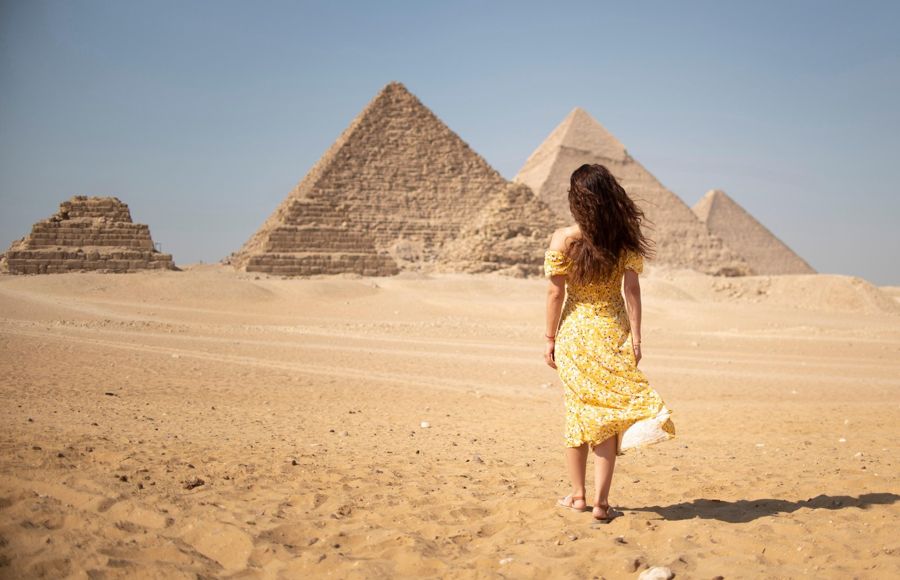
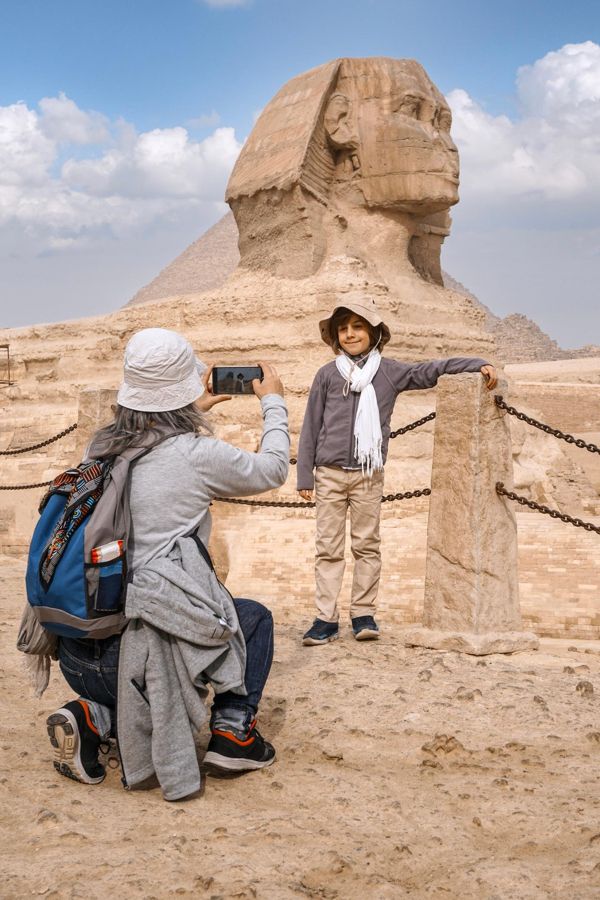
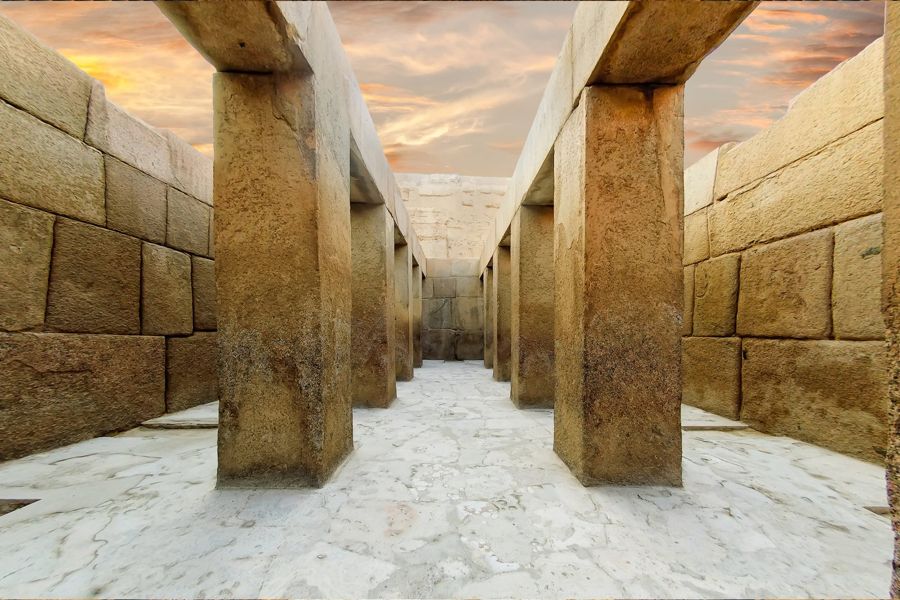
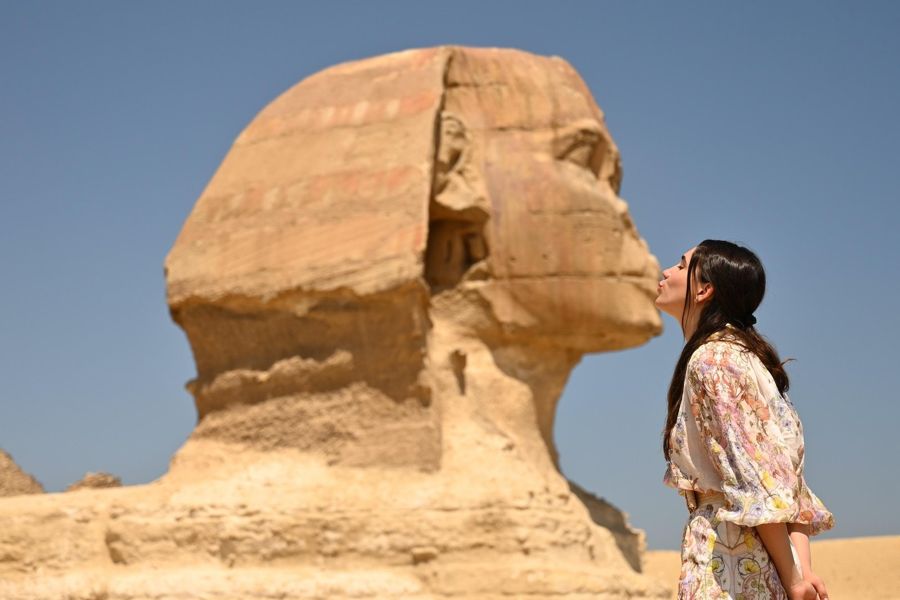
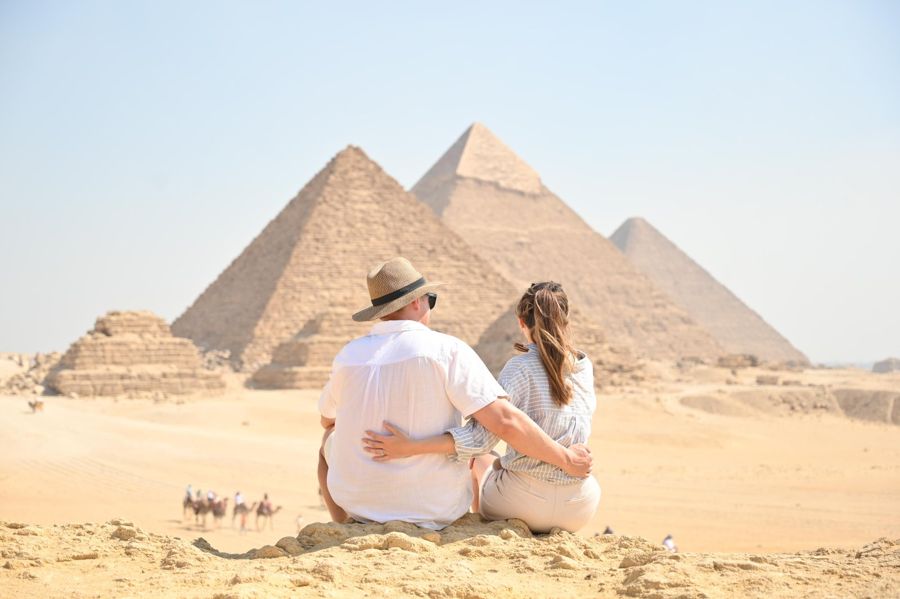
Half-day tour to the Pyramids of Giza and the Sphinx
- Hotel pickup, so the question of the right gate never even arises
- The driver knows the current access route and drop-off points
- Plateau entry and German-speaking guide included
- Free cancellation up to 24 hours before