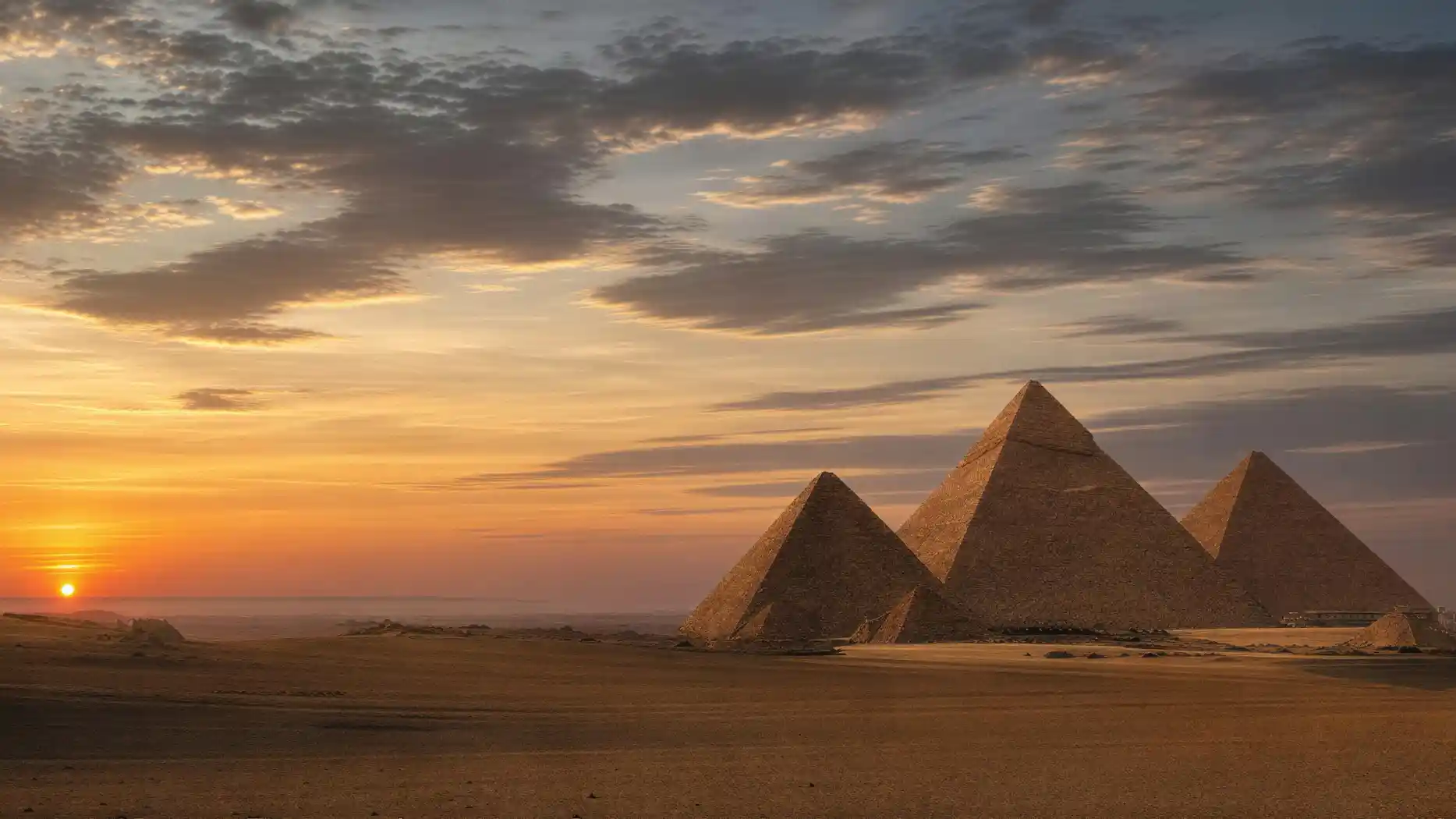
Few places generate as many headlines with so few finds. Anyone looking for news about the Pyramids of Giza will find reports within minutes about hidden cities, sealed doors, and dating that is supposed to overturn everything. Most of them do not stand up to simple scrutiny.
This scrutiny consists of a single question: Has it been published? This does not mean a press conference or a preprint, but a paper in a peer-reviewed journal where methods, data, and margins of error are disclosed and can be verified by experts.
This scrutiny is not a seal of approval, nor is it intended to be. A peer-reviewed paper can turn out to be wrong, and that is exactly what has just happened in this field. Conversely, an unpublished observation can be correct. Peer review only says that someone with expertise has checked the method and found no obvious errors, and that the data and calculations are transparent. That is not much, but it is more than any press conference offers, and it is the only standard a layperson without specialized knowledge can apply.
By this standard, reports from recent years can be sorted into three levels. At the first level are peer-reviewed findings, and there are fewer of these than one might think, but they are remarkable. At the second level are announcements that may become findings but are as yet unpublished. At the third level are claims whose basis has been examined and found to be untenable, in one case leading to a formal retraction.
This page classifies the well-known reports into these three levels and concludes with the news that actually matters for a visit. Because those who search for news often do not want to know about cavities at all, but simply want to find out what has changed at the site.
First Level: The Actual Finds
Let's start with the first level. There are indeed new finds at the Pyramids of Giza, and the most recent one concerns not the largest structure but the smallest.
In November 2025, a team from Cairo University and the Technical University of Munich published a study of the Pyramid of Menkaure in a journal for non-destructive testing methods. Using ground-penetrating radar, ultrasound, and electrical resistivity tomography, the researchers found two air-filled cavities behind the granite-clad eastern side, just over a meter below the surface. Both are small, around one meter in height.
What is interesting is not the size but the location. The eastern side of this pyramid features a striking granite section whose purpose has long been a mystery, and experts consider it plausible that the cavities are connected to a second, as-yet-unknown entrance. This is not proven, but it is a well-founded hypothesis from a peer-reviewed series of measurements, which is different from a press release.
Why this particular spot was examined has a long backstory. The lower courses of the smallest pyramid are clad in granite, and on the eastern side this cladding is conspicuously worked, without the purpose having been explained so far. A second entrance would be a possible answer, because the entrances to the two larger structures are each on the north side, and a deviation from this would require explanation. This is precisely why the finding is more interesting to experts than its dimensions suggest.
At the same level are two older findings from the largest pyramid: a large void above the Grand Gallery, published in 2017, and a corridor confirmed in 2025 behind the chevrons on the north side, confirmed by three independent methods. Both are covered in detail on a separate page. What all three have in common is that they were found using measurement technology without moving a single stone, and that their interpretation remains open.
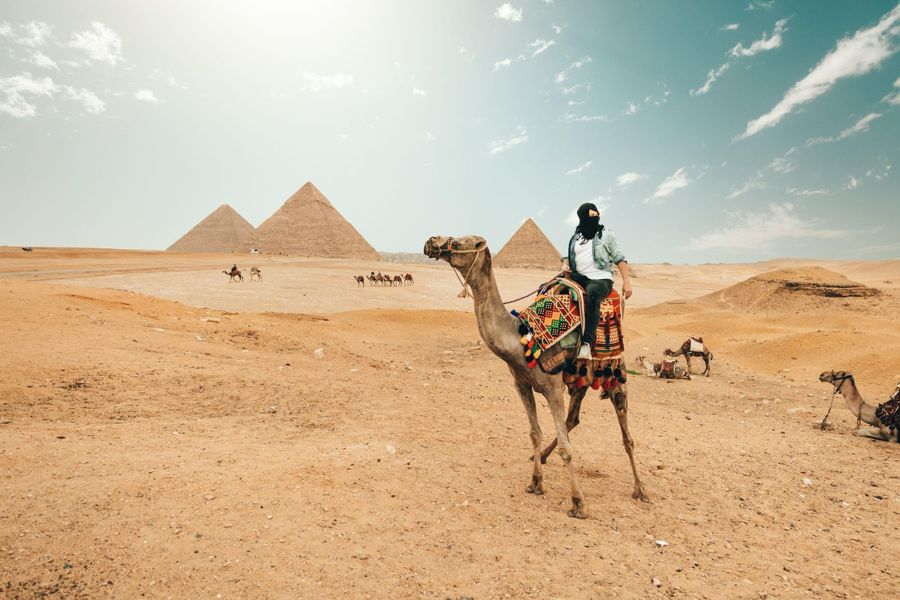
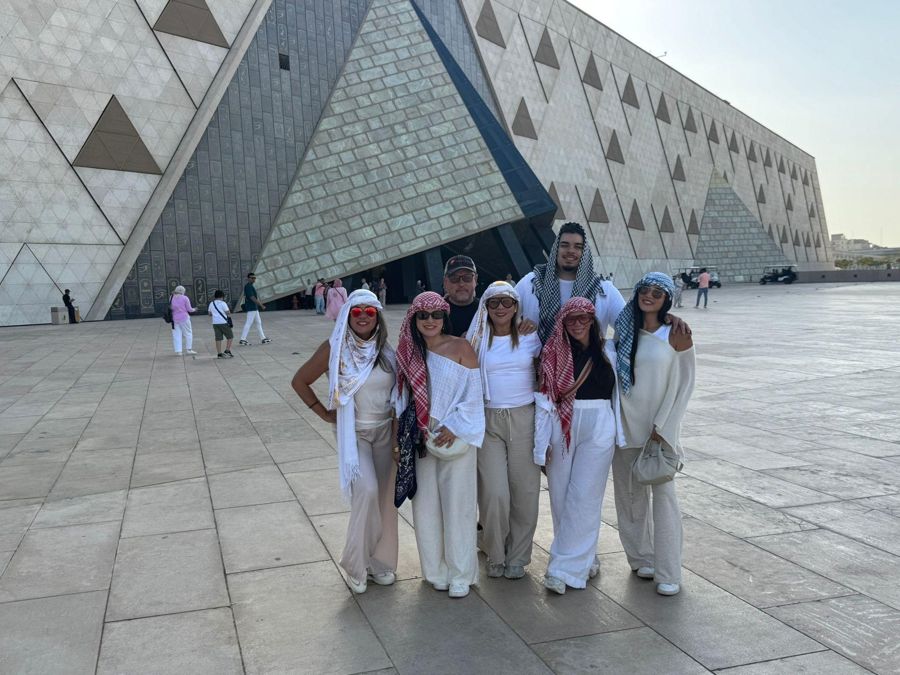
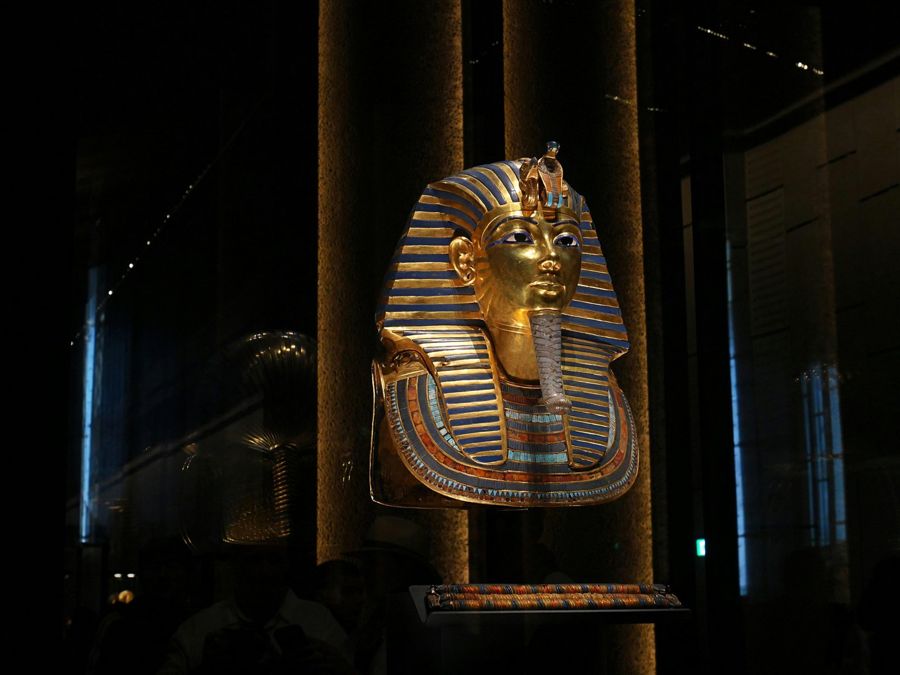
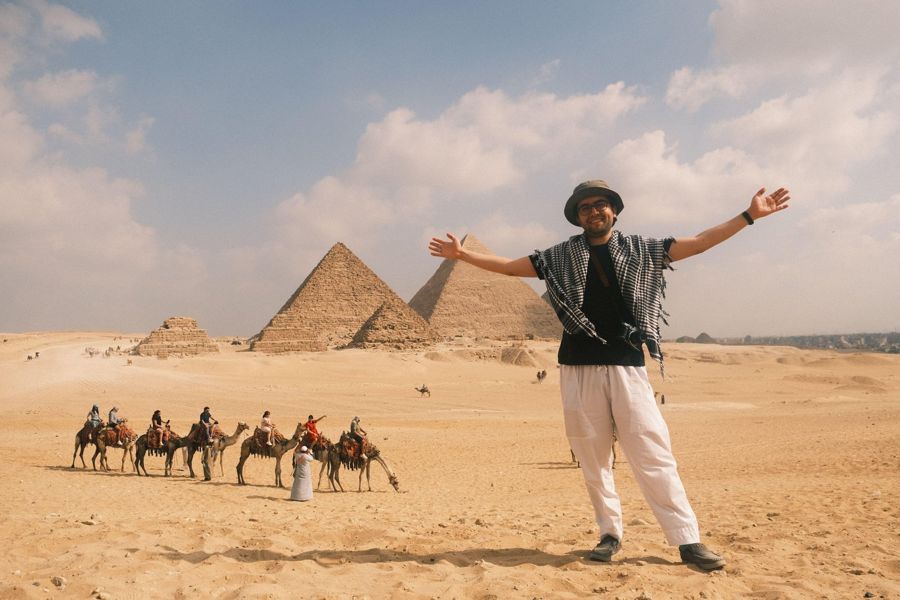
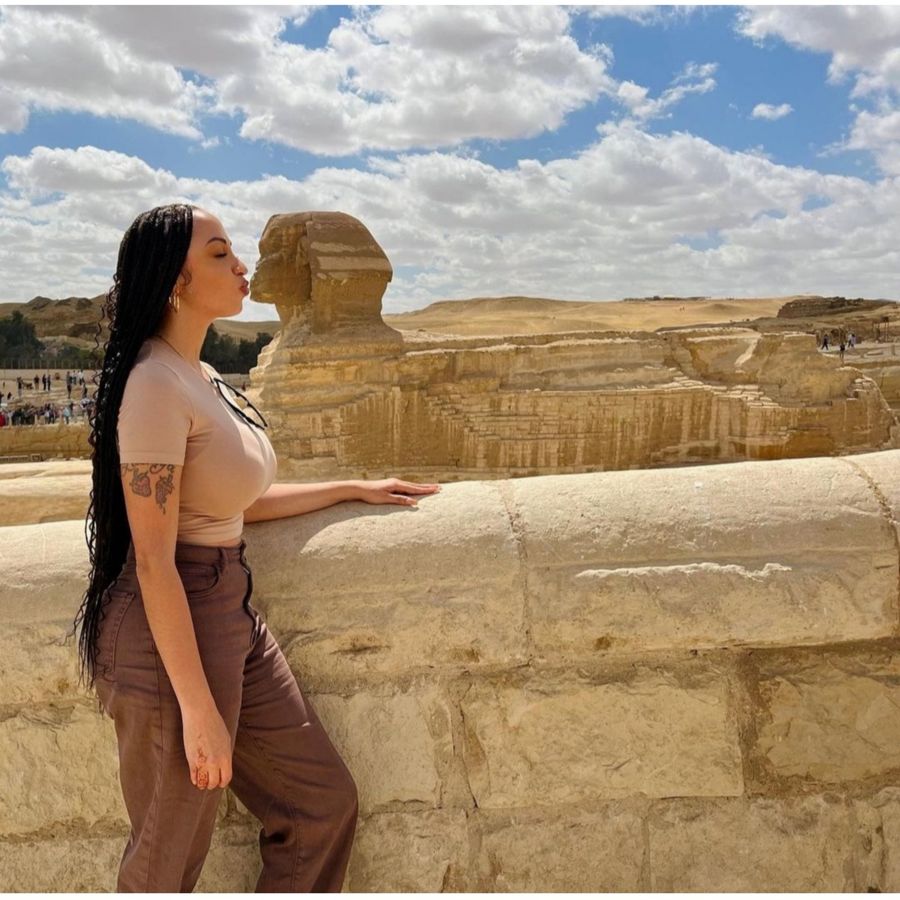
Guided day at the site and the Grand Egyptian Museum
- The finds themselves are now mostly in the museum next door, no longer at the site
- German-speaking guide, hotel pickup, and lunch included as per the provider's description
- Access to the interior of the pyramids is expressly not included in this offer
- Four to eight hours, depending on the option chosen
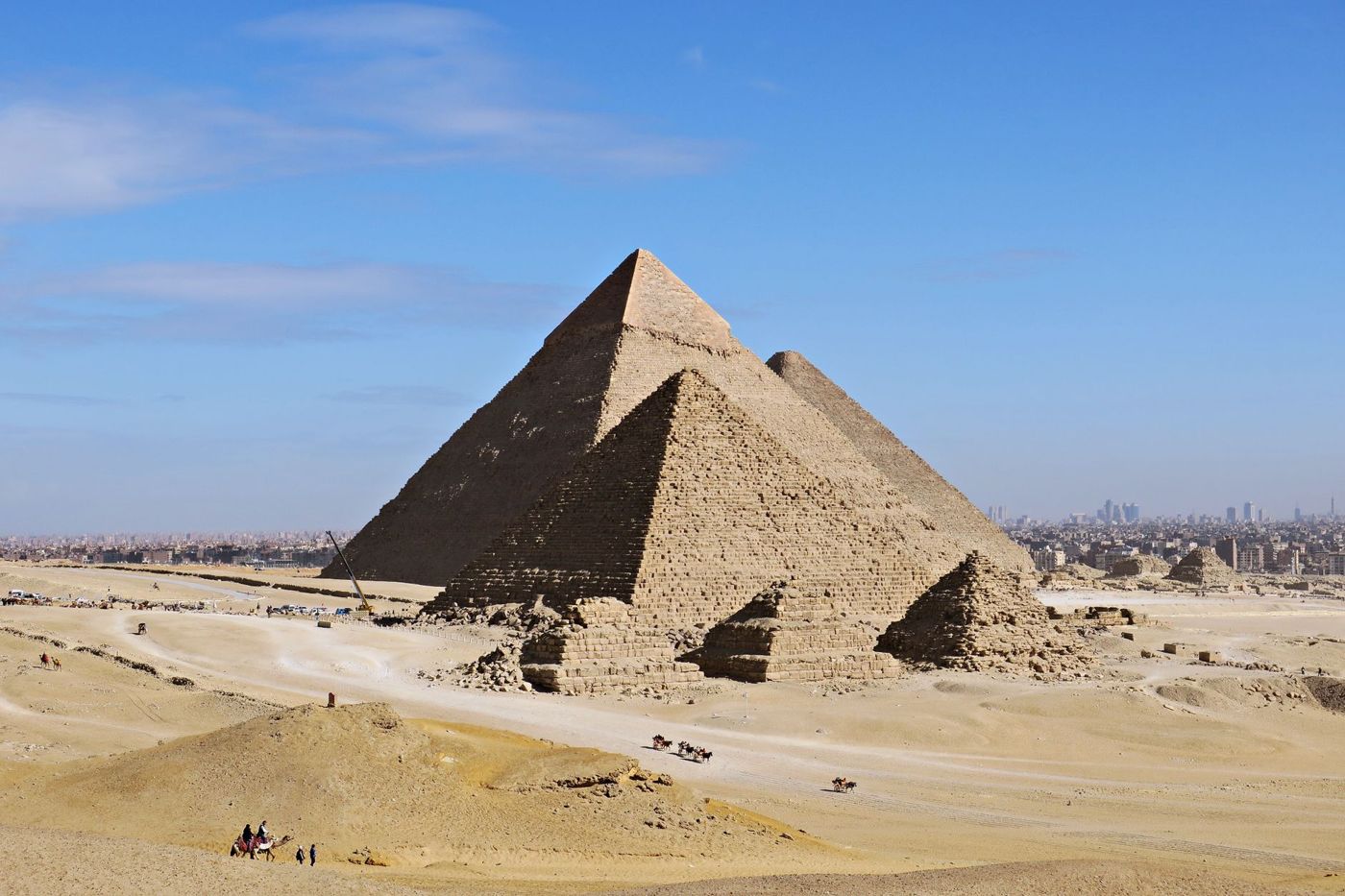
Second Level: Work and Announcement Close Together
The second level is the most difficult because serious work and announcement rhetoric are close together here.
The most prominent example concerns the corridor on the north side of the largest pyramid. Zahi Hawass and the Pyramids of Giza have been closely linked for decades, and he has repeatedly announced that at the end of this corridor there is a sealed door whose opening would rewrite a chapter of history. Remote-controlled robots with cameras have already advanced to that point, and an announcement was planned for 2026.
What to make of this depends on a distinction. That the corridor exists is proven and peer-reviewed. What lies at its end is not. There is no published series of measurements, no images in a journal, and no verifiable finding, only statements in interviews. That does not make them wrong, but it does make them announcements.
A simple rule has proven useful in dealing with this. Pay attention to whether a report cites a source that can be looked up. A journal and a date mean the first level. A quote, an announcement, or a reference to an upcoming announcement means the second level. And if a report sounds particularly spectacular and is based solely on a press conference, it is worth looking at the third.
The Three Levels at a Glance
How to classify a report without specialized knowledge.
| Level | How to recognize | Examples | Reliability |
|---|---|---|---|
| Published | Peer-reviewed journal, date, method, and margins of error verifiable | Void 2017, north side corridor 2025, Menkaure cavities 2025 | Reliable; interpretation may still be open |
| Announced | Interview, press conference, or reference to an upcoming announcement | The sealed door at the end of the corridor | Open; neither confirmed nor refuted |
| Retracted or unsubstantiated | Only presentations, no publication, or a retracted foundational paper | Structures beneath the Pyramid of Khafre, dating via erosion | Not usable as evidence |
- How to recognize
- Peer-reviewed journal, date, method, and margins of error verifiable
- Examples
- Void 2017, north side corridor 2025, Menkaure cavities 2025
- Reliability
- Reliable; interpretation may still be open
- How to recognize
- Interview, press conference, or reference to an upcoming announcement
- Examples
- The sealed door at the end of the corridor
- Reliability
- Open; neither confirmed nor refuted
- How to recognize
- Only presentations, no publication, or a retracted foundational paper
- Examples
- Structures beneath the Pyramid of Khafre, dating via erosion
- Reliability
- Not usable as evidence
This classification says nothing about the intentions of those involved, only about the verifiability of the claim.
Third Level: What Happened in August 2026
That leaves the third level, and here something happened in August 2026 that is rare and therefore deserves attention.
In 2022, a research group had presented a satellite-based radar method and later drew far-reaching conclusions from it: in 2025, the claim of extensive structures and shafts hundreds of meters deep beneath the middle pyramid, and in 2026, the presentation of a supposedly buried second sphinx. Both were presented at press conferences and never published in a peer-reviewed form; the Egyptian antiquities authority contradicted them.
On August 10, 2026, the journal formally retracted the foundational 2022 paper. After an investigation, the editors cited serious methodological flaws and statistical errors that undermine the conclusions. The investigation was triggered by a reader's note. The authors dispute the decision, and that is part of the story.
A second example at the same level circulated in early 2026. An engineer proposed deriving the age of the largest pyramid from weathering patterns and arrived at tens of thousands of years. This is being sold as a new discovery at the Great Pyramid of Khufu, and anyone searching online will almost inevitably come across it. The paper is not peer-reviewed, and the objections are obvious: the method assumes constant weathering, even though the region's climate was demonstrably wetter, sand cover and modern tourist traffic also have an effect, and radiocarbon dates of organic remains support the conventional dating. Furthermore, as a factual argument, satellite radar penetrates only a few meters into dry soil, not hundreds.
The News That Matters for Travel
Finally, the news that really matters for travel, because many searches for news mean exactly that.
There has been more news about visitor operations in Giza in recent years than finds. The main entrance has been moved to a new visitor center, private vehicles are no longer allowed on the site, electric shuttles cover the routes, and there is no longer a ticket office at the eastern gate. The Grand Egyptian Museum next door fully opened in November 2025 and operates with booked time slots. The evening show is currently being replaced and is canceled at short notice.
There are also changes in the surrounding area that also affect your stay: the district on the eastern edge is being redeveloped, the dining options on site have changed, and the shuttle buses have stops that did not exist before. None of this is a discovery, but all of it stands between you and a successful morning.
In practice, this category is more important than any report of a cavity. A newly discovered corridor will not change your visit because it is not accessible and will not be for the foreseeable future. A relocated ticket office changes everything if you are at the wrong gate.
Where you can check this is limited. The official website of the antiquities authority lists tickets, opening hours, and the areas that require separate payment. For short-term cancellations and construction sites, your accommodation is the fastest source of information, as guests return daily and report back. Guidebooks and blog posts are useless for this category once they are older than a year, and this applies here more than at most other places.
Therefore, the practical advice for using this page: Before your trip, check the operational notices and read the research news at your leisure afterward. The former are fleeting and have an immediate effect, while the latter are permanent and never affect your travel plans.
Stay close when operations are constantly changing. Entrances, ticket offices, and shuttles have been relocated several times recently; those who stay overnight at the site can react in the morning instead of repeating a trip across the city. Three hotels that cover this:
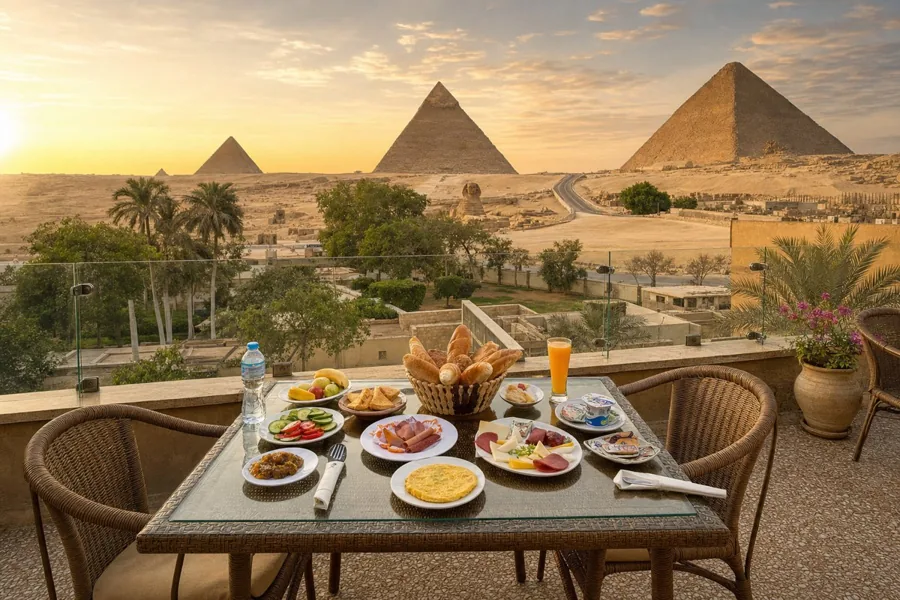 At the Sphinx
Giza Pyramids View Inn
- Good breakfast
- Airport shuttle
- Two restaurants
- 24-hour reception
- Free Wi-Fi
For those who want to see the Sphinx from their breakfast chair
 Most reviewed
Great Pyramid Inn
- Fabulous breakfast
- Rooftop terrace restaurant
- Bar
- Airport shuttle
- 24-hour reception
Most who want to stay in the neighborhood
 Garden & pool
Marriott Mena House
- Excellent breakfast
- Outdoor pool
- Spa and wellness center
- Three restaurants
- Fitness center
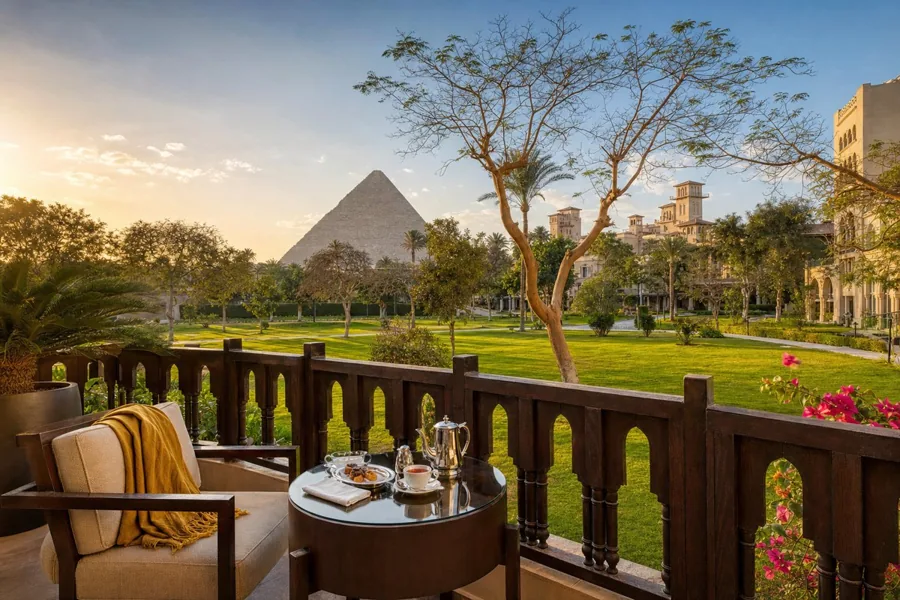
For those who want space, garden, and pool instead of a rooftop terrace
Frequently asked questions
What is the most recent confirmed find?
Two small air-filled cavities behind the granite-clad eastern side of the smallest pyramid, published in November 2025 by a team from Cairo and Munich.
Will a sealed door be opened in 2026?
It has been announced. Nothing has been published. The corridor itself is proven; what lies at its end is not.
What about the structures beneath the second pyramid?
They were claimed at press conferences and never peer-reviewed. The underlying methodological paper was retracted by the journal in August 2026, a decision the authors have appealed.
Are the pyramids much older than assumed?
There is no solid evidence for this. The proposal circulating in 2026 is based on weathering assumptions, is not peer-reviewed, and contradicts radiocarbon dates.
How can I recognize a credible report?
By a verifiable source: a peer-reviewed journal, date, and method. If these are missing and there is only a press conference, caution is advised.
Can I see new finds on site?
No. The cavities are not accessible, and the movable finds are mostly in the museum next door.