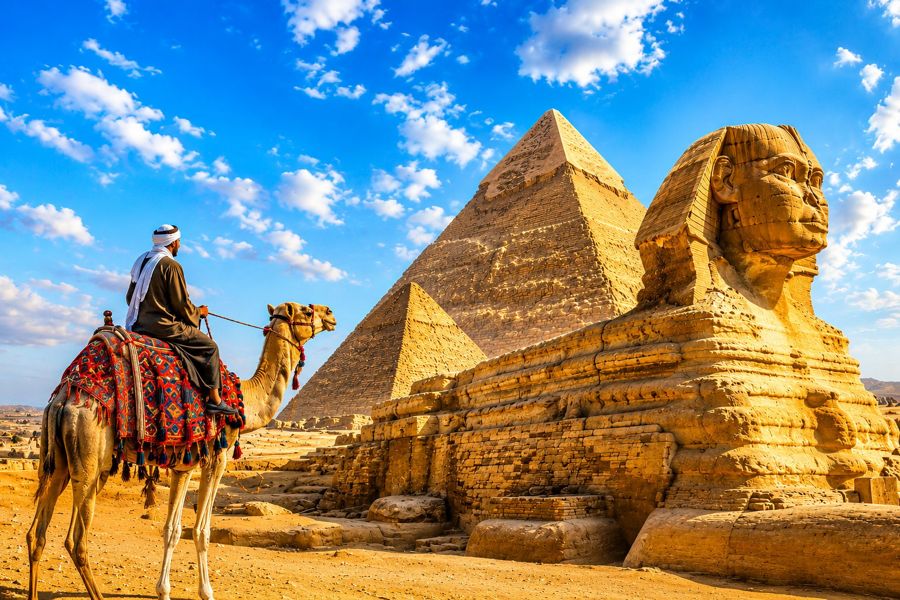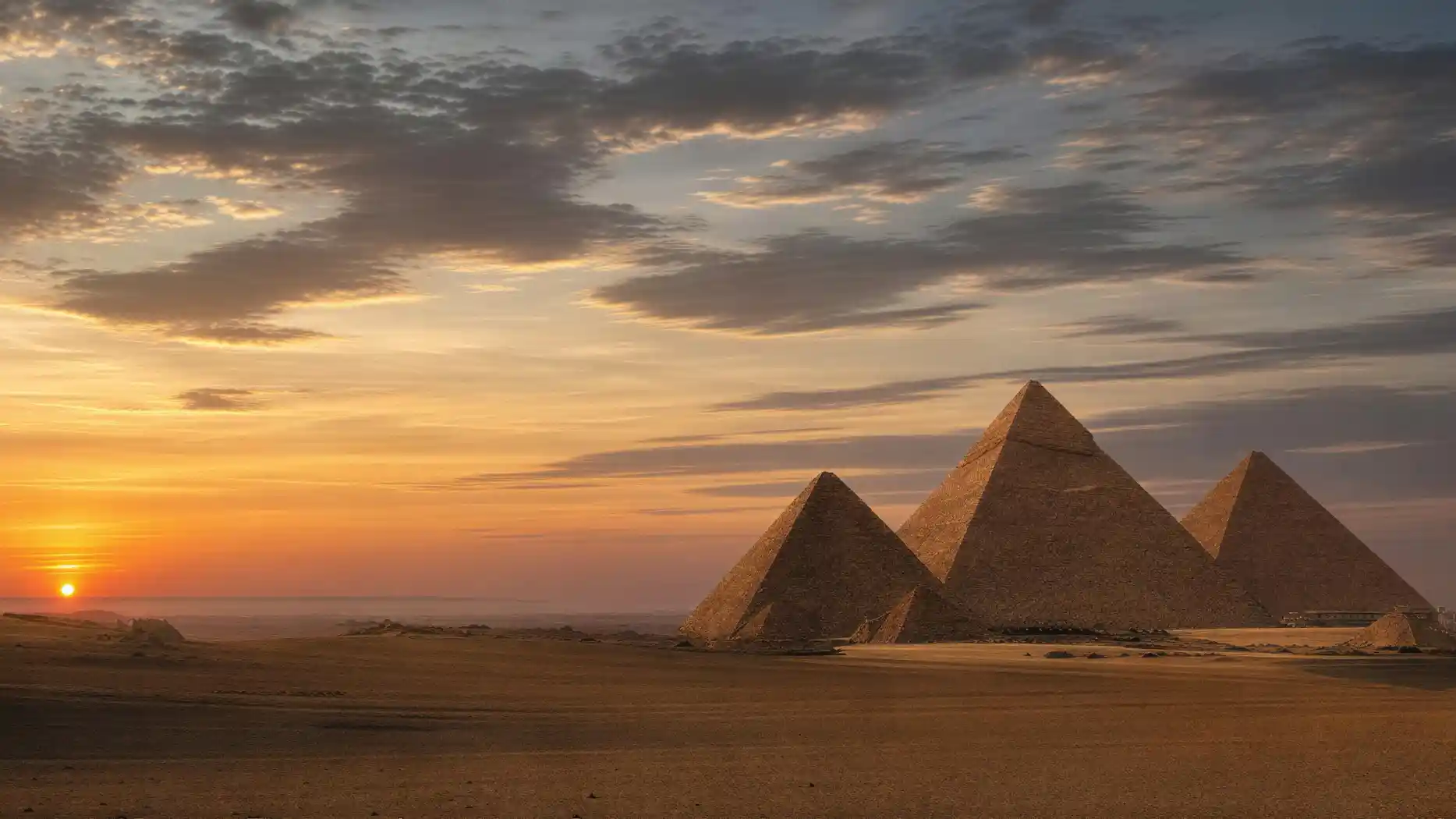
Building a quiz on the Pyramids of Giza is easier than building the pyramids correctly. Anyone who clicks through the common online question collections will find surprisingly many answers that are either outdated or were never correct.
The most common mistakes are always the same. Slaves as builders, although excavations have shown something different for decades. An entrance that has not been the main entrance since visitor management was reorganized. And height figures that confuse the current state with the original one.
Two types of questions can be clearly separated, and that matters more for a quiz than it sounds. Historical questions have a stable answer: height, construction time, material, and purpose do not change. Questions about visiting, on the other hand, have an answer with an expiration date, because access, tickets, and transportation at the site are constantly being rearranged. A quiz that mixes both without labeling them becomes a source of errors within two years.
That is why the following six questions are designed so that each answer comes with a reason. Anyone who gets all six right on the first try knows more about this place than most travel guides reveal.
Check the answers yourself. The last two questions concern current visitor operations, and those change; if you stay within walking distance, you can get the current status in the morning at the reception desk instead of relying on a text that is two years old. Three houses cover that:
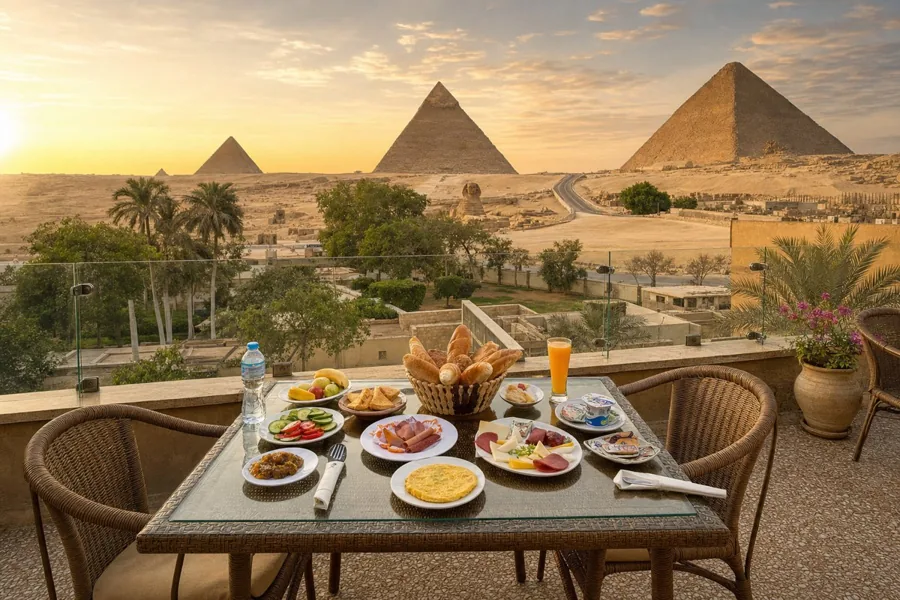 At the Sphinx
Giza Pyramids View Inn
- Good breakfast
- Airport shuttle
- Two restaurants
- 24-hour reception
- Free Wi-Fi
For those who want to see the Sphinx from their breakfast chair
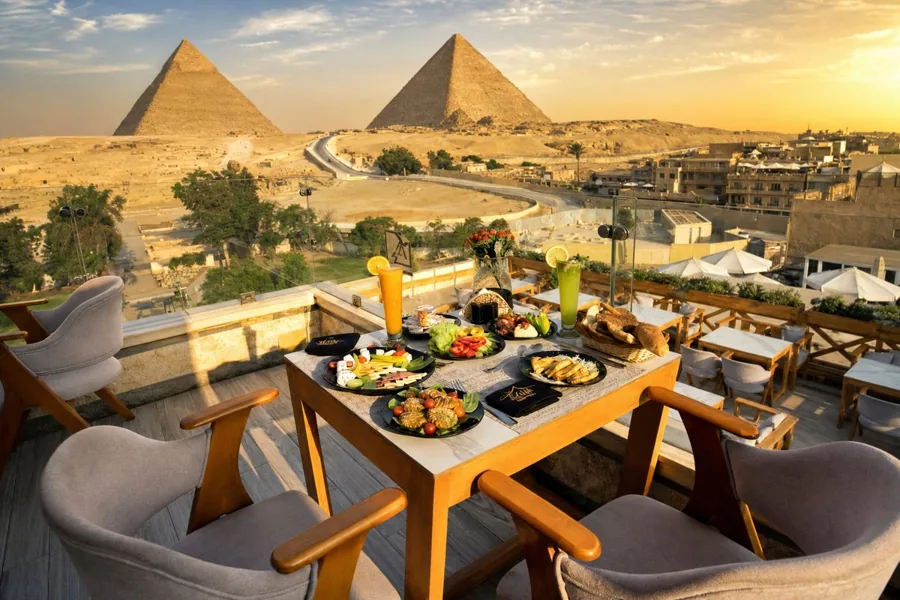 Most reviewed
Great Pyramid Inn
- Fabulous breakfast
- Rooftop terrace restaurant
- Bar
- Airport shuttle
- 24-hour reception
Most who want to stay in the neighborhood
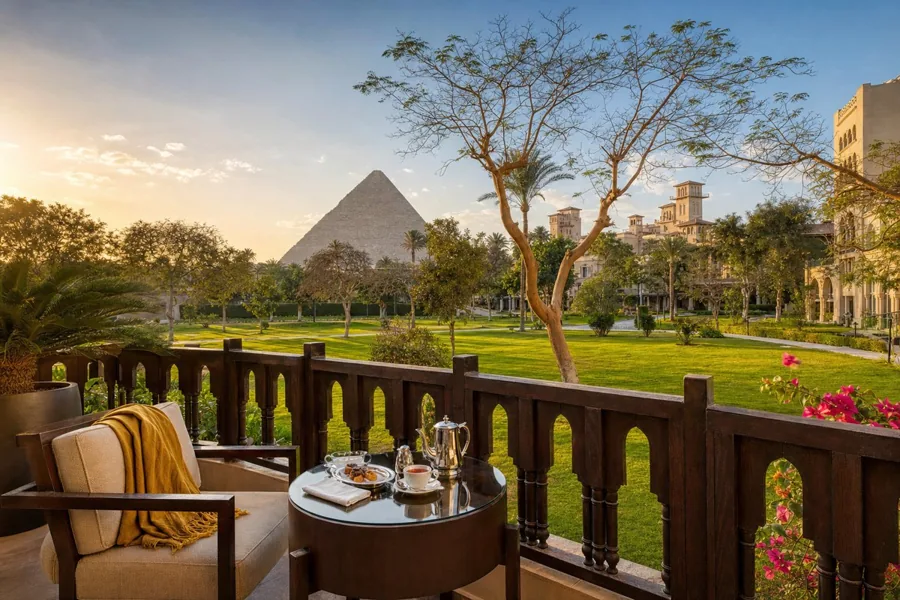 Garden & pool
Marriott Mena House
- Excellent breakfast
- Outdoor pool
- Spa and wellness center
- Three restaurants
- Fitness center
For those who want space, garden, and pool instead of a rooftop terrace
Six questions about the site
Each has one correct answer. The explanation is right there, so even the wrong answers teach something.
1How tall was the largest pyramid originally?
Today it is about 138.5 meters. The missing eight meters or so are due to the loss of the smooth casing and the pyramidion.
2How long was it the tallest structure made by humans?
It was only in the early 14th century that the central tower of an English cathedral surpassed it; that tower collapsed in 1548. The pyramid still stands.
3Who built the structures?
Southeast of the site lies an excavated workers' settlement with bakeries, housing, and a cemetery where the builders were buried. Healed, professionally set bone fractures indicate medical care.
4Where is the main entrance to the site today?
The eastern gate is still open but no longer sells tickets. If you arrive there without a pre-purchased ticket, you will not get in.
5How far is the Nile from the plateau?
At the time of construction, a branch of the Nile that has since silted up came much closer, and the valley temples were harbor buildings.
6What does the ride on the electric shuttle buses at the site cost?
Private vehicles are no longer allowed on the site. The shuttle buses replace them and are included in the ticket.
Which questions are most often answered incorrectly
It is fairly easy to say which questions about the Pyramids of Giza are most often answered incorrectly online, and they are not the difficult ones.
The most reliable failures involve two points. The first is confusing then and now: height, appearance, access, and surroundings have changed, and many sources mix both states in one sentence. The second is visitor operations, which have been reorganized several times in recent years and are almost always described in an outdated way in any text older than two years.
The slave question, on the other hand, is now more often answered correctly than before. That is thanks to the excavations of the workers' settlement, whose results have even made it into school textbooks. A good sign that research and general knowledge do move, even if with a delay.
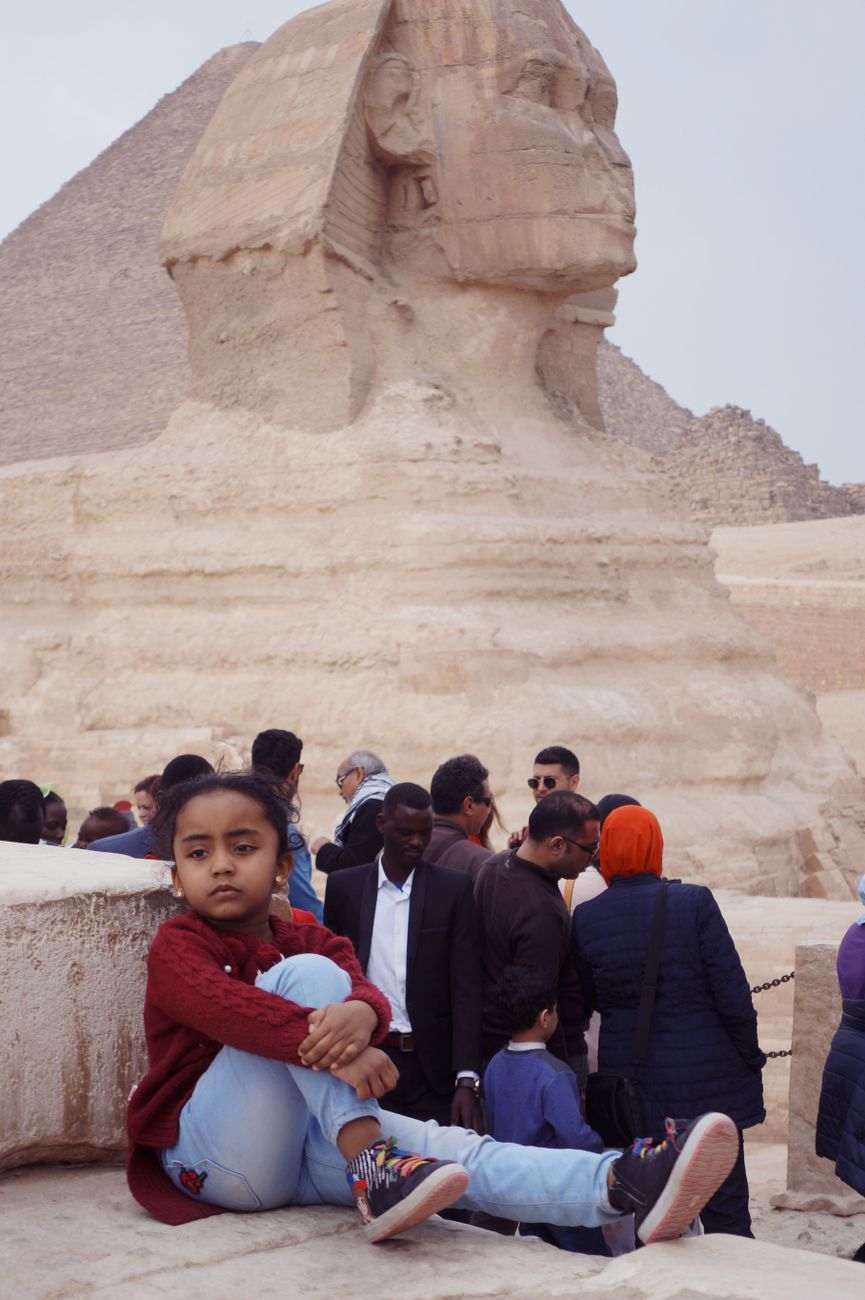
Six facts for the fact sheet
Anyone who needs a fact sheet on the Pyramids of Giza for class can manage with six facts, and all six can be verified.
Location and position, original and current height, construction time and builder, material and origin, purpose as a tomb, and finally the current status as a World Heritage Site. Add to that one piece of information that is almost always missing from fact sheets and makes all the difference: a source for each number. If you state where the 146.6 meters come from, you have a fact sheet; if you do not, you have a list.
It has also proved practical to leave one question open. Not every fact about this site is settled, and if you leave an unresolved question in class—for example, the purpose of the confirmed cavities inside—you show along the way how research actually works. A fact sheet in which everything is answered creates the false impression that there is nothing left to do.
For the complete collection with sources, there is a separate facts page on this site, and for younger children a version that works with fewer numbers and more visual explanation.