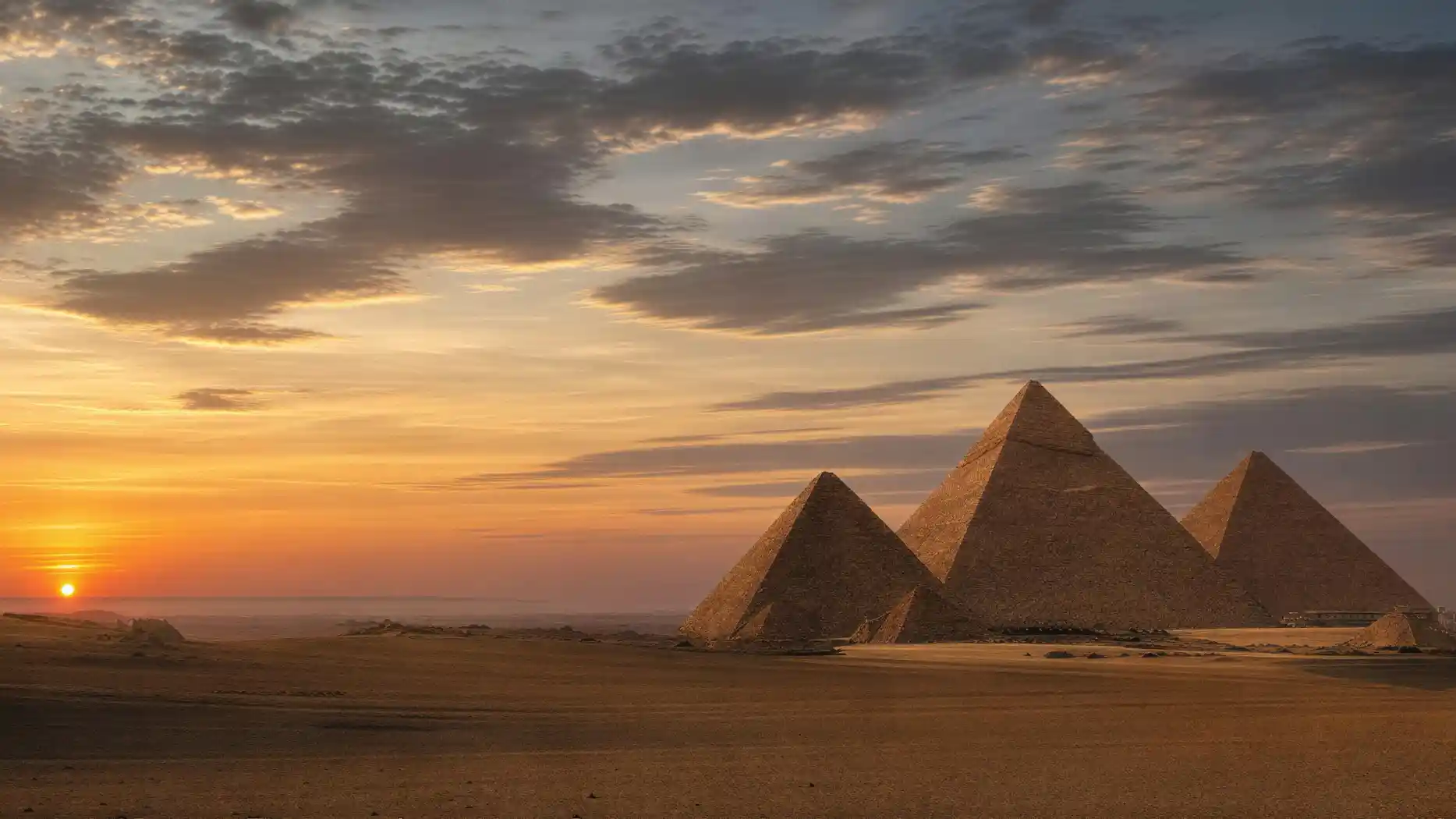
When you search for night tours of the pyramids, you'll find offers that sell four very different things under one term. Three of them actually exist; one exists only in the imagination.
The starting point is a time. The excavation site closes in the late afternoon, the last entry is before that, and after that, free roaming among the structures is over. This isn't a seasonal exception but standard operation. Everything bookable in the evening therefore takes place either outside the fence, on a dedicated grandstand, at a single managed spot within the site, or under an official special permit.
That's the real information on this page, and it saves you disappointment. What many are looking for—standing among the pyramids while it's dark—isn't sold in that form. Instead, what's sold is a view from outside, a dinner, a show, or an access that's regulated as its own administrative category and costs accordingly.
The reason for this situation is mundane. An excavation site of about two square kilometers without lighting, without paved paths between the structures, and with open shafts can't be supervised after dark. The closure isn't a marketing decision but a matter of oversight, and that's exactly why the only exception is a permit with paid supervision staff.
The four forms differ significantly in price, effort, and reliability, and the cheapest is the most uncertain. If you know which form an offer describes, you can assess in two minutes whether it delivers what the title promises. That's why they're listed side by side here first, and then each in detail.
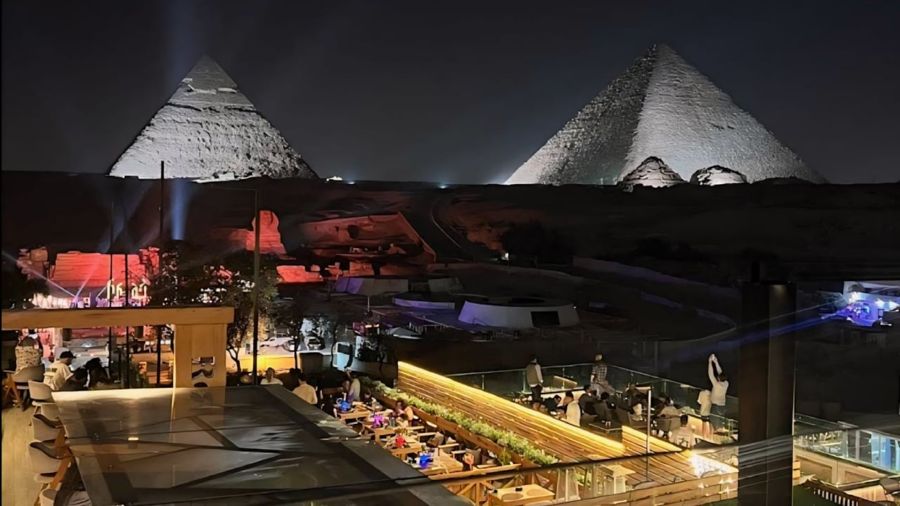
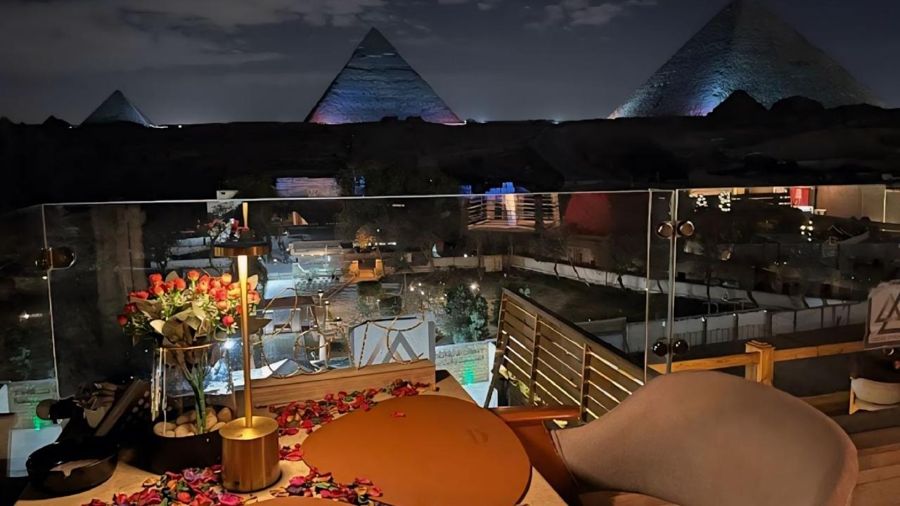
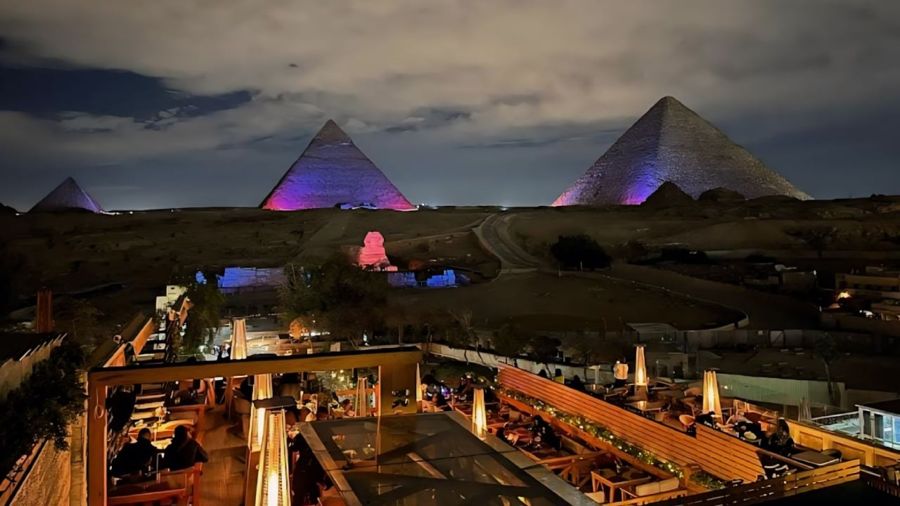
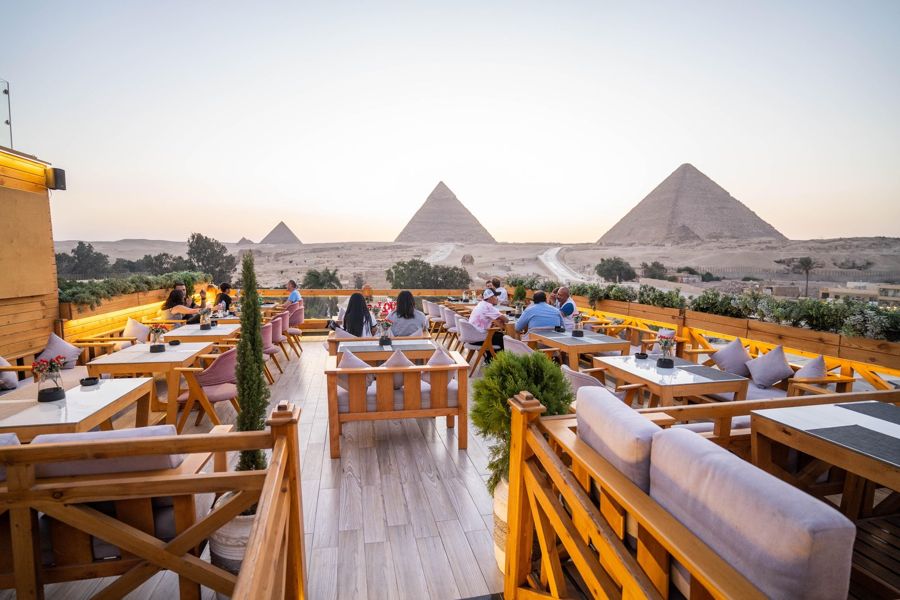
Dinner with a panoramic view of the site, with pickup
- Four hours with pickup and return, so no driving through evening traffic yourself
- On-site support also in German
- Not tied to a performance schedule and doesn't get canceled if the show is canceled
- Free cancellation up to 24 hours before, according to the provider
Four Offers, One Word
Show with Transfer
Hotel pickup, entry to the show at the grandstand by the valley temple, return trip. Usually three hours, often combined with dinner.
- Good for
- Those who want to see the show and don't want to arrange their own transport.
- Watch out
- The show is currently being renovated and can be canceled at short notice. You won't enter the excavation site itself.
Dinner with a View
Restaurant, rooftop terrace, or bistro with a view of the illuminated flanks, usually with pickup and return.
- Good for
- Those who want the sight without a fixed schedule and without dependence on the performance schedule.
- Watch out
- The distance determines the view. Houses far to the east see the structures only as a silhouette.
Evening Operation on the Site
The managed complex at the foot of the largest pyramid opens in the evening, with a shuttle from the visitor center and a lit path.
- Good for
- Those who really want to be inside the fence when it's dark.
- Watch out
- Reservation and a valid plateau ticket are prerequisites, and the operation runs in campaigns, not continuously.
Special Access with Permit
A privately booked time slot in a single structure, regulated as its own fee category by the antiquities authority.
- Good for
- Groups that want a structure all to themselves and can handle the effort.
- Watch out
- The fee is per group, not per person, and supervision fees add up. Without a written permit, the offer is worthless.
Most Night Tours Are a Transfer
Most offers sold as night tours are essentially a transfer with an entry ticket. The process is the same everywhere: pickup in the early evening, drive to Giza, show, return trip, often with a meal in between or after.
The show itself is about forty years old and uses a narrative voice and floodlights, not projection. It runs on its own grandstand by the valley temple next to the Sphinx, has its own ticket, and has nothing to do with the day ticket for the site. If you book it, you don't enter the area of the structures.
For the booking decision, the condition is more important than the description. The production is currently being replaced, construction work is ongoing, shows are canceled at short notice, and no confirmed date for the successor production exists. This shows in the reviews: Among the offers of the largest broker, the category around the night show at the Pyramids of Giza is the only systematic outlier downward, with a gap of more than a full star to the next weakest category. All other categories are close together in the upper range.
What comes next is already designed but not yet visible. The successor production is intended to stage the valley temple, the Sphinx, and the pyramids as three interconnected voices, with projection across the entire site and multilingual narration. The design office names 2026 as the target year, but no one names an opening date.
This doesn't lead to a warning but to a sequence. A trip shouldn't be planned around this evening. If you want to include it, check the performance schedule on the day of arrival and book at short notice. For a fixed program point, the evening is better in a form that doesn't depend on any schedule.
Inside the Fence in the Evening
There's a way to be inside the fence in the evening, and it's little known because it isn't sold as a tour.
The managed complex at the foot of the largest pyramid also opens in the evening, in cooperation with the antiquities authority. Access is via the shuttle from the visitor center, and the path there is solar-powered and lit. A valid plateau ticket remains a prerequisite, and walking among the structures isn't included. You sit at one place; you don't walk across the site.
What's important is the operating mode. The evening operation doesn't run continuously but in limited campaigns with fixed sessions, and between two campaigns, nothing may happen for months. A reservation is therefore not a comfort but the only way to find out whether it's open at all. The antiquities authority's announcement about the evening opening describes the offer but doesn't specify a permanent rhythm.
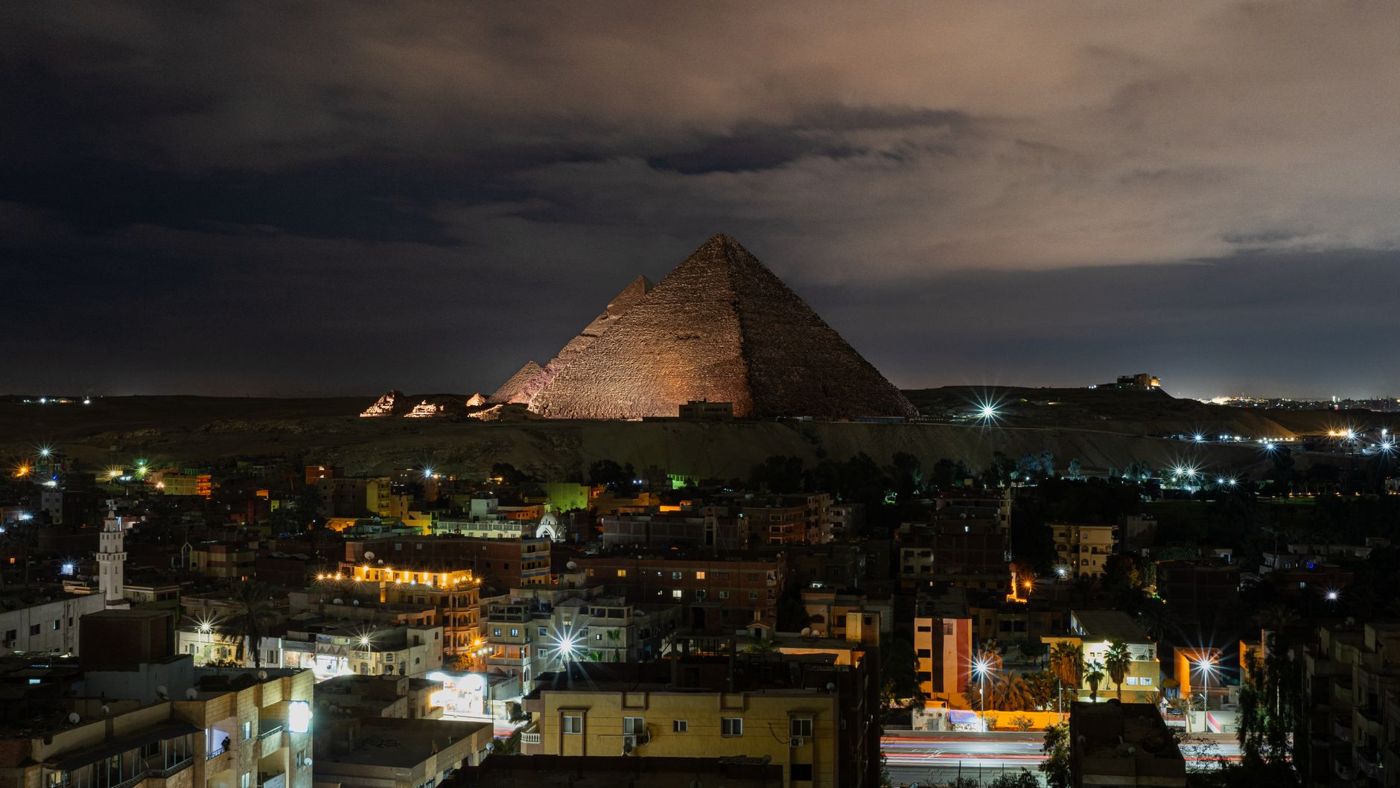
Everything else with an evening view lies outside the fence, and there, the location decides. The east side sees the illuminated flanks head-on, the north and south see them at an angle, and beyond a certain distance, only a silhouette remains above the rooftops. When choosing a venue or terrace, you should therefore go by orientation and distance, not by category. The official overview of the site helps only to a limited extent because it describes daytime operation.
The Special Opening Is the Only Real Night Opening
That leaves the fourth form, and it's the only one that actually opens a structure after hours. If you want to get onto the Giza Plateau at night and not just to its edge, you'll inevitably end up with it.
It's not an invention of providers but a regulated category of the antiquities authority, the so-called special opening. A circular from the Chamber of Travel Agencies reproduces the new version: The board of the Supreme Council of Antiquities set the fees and duration anew in spring 2026, valid from August 1, 2026. For the largest pyramid, a fixed amount applies for a group of up to fifty people and a duration of two hours. For the Sphinx, one hour is planned, for tombs a smaller amount with a smaller group. Supervision fees and the levy to the employee fund are added on top.
Two limitations come with it. First, the text regulates duration and fee, not the time of day. That these windows lie in the evening or at night is the practice of providers and isn't stated in the fee schedule. Second, the fee is a group fee. A four-figure amount for a small group isn't automatically dubious, but it's also not proof that a permit exists.
For individual travelers, this rarely pays off, and that's due to the structure of the fee. It applies to the group, not per person, and it doesn't decrease if only two people come. It becomes economical only when the amount is spread over many shoulders, which is why such windows are in practice booked by tour groups, film crews, and closed societies. Add to that what you get for it: a single structure for a limited time, not the site.
Practically, this means: Such an offer stands or falls with the paperwork. Demand the written permit with date, structure, and time slot, clarify in advance who bears the supervision fees, and expect a lead time of several weeks. If you only ask on site, you won't get the permit anymore.
Early Morning Is the More Honest Answer
For most travelers, the more honest answer to the desire for a night tour is actually the early morning.
The reason is simple: What's sought in the evening is rarely the darkness itself but soft light, few people, and quiet. All three exist at opening time, and that's inside the fence, without a permit, without a reservation, and at the normal ticket price. The first hour after entry is the emptiest of the day, the sun is low in the east and models exactly the surfaces that look flat and white at noon.
Add to that a point that's rarely shown honestly in pictures. The night sky over the metropolitan area is one of the brightest in the world, the Milky Way isn't visible here, and images showing stars over the pyramids are composites. What you actually see in the evening is floodlight on stone against an orange sky. That's an impressive sight, but a different one than expected.
If you want both, combine them. A room or terrace within sight covers the evening without a fixed appointment, and the next morning you're at the gate without a drive when it opens. This combination costs less than any special opening and delivers the best of both. It only requires that you stay overnight in Giza and not in downtown Cairo. The return trip in the evening is, after all, the part that eats up time in most night tours: Of the stated three hours, more than half regularly goes to the two drives, and the evening traffic between Giza and downtown isn't predictable. If you stay within walking distance, you trade those hours for evening light on the terrace.
Four Questions Before Booking
Do we enter the excavation site or only the grandstand? Is the plateau entry included or additional? What happens if the show is canceled—do you get a refund or a replacement date? And for any offer with access to a structure outside opening hours: Is there a written permit, and what date does it bear? A provider who doesn't answer one of these four questions in writing won't answer them on site either.
Stay overnight in Giza instead of Cairo. For most night tours, the evening ends with a long return trip; if you stay within sight, you save it and are at the gate at opening time without a drive. Three properties that cover this:
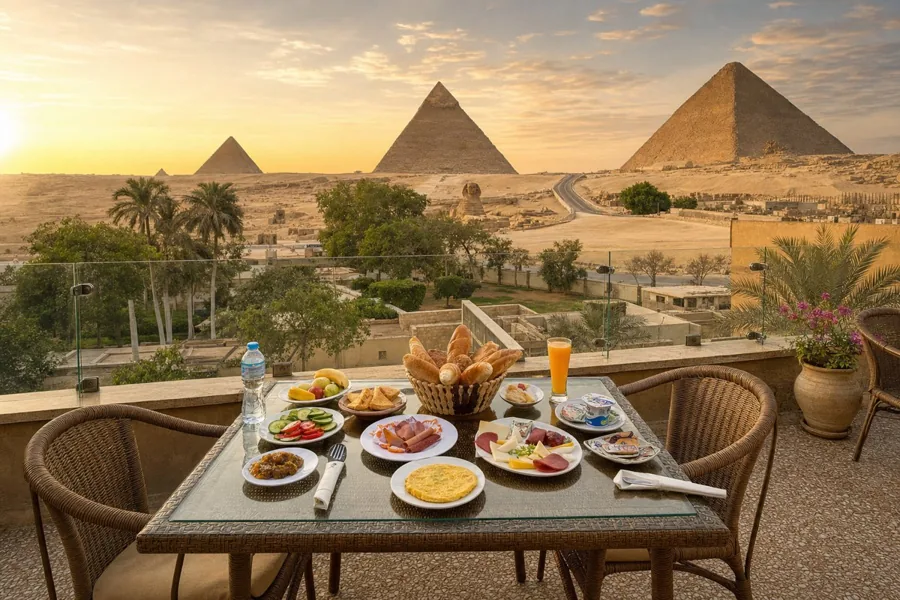 At the Sphinx
Giza Pyramids View Inn
- Good breakfast
- Airport shuttle
- Two restaurants
- 24-hour reception
- Free Wi-Fi
For those who want to see the Sphinx from their breakfast chair
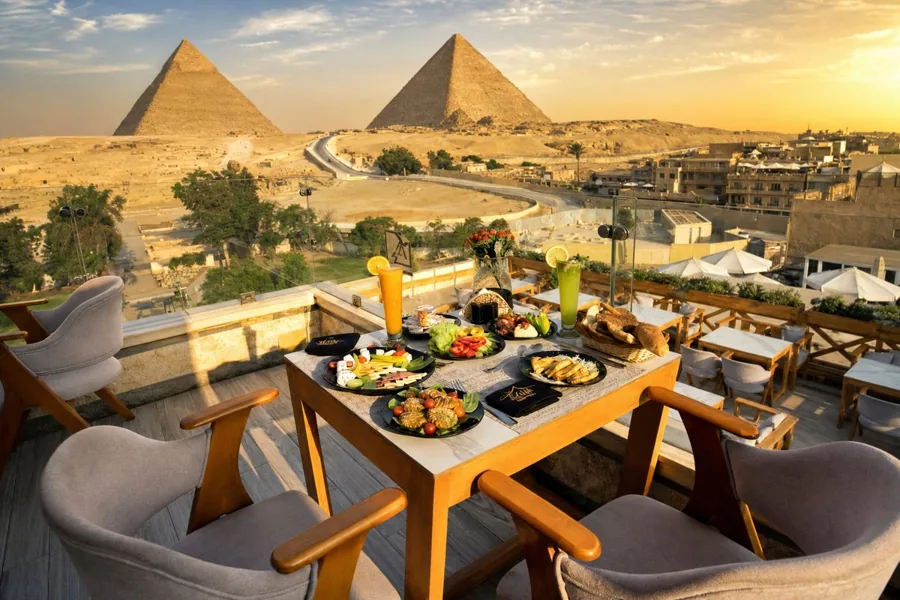 Most reviewed
Great Pyramid Inn
- Fabulous breakfast
- Rooftop terrace restaurant
- Bar
- Airport shuttle
- 24-hour reception
Most who want to stay in the neighborhood
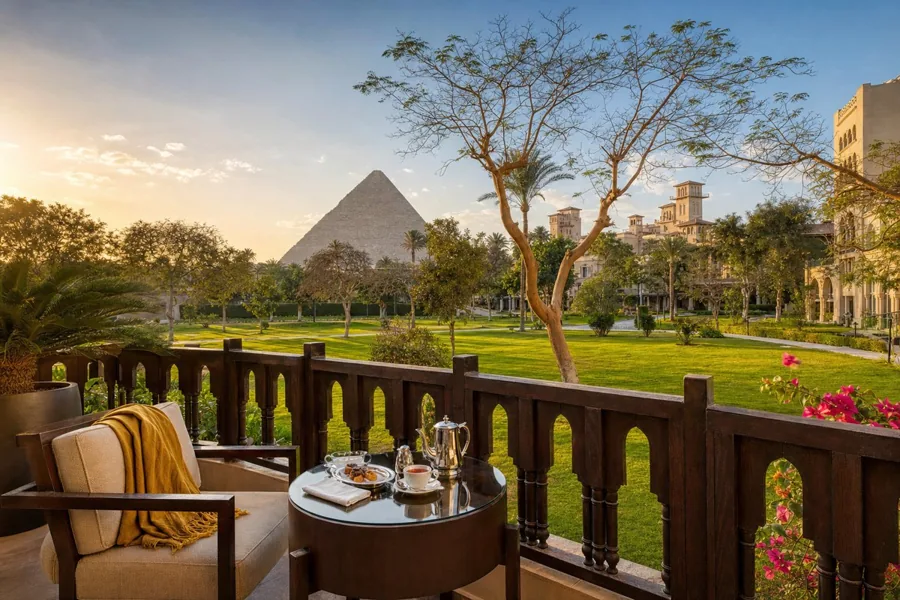 Garden & pool
Marriott Mena House
- Excellent breakfast
- Outdoor pool
- Spa and wellness center
- Three restaurants
- Fitness center
For those who want space, garden, and pool instead of a rooftop terrace
Frequently asked questions
Can you enter the pyramids at night?
Not in normal operation. The site closes in the late afternoon. In the evening, accessible are the show's grandstand, the managed complex with reservation and valid ticket, and special openings with official permit.
What's usually included in a night tour?
Usually hotel pickup, the entry ticket for the show, and the return trip, often with dinner. Entry to the excavation site isn't included because it doesn't apply in the evening anyway.
Is the show currently worth it?
As a fixed program point, rather not. It's being replaced, dates are canceled at short notice, and reviews are significantly below everything else on offer. Booked at short notice, it's a reasonable add-on program.
What does private access outside opening hours cost?
The antiquities authority charges a fee per group, not per person, plus supervision fees. For the largest pyramid, two hours and up to fifty people are planned. What a provider charges beyond that is their own margin.
Can you see the starry sky over the pyramids at night?
No. The sky over the metropolitan area is among the brightest in the world, and the Milky Way isn't visible. Corresponding images are montages.
What's the best alternative to the evening?
The first hour after opening. Soft light, few people, free roaming, normal ticket price, and no permit needed.