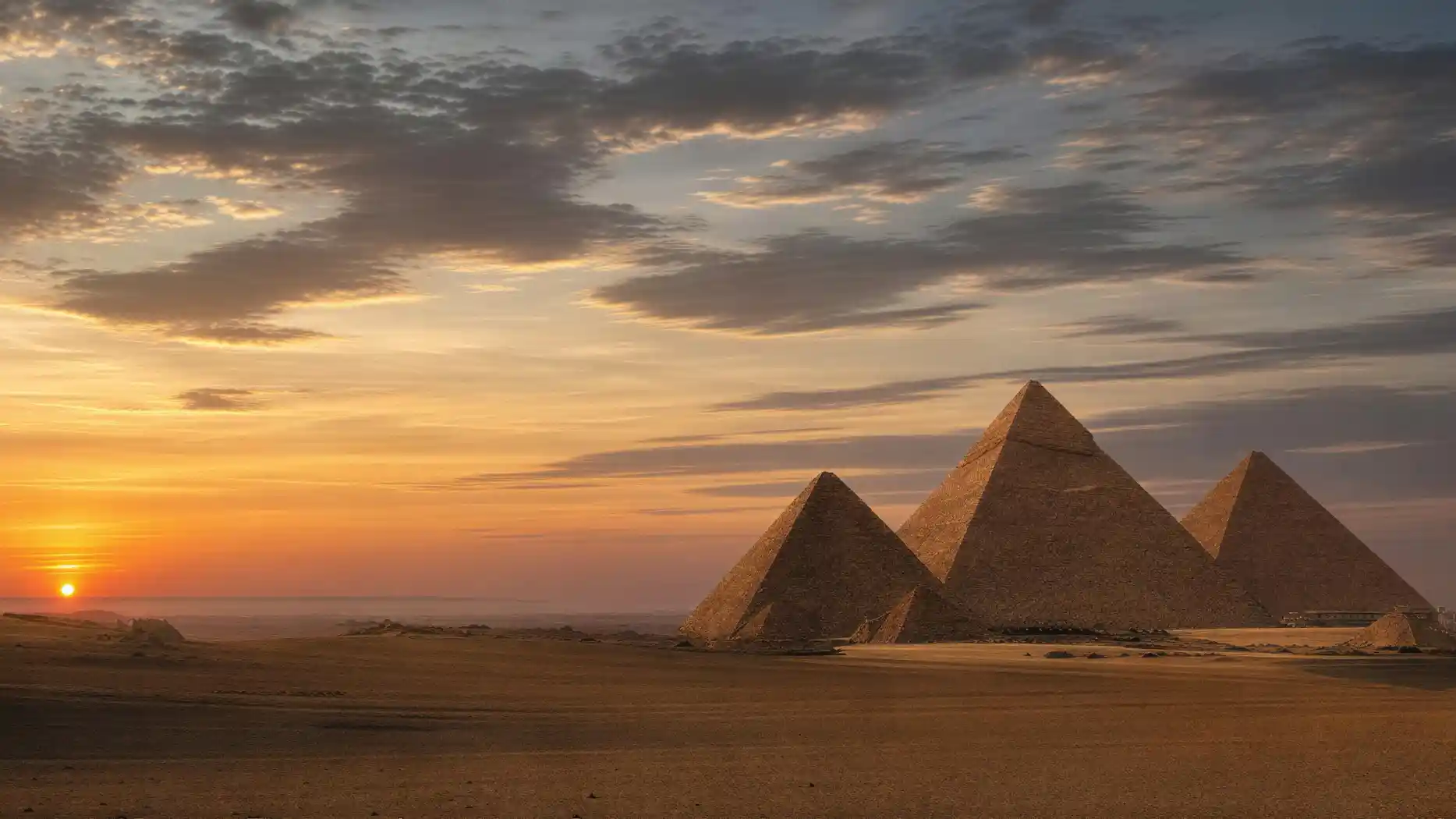
Heat and sun protection in Giza are usually treated in travel guides under comfort, right next to comfortable shoes. That is a misclassification. On this site, the time of day you arrive is a safety decision, and in summer it is the most important one of the whole day.
The reason is not just the air temperature. It lies in three characteristics of the plateau that work together.
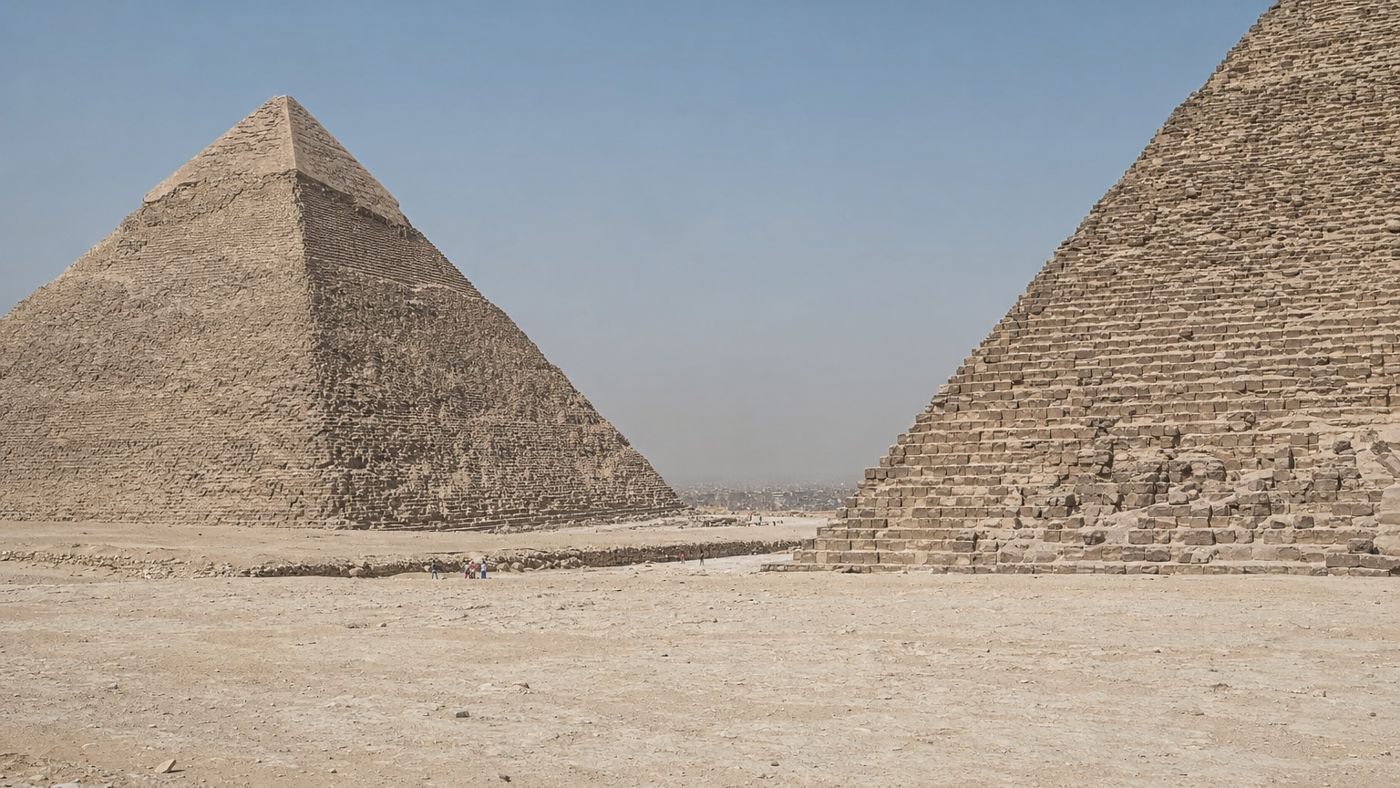
First, there is no shade along the way. Since the renovation, you will find shade canopies and seating at the visitor center and at the managed points. Between these points, however, there is open ground, and the distances to them are long. If you stand between two structures, the nearest shade is several hundred meters away.
Second, the ground radiates back. Light limestone and sand reflect sunlight and heat upward, so you are stressed from below as much as from above. A thermometer in the shade does not measure that.
Third, you are on foot, and vehicles are not allowed on the site. If you realize it is too much, you cannot get into a car. The way back is the same path, only with less strength.
The numbers that matter
- Summer UV exposure in the region
- in the range of the highest level of the WHO scale
- WHO recommendation from level 8
- Avoid outdoor midday hours, seek shade
- Increase in body temperature during heatstroke
- to over 40 degrees in 10 to 15 minutes
- Emergency services in Egypt
- 123, toll-free, around the clock
- Unified emergency number
- 112
- Shade on the path between structures
- none
The most dangerous month is not July
Now the point where most recommendations miss the mark. The most dangerous month for a visit is not July.
In July and August, the average daily maximum is just under 35 degrees, and no one plans a six-hour walk for these weeks. The expectation matches reality, and those who come in high summer start early and are gone by noon.
More risky is spring, for two reasons that reinforce each other. The first is physical. The Federal Institute for Public Health points out that the body acclimatizes to heat and can cope better once it has adjusted. Early heatwaves are therefore more dangerous than late ones. If you fly in April from a German spring with fifteen degrees into an Egyptian day with thirty-five, you have no adaptation behind you.
The second reason is planning. An April average of 28 degrees reads as harmless, and the day's schedule is correspondingly generous. But exactly in these weeks the outliers occur: In spring 2026, the Egyptian Climate Information Center warned of an unusually early heatwave with over 42 degrees in the Greater Cairo area. If you planned for 28 degrees and find 42, you have not a weather problem but a time problem.
From this follows a simple rule: Check the forecast for the last days before your trip and adjust the time accordingly, not according to the month you booked.
For some visitors, this rule applies more strictly. The Federal Institute counts people aged 65 and over, pregnant women, infants and young children, and people with pre-existing conditions as particularly at-risk groups. Small children heat up faster than adults and communicate it less well, and in a stroller they are additionally exposed to heat near the ground. If you are traveling with someone from one of these groups, you should not use your own endurance limit as a benchmark, but rather split the visit into two shorter segments or consistently use the shuttle instead of walking the distances.
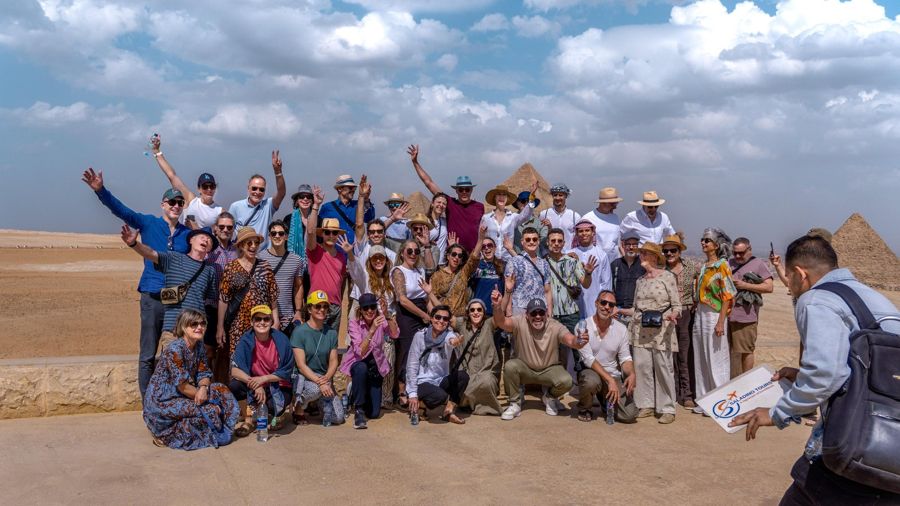
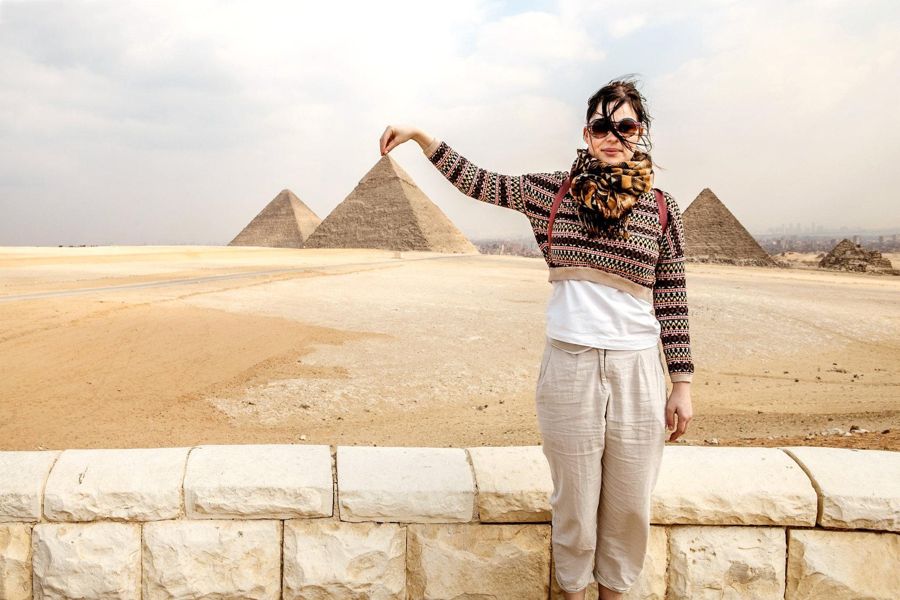
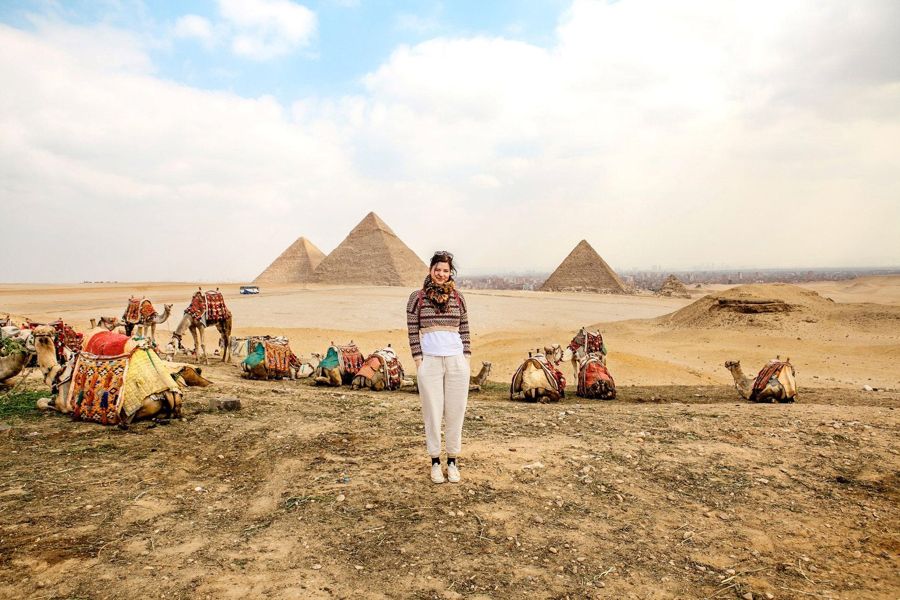
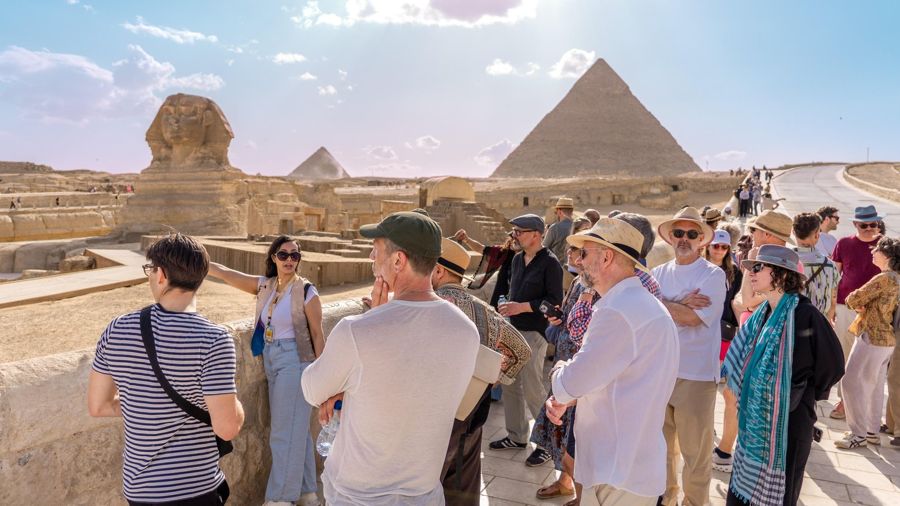
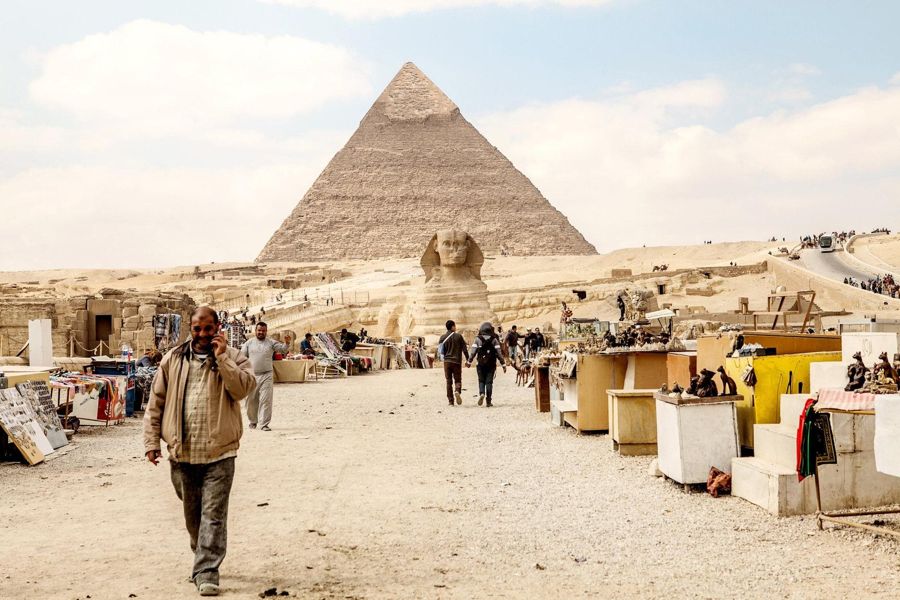
Half-day tour to the pyramids and Sphinx with German-speaking guide
- Around four hours, so the visit ends before the stress peaks
- Pickup from your accommodation is included, so you don't stand at the gate looking for a connection
- Entry to the site is included, saving you waiting time in the sun
- German-speaking guide possible, free cancellation up to 24 hours before
Distinguishing heat exhaustion and heatstroke
If it does become too much, it helps to know the difference between two conditions, because one is unpleasant and the other is life-threatening.
Heat exhaustion results from fluid loss. Blood pressure drops, the brain is less well supplied with blood, and typical signs are weakness, dizziness, headache, nausea, and cold, clammy skin. That sounds harmless and initially is. The right response is to immediately get out of the sun, sit down, and drink slowly.
Heatstroke is something else. Here, cooling fails, and body temperature rises to over 40 degrees within ten to fifteen minutes. The skin becomes red, hot, and dry, sweating may stop, and the decisive factor is behavior: confusion, inappropriate answers, aggression, or unconsciousness. If someone cannot clearly answer the question of their own name, they are not having a bad day but an emergency. Then: call emergency services, shade, open clothing, cool, do not wait to see if it gets better on its own.
Two things about this are important for the plateau. First, one condition tips into the other if you keep walking instead of stopping. Second, the nearest shady spot here can be a shuttle ride away. It is therefore worth going to the next station at the first sign rather than taking in the last structure first.
And a note that is often missing: The interior of a pyramid is not a cooling off. The ascent is narrow, warm, and stuffy. If you already feel exhausted outside, you should not go in.
The drinking mistake in dry air
When it comes to drinking, there is a mistake that is particularly easy to make in dry air.
In Central Europe, you notice sweating because your clothes become damp. In Giza, sweat evaporates almost immediately, so you stay dry and underestimate the loss. The thirst sensation lags behind anyway, and in a dry, warm environment it lags further behind than usual. So drink by the clock, not by feeling.
Water alone is not enough when sweating heavily, because salts are also lost with sweat. The Federal Institute's recommendation is water, unsweetened tea, or diluted juice, and explicitly also electrolyte-containing drinks in case of heat exhaustion. Equally explicitly advised against are alcohol, caffeinated drinks, and ice-cold drinks.
On sun protection itself, the World Health Organization says something uncomfortable. Its recommendation on the UV index-index) is that from level 8, you should not stay outdoors during midday hours and should seek shade. In the Egyptian summer, this level is regularly exceeded, and there is no shade along the way. That is not an argument against the visit, but one for the early morning. Sunscreen is the last line of defense, not the first: it replaces neither a hat nor a schedule.
Electrolytes and sun protection for hot destinations
Electrolyte tablets for your bottle, a wide-brimmed hat, and high-factor sunscreen are easier to get before departure than on the go, and tablets weigh nothing in your backpack.
If something actually happens
That leaves the case where something actually happens. Two things are different from home.
The first is the care itself. The Federal Foreign Office states that medical care outside Cairo often does not meet Western European standards. For Giza, that is the comparatively good news, because the Cairo metropolitan area is better equipped than the rest of the country. The German Embassy in Cairo maintains lists of cooperating doctors and clinics.
The second concerns payment, and here a closer look is worthwhile. Most clinics require advance payment or proof of cost coverage before treatment. The Federal Foreign Office therefore explicitly recommends travel health and repatriation insurance. The emergency services themselves are unaffected: The emergency number 123 is toll-free, and transport to the nearest hospital costs nothing.
Practically, this means: Save the number before you set off, and know how to get a cost commitment in an emergency. Both take five minutes beforehand and are difficult afterwards.
Because in Egypt, the clinic wants to see a commitment before treatment
- Covers the costs of treatment on site, which would otherwise have to be paid in advance
- Includes repatriation, which the Federal Foreign Office explicitly recommends for Egypt
- 24/7 emergency contact, which makes the difference in a heat emergency
- To be taken out before departure; it cannot be done retrospectively
Frequently asked questions
Is there shade on the site?
Yes, at the managed points and the visitor center since the renovation. Not on the paths between them.
From what temperature is the plateau closed?
There is no published heat regulation and no temperature limit at which it closes. The decision about the time is up to you.
Which month is the most dangerous?
Not high summer, but spring. The body is not yet acclimatized, and planning is more generous for the lower averages.
How do I recognize heatstroke?
By behavior. Confusion, inappropriate answers, or unconsciousness with hot, red skin is an emergency, not just exhaustion.
Which number do I call in an emergency?
123 for emergency services, 112 as the unified emergency number. The emergency services are toll-free.
Is it cooler inside the pyramid?
No. The ascent is narrow, warm, and stuffy. If exhaustion is setting in, that is the wrong place.