Guided tour or on your own is a question that is usually treated as a matter of taste: Do I like groups or not? That leads you astray, because the answer then depends on your mood rather than on the facts.
Looked at soberly, you decide something else, namely who puts the components of a day at Giza together. And there are exactly five of them: getting there, the ticket, the paths on the site, classifying what you see, and getting back. A booked package takes over all five. If you go alone, you take over all five yourself. Everything in between is possible and is rarely offered.
Whether someone comes along and explains is a separate question, and it has its own page. Here it is about organization, money, and risk.
First, a number that explains the market. In the offers for this place, a live guide is almost always included; offers without one are the exception, and the few that exist are essentially just admission tickets. There is no official audio guide for the site, neither as a device nor as an app from the administration. So if you are looking for the middle path, you will not find it on the shelf, but you have to put it together yourself. How to do that is explained below.
The five components and who takes them over
The same list, once from the perspective of the package and once from your own. The right column is the reason why the decision is so difficult.
| Component | In the package | Self-organized | What can go wrong |
|---|---|---|---|
| Getting there | Pickup at the accommodation, fixed time | Ride-hailing app, transfer, or metro plus taxi | The driver drops you off at the wrong gate |
| Ticket | Included, no counter, no line | Buy online in advance or at the main entrance | At the eastern gate there is no ticket sales |
| Paths on the site | Fixed route, vehicle waits | Shuttle in a loop, stops are fixed | Distances are underestimated, especially to the Sphinx |
| Classification | Guide on site, in the booked language | Preparation at home, exhibition at the visitor center | Without preparation, three big piles of stones remain |
| Getting back | Included, vehicle is ready | Organize again, in the midday heat | The return trip is regularly forgotten when planning |
- In the package
- Pickup at the accommodation, fixed time
- Self-organized
- Ride-hailing app, transfer, or metro plus taxi
- What can go wrong
- The driver drops you off at the wrong gate
- In the package
- Included, no counter, no line
- Self-organized
- Buy online in advance or at the main entrance
- What can go wrong
- At the eastern gate there is no ticket sales
- In the package
- Fixed route, vehicle waits
- Self-organized
- Shuttle in a loop, stops are fixed
- What can go wrong
- Distances are underestimated, especially to the Sphinx
- In the package
- Guide on site, in the booked language
- Self-organized
- Preparation at home, exhibition at the visitor center
- What can go wrong
- Without preparation, three big piles of stones remain
- In the package
- Included, vehicle is ready
- Self-organized
- Organize again, in the midday heat
- What can go wrong
- The return trip is regularly forgotten when planning
Where the risk lies
What is interesting about this list is not the number of points, but how the risk is distributed.
A package is a single process with a single point of failure. If it works, everything works, and you do not have to make any more decisions that day. If it does not work, for example because the bus is two hours late or the group only arrives at the site at noon, you cannot change anything. You are stuck in it, and the day is what it is.
A self-organized day has five small points of failure instead of one big one. The driver does not find the gate, the line at the counter is longer than expected, the shuttle does not come immediately. Each of these mistakes costs twenty minutes and can be fixed on the spot. None of them costs you the day.
That is the real trade-off, and it turns out differently depending on the person. If you find improvisation exhausting, the package buys you peace of mind. If you find it normal, you take on a risk with the package that you could handle better yourself.
The price difference is almost always read incorrectly
When it comes to money, the same analytical look is worthwhile, because the price difference is almost always read incorrectly. A package is not a surcharge on the admission price. It contains two rides, the ticket, the working time of a trained person, and often a lunch. So the honest question is not whether the package is more expensive than the admission, because it inevitably is, but which of these items you would have bought anyway. If you would have taken a taxi there and back anyway and eaten somewhere at noon, you end up comparing two similar sums.
One factor shifts this calculation more than anything else, and it appears in no offer: the number of people. Tours and private rides are usually charged per group, admission per person. So for a single person, a package is proportionally expensive; for four or five travelers, the calculation tips, because the most expensive component is spread over more shoulders. If you are traveling as a group of four and still organizing on your own, you should do so for reasons other than saving money.
What actually makes an independent visit fail is almost never a lack of knowledge. It is logistics, and it is always the same: aiming for the wrong gate, not having a ticket at the eastern entrance, arriving at midday, not having small change, not planning the return trip. If you clarify these five points in advance, you already have most of the advantage of a package, without booking one.
The two ends of the decision, so that the difference becomes visible. In between lies the middle path, which you build yourself.
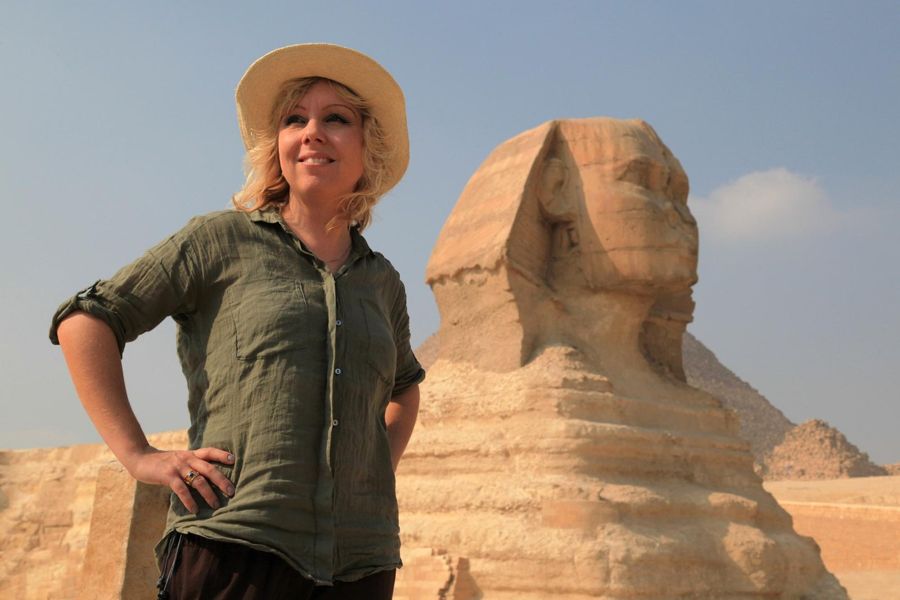 Ticket only
Just the admission, as a code on your phone
- Plateau entry
- Guide
- Hotel pickup
- Lunch
- Pyramid interior
- Free cancellation up to 24 hours before
For those who arrange their own transport and only want to skip the line at the counter
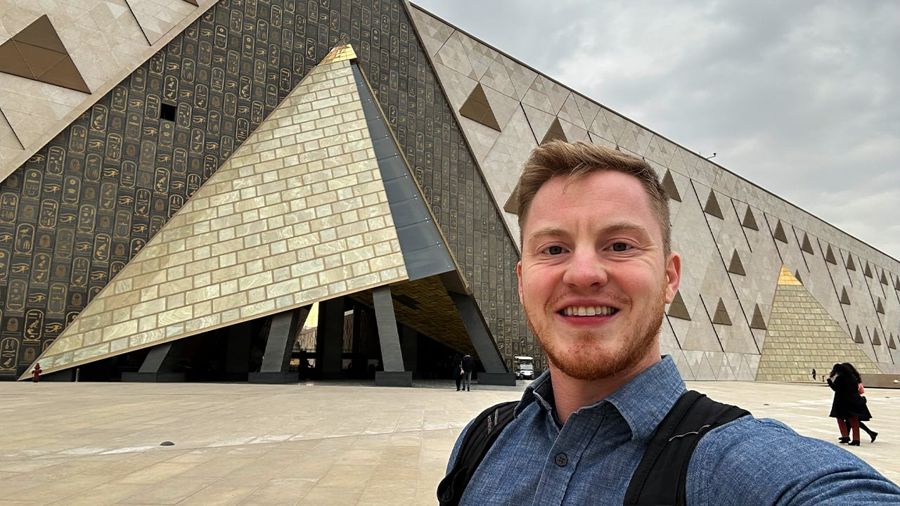 Private, with pickup
The whole day as a package, with pickup and museum
- Plateau entry
- English-speaking guide
- Hotel pickup
- Lunch
- Free cancellation up to 24 hours before
For those who do not want to make a single decision that day
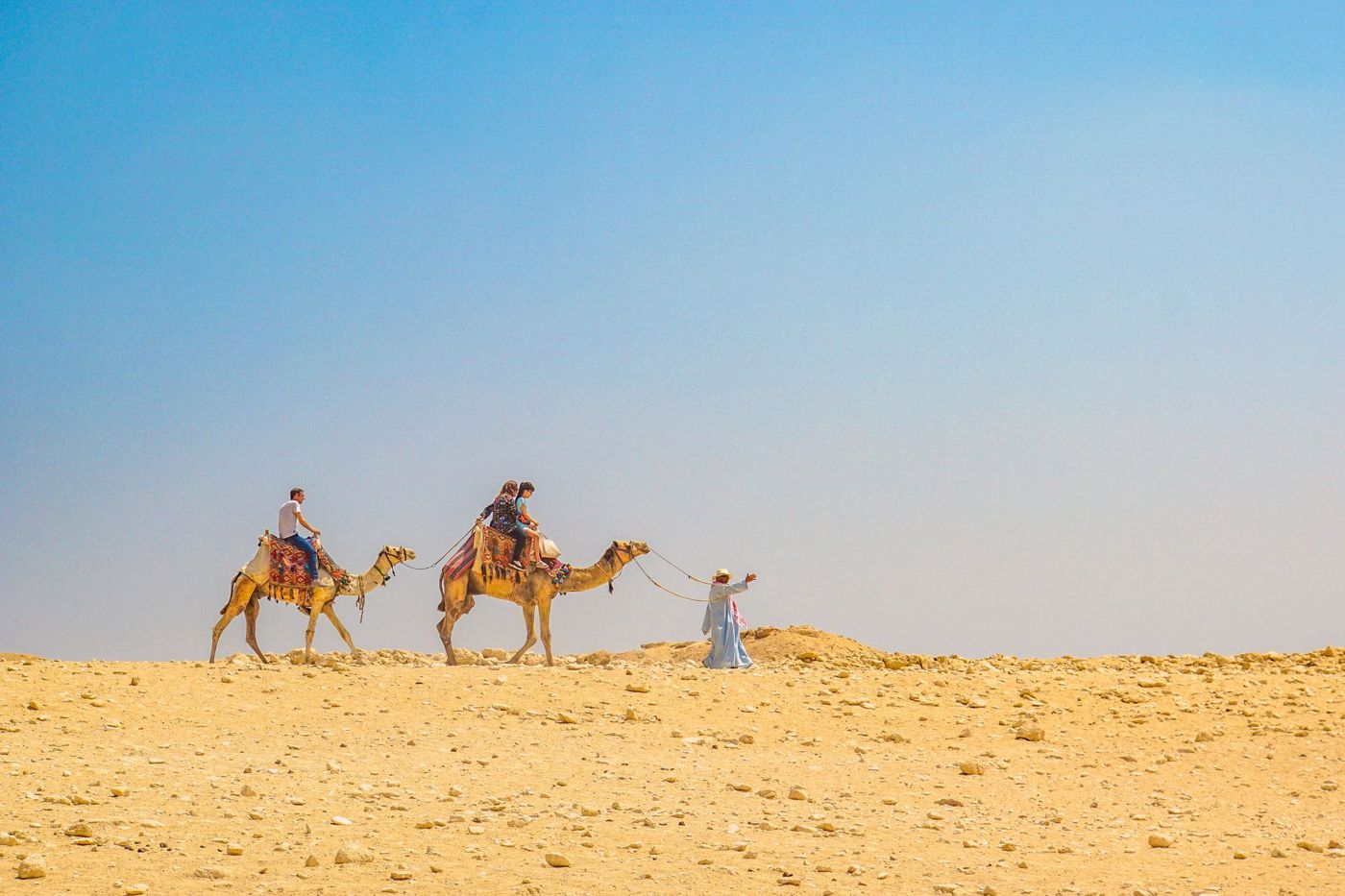
The middle path that nobody sells
Now the middle path, which hardly anyone suggests because nobody sells it.
It consists of three decisions. First, you buy the ticket yourself and in advance, so that the counter drops out of the equation. Second, you organize the ride there as a fixed, prepaid ride instead of a negotiation at the roadside. And third, if you want context, you book a short guided tour in the morning and stay on your own afterwards.
That this works is due to two characteristics of the site. The ticket is valid for the whole day, and both gates are entrances and exits. So you are not tied to leaving the site with the same group you entered with. And since the renovation, the shuttle in a loop has taken over the orientation that used to be the real reason for booking. If you follow the line, you pass all the important points without needing a plan.
For context, there is an option that most people walk past: the exhibition in the visitor center at the main entrance, with replicas, display boards, and a short film. It does not replace a guide, but it explains in twenty minutes what you will see outside afterwards, and it costs nothing extra.
The middle path is thus neither cheaper nor more expensive than a package, but distributed differently: you pay for the parts that really take something off your hands, and not for the others.

Private car with driver, without guide
This is the middle path that hardly anyone sells: the ride and the waiting time booked, the content brought along yourself. You get the friction-free experience of a package without the rigid schedule and without paying for an explanation you would rather work out yourself. Free cancellation.
For whom the decision is clear
The question remains for whom the decision is clear, because for some readers it is.
You should opt for the package if you are coming as a day guest from the coast, because the route is hard to manage without an organizer. Likewise, if you only have a single morning in Cairo and do not want to spend it on logistics. Likewise, families with small children, because a waiting vehicle in the midday heat is worth more than any savings. And anyone who has neither cash nor a working payment method on site, because then every single step becomes a problem.
You should organize on your own if you are staying several days in Cairo or Giza and do not have to work through the site in one go. Likewise, if you have already been in comparable metropolitan areas. Likewise, if you want to take photos, because no program waits for light. And anyone who has read the official information about the site in advance and knows what it costs and when it opens.
If, after all this, you still cannot decide, you probably already have the right answer: Then take the middle path. It is the only one where a mistake in the choice does not affect the whole day.
Frequently asked questions
Can you even get in without a tour?
Yes. Admission is a ticket that anyone can buy. A guide is not required at any point.
Is there an official audio guide?
No, neither as a device nor as an app from the administration. If you want context, you prepare in advance or book a guide.
What is the most common mistake when visiting without a tour?
Not a lack of knowledge, but logistics: the wrong gate, no ticket at the eastern entrance, arrival at midday.
Can I book a short guided tour and then stay?
Yes. The ticket is valid all day, and both gates are entrances and exits.
Is a package more expensive than doing it yourself?
Usually yes in total, because the ride, admission, and guide are included. The question is which of these parts take something off your hands.
What about a day trip from the Red Sea?
There, the package is practically the only option, because the route takes several hours each way.