
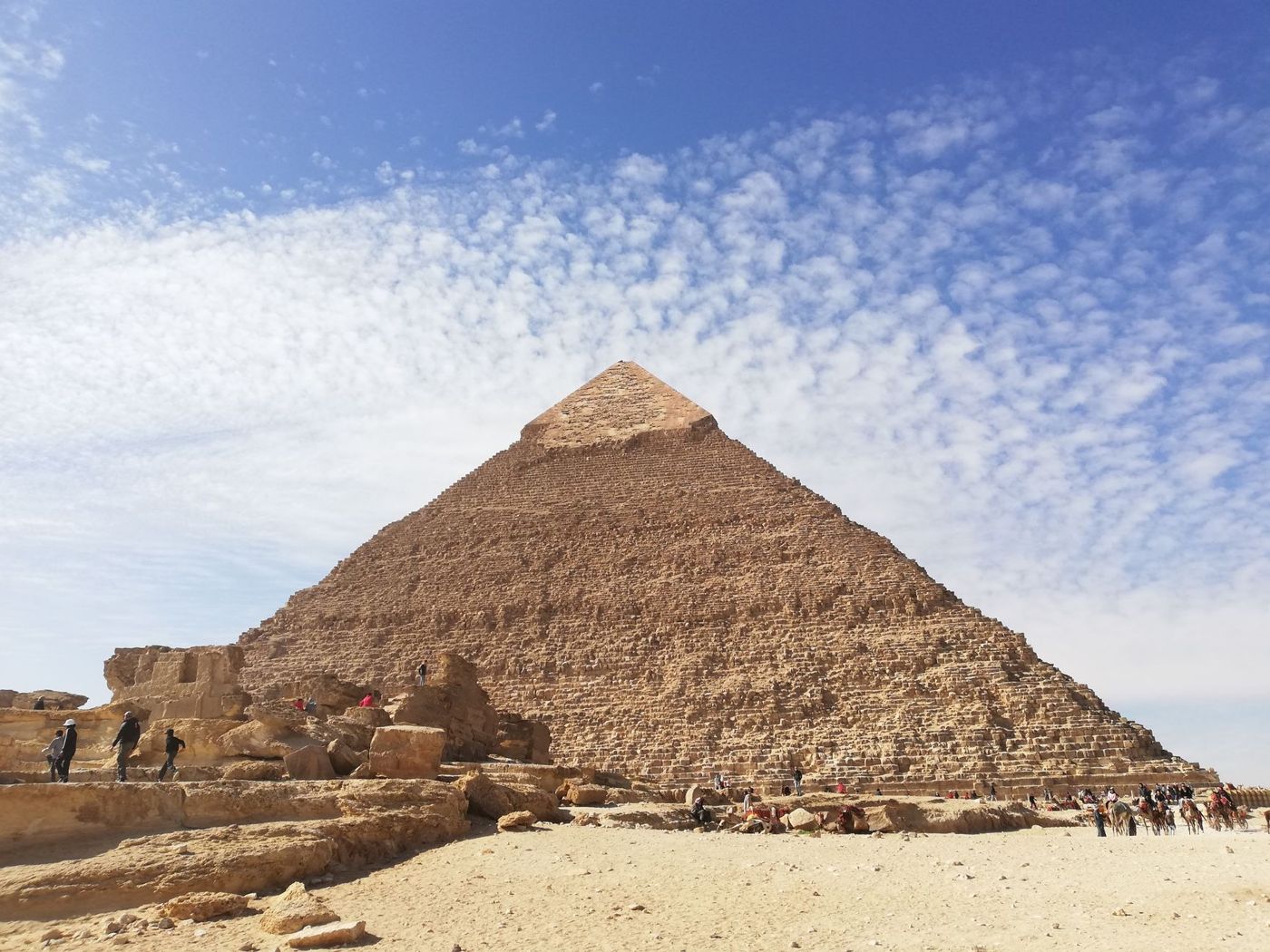
The short answer is yes, and that goes for all three major structures. All have accessible interiors, and all three are generally open to visitors.
The longer answer comes with a caveat that many only discover at the ticket booth. The regular site entry ticket does not grant access to the pyramids. The antiquities authority explicitly states this: the site ticket does not cover the three pyramids, nor does it cover two other areas of the site. Each interior requires its own separate ticket.
This is not a minor detail, as the prices differ significantly. The interior of the largest structure costs many times more than the other two. If you only want to go inside one pyramid, the neighboring structures are significantly cheaper and, in some respects, offer an even better experience.
The second limitation concerns capacity. The number of interior tickets for the largest structure is capped daily, and during peak season, they are sold out by noon. The other two see less demand, and you can usually get in even in the afternoon.
Let's clarify one more thing that often causes frustration. In addition to the three pyramids, the administration lists two other areas not covered by the site ticket: a painted tomb of a king's granddaughter and the workers' cemetery. These also require separate tickets. So, if you expect one ticket to cover everything, you'll be stopped at several points on the site.
Visiting the Great Pyramid of Khufu, therefore, means one of two things, depending on your interpretation: standing in front of it, which the entry fee covers, or going inside, which it does not. If you want to see the pyramids of Giza from the inside, you need to make three decisions, not one: which structure, what time of day, and whether your body is up to it. The third limitation is physical. More on that below, as it settles the question for some visitors right from the start.
The Three Options Compared
All three are accessible, and all three require a separate ticket. What you get for your money differs significantly.
| Structure | What You'll See | Route | Crowds and Price |
|---|---|---|---|
| Great Pyramid of Khufu | Ascending passage, Grand Gallery, burial chamber with sarcophagus | Narrow, ascending, about 30 minutes | High, limited quota, by far the most expensive |
| Pyramid of Khafre | Descending passage, a chamber in the rock with a sarcophagus | Shorter, less strenuous | Low, rarely sold out, significantly cheaper |
| Pyramid of Menkaure | Descending passage, chamber with granite lining | Short, easy | Very low, usually almost empty, inexpensive |
- What You'll See
- Ascending passage, Grand Gallery, burial chamber with sarcophagus
- Route
- Narrow, ascending, about 30 minutes
- Crowds and Price
- High, limited quota, by far the most expensive
- What You'll See
- Descending passage, a chamber in the rock with a sarcophagus
- Route
- Shorter, less strenuous
- Crowds and Price
- Low, rarely sold out, significantly cheaper
- What You'll See
- Descending passage, chamber with granite lining
- Route
- Short, easy
- Crowds and Price
- Very low, usually almost empty, inexpensive
None of the three interiors are decorated. There are no paintings, reliefs, or inscriptions from the time of construction in any of them.
What You'll See Inside the Great Pyramid of Khufu
The most common question is whether you can go inside the Great Pyramid of Khufu, and it deserves a precise answer because that's where most misunderstandings arise. Yes, you can visit the inside of the Great Pyramid of Khufu; it costs a separate ticket, and what you'll see is different from what the question usually implies.
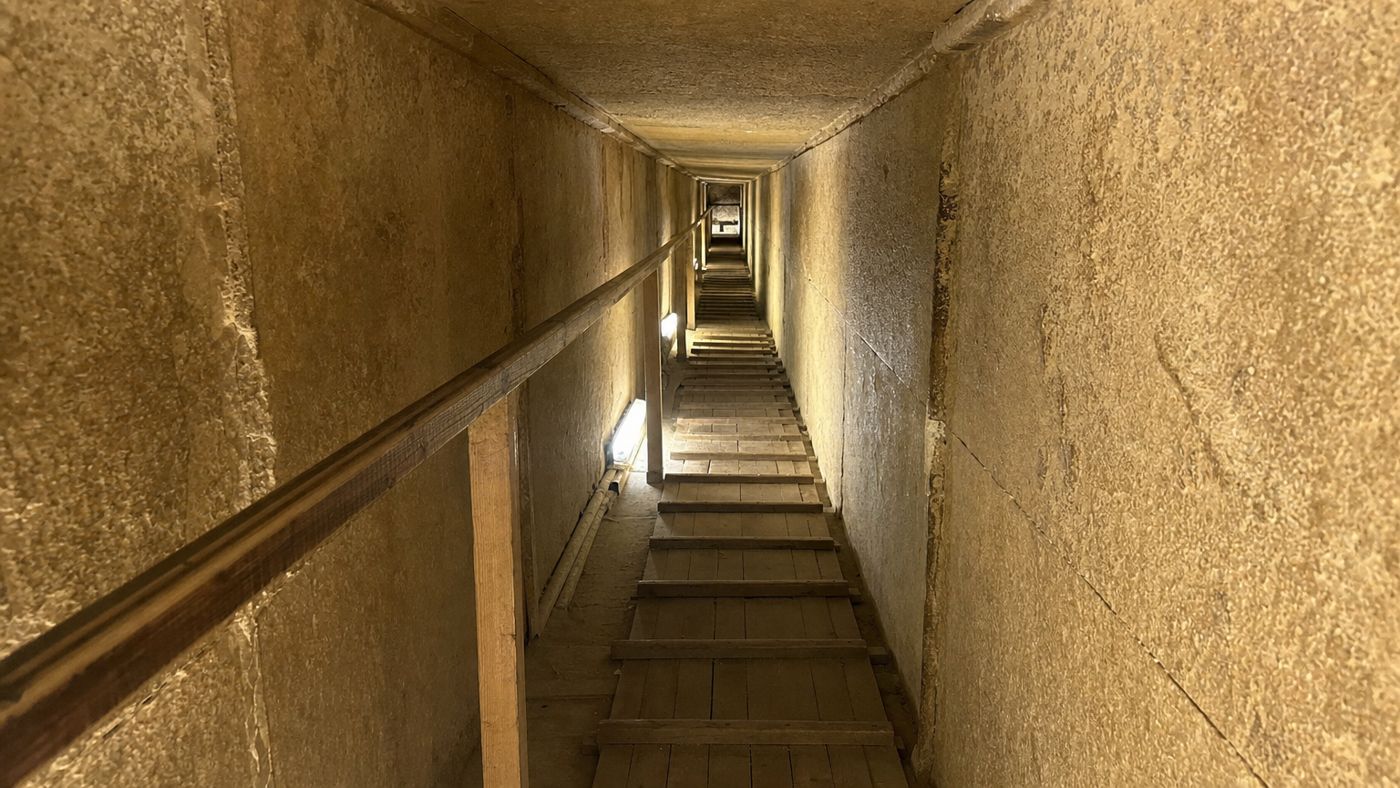
You enter the structure through a passage on the north side, which was broken through in the 9th century by someone searching for treasure. From there, the route goes up: first, bent over through a passage about one meter high and forty meters long, then upright through the Grand Gallery, then bent over again into the burial chamber. You return the same way, against the flow of traffic.
What you see there is bare stone. The burial chamber is lined with red granite, containing a lidless sarcophagus, and that's it. No pictures, no writing, no grave goods. This isn't due to looting; it's the original state: royal burial chambers of the Old Kingdom were unadorned.
The official description of the structure mentions three chambers, of which the lowest, in the rock, is not accessible. The route upwards is open to visitors.
Two details surprise almost everyone. First, the route is not dark: there is electric lighting, so flashlights are unnecessary. Second, the floor of the ascending passage has wooden slats that serve as steps, making it less slippery than you might expect. What's actually tiring isn't the surface but the posture: forty meters with a bent back is significantly more work for the untrained than forty meters of stairs.
So, if you go in expecting to see a tomb like those in the Valley of the Kings, you'll be disappointed. If you go in to stand in a room with fifty meters of stone above you, you'll get exactly that.



Guided Day Tour with Option to Visit the Interior
- Interior visit to the Great Pyramid of Khufu available as an add-on
- The guide will take care of purchasing the additional ticket on-site
- Plateau entry, German-speaking guide, pickup, and lunch included
- Free cancellation up to 24 hours before the start
What It Costs to Enter the Interior
Regarding the question of how much it costs to enter the pyramids, there is reliable and unreliable information.
What's reliable is the structure. There's a site ticket for the area, and then a separate ticket for each of the three structures. The official site for the area explicitly states that the site ticket does not cover the three pyramids. If you read anything online that says otherwise, such as that an interior visit is included in the base price or that access rotates, you're reading outdated or incorrect information.
What's unreliable are the prices. Prices are set in Egyptian pounds, change frequently, and the figures circulating online contradict each other by several times. As a rough guide: expect to pay a bit more than double the site entry fee for the largest structure, and a fraction of that for the other two. Only the notice board on-site is binding.
A note on offers that promise something different. There are providers who promise priority access, private openings, or visits outside regular hours. Such special access does exist but is exceptional, requires official approval, and is correspondingly expensive. A standard ticket with the "skip the line" add-on usually refers to the site entrance, not the interior.
There's also the capacity limit. Only a few hundred tickets are issued daily for the largest pyramid. During peak season, that means: be there early or book in advance.
Tours into the pyramid interiors in Giza are also available, usually as an add-on to a tour. The advantage isn't the price, but that someone else handles the extra ticket and you don't have to plan the order of your visit yourself.
Interior Visit: Pros and Cons
Pros
- A spatial experience that no photo or video can convey.
- The Grand Gallery is the most impressive interior space on the entire site.
- For the two smaller pyramids, it's cheap, uncrowded, and wait-free.
- The granite of the burial chamber shows a level of craftsmanship not visible anywhere outside.
Cons
- There is literally nothing to see: no pictures, no writing, no artifacts.
- Narrow, warm, stuffy, and almost always crowded in the largest pyramid.
- For the largest pyramid, it costs many times the site entry fee.
- Not accessible, and unsuitable for several groups of people.
Is the Interior Visit Worth It?
Is visiting the interior of the pyramids worth it? It depends less on the price than on your expectations, and that can be clarified in advance.
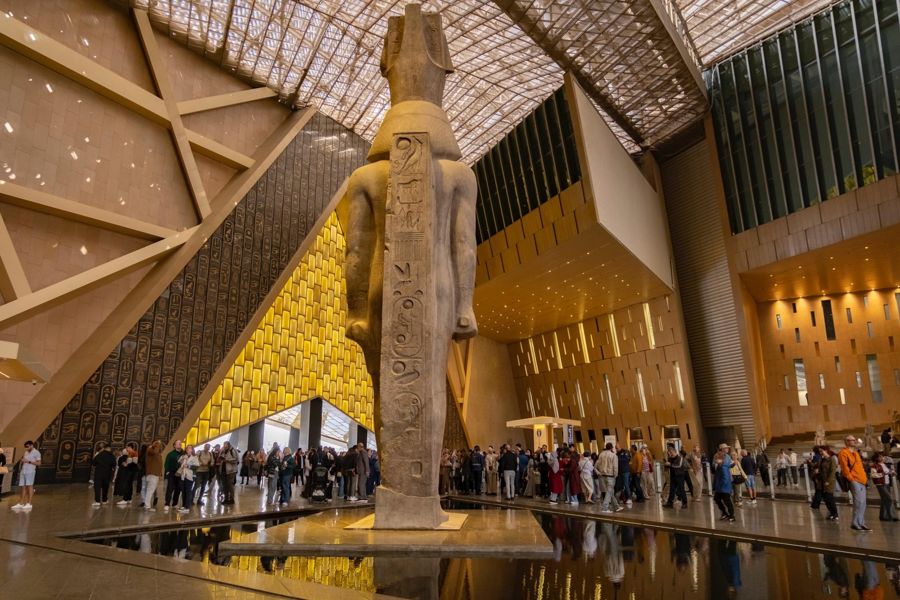
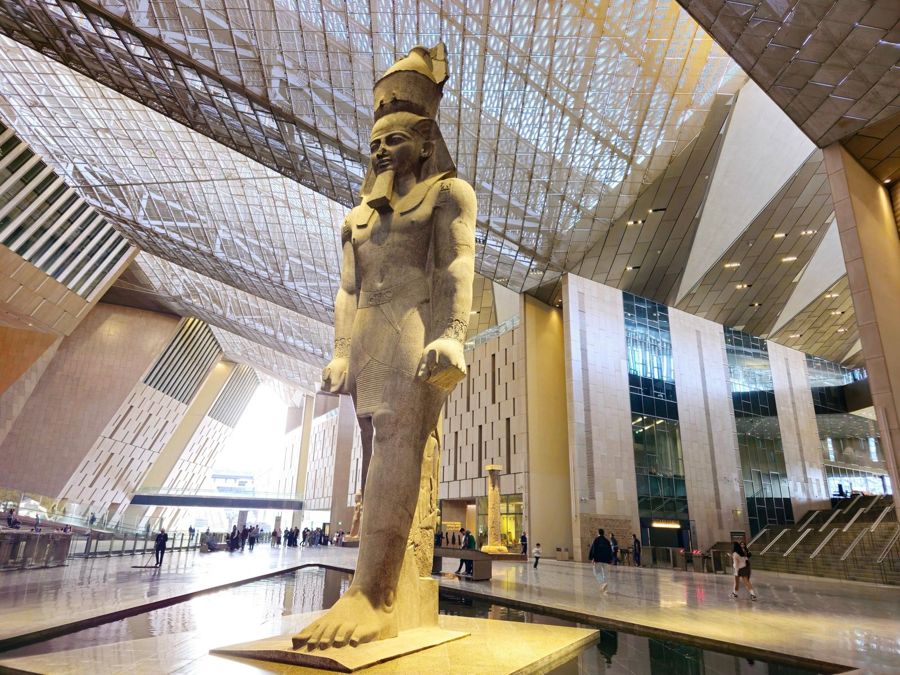
If you want to see something, i.e., objects, colors, inscriptions, then no. The museum is the right place for that, by a long shot. The interiors are empty and unadorned, and they were already like that when the first reports were written.
If you want to experience something, then yes. The transition from a narrow crawl space into a nine-meter-high room, the warmth, the silence between groups of visitors, the awareness of the mass above you: that's the value, and it's real.
If you're undecided, there's a middle ground that few take advantage of. Book the interior of the middle or smallest pyramid instead of the largest structure. You pay a fraction of the price, usually have the room to yourself, and the difference in experience is smaller than the price difference suggests. What you'll miss is the Grand Gallery; everything else is comparable.
One more observation that helps with the decision. Most people who regret the visit afterward don't cite the price or the narrowness as the reason, but rather the expectation of seeing something specific. If you know in advance that the chamber is empty, you'll find the emptiness impressive rather than lacking. This page therefore serves a very practical purpose: it doesn't replace the visit, but it does replace the wrong idea about it.
And if you're traveling with children: the route is usually not a physical problem for them, but the narrowness and darkness can be. Ask in advance, not halfway through.
Site Entry as a QR Code on Your Phone
Covers the site, explicitly not the interiors of the three pyramids. Interior tickets are purchased on-site.
Who the Route Is Not Suitable For
It should be clear in advance who the route is not suitable for, as turning back halfway is practically impossible.
The ascending passage of the largest pyramid forces a bent-over posture for about forty meters. There is no room to step aside, no seating, no staff along the way, and traffic flows in both directions through the same shaft. If you have claustrophobia, back problems, knee issues, cardiovascular conditions, or are significantly overweight, it's not advisable, regardless of general fitness.
None of the three interiors are accessible, and there's no section that is. Wheelchair users, people with walking aids, and those who cannot manage stairs and inclines cannot visit the interiors. The site itself, however, is largely accessible, and the electric bus runs between the main points.
The same applies to pregnant women, people with recent surgeries, and anyone who needs to take medication regularly: when in doubt, skip it. The route only takes half an hour, but it can't be shortened, and help doesn't arrive quickly there.
The air is also a concern. The chambers are only ventilated through the existing passages, it's warm and humid, and it gets stuffy during busy times. If you're sensitive, go early in the morning.
Since the entire site is protected as a World Heritage Site, there are no structural retrofits. There will be no elevators, widened passages, or additional exits, as any of these would be an intervention in the fabric of the site.
The Most Practical Order
Buy your site ticket online before you travel. In the morning, first go to the interior ticket booth of the structure you want to visit, and only then start your tour. If the quota for the largest pyramid is exhausted, switch to one of the other two instead of replanning your day. Leave backpacks and tripods behind; their carriage is restricted and the rules change.
Frequently asked questions
Are all three pyramids open to the public inside?
In principle, yes. Individual interiors may be temporarily closed for restoration, but the others remain open.
Is the interior included in the regular ticket?
No. The antiquities authority explicitly states that the site ticket does not cover the three pyramids. Each interior requires a separate ticket.
Can you buy interior tickets online in advance?
Usually not individually. They are sold on-site or organized through a provider as an add-on to a tour.
How long does the visit take?
For the largest pyramid, about half an hour round trip, plus waiting time. Less for the other two.
Are you allowed to take photos inside?
The rules change and are enforced on-site. Don't rely on older information online.
Is there anything to see?
Rooms, not objects. The interiors are bare. If you want to see artifacts, go to the museum.
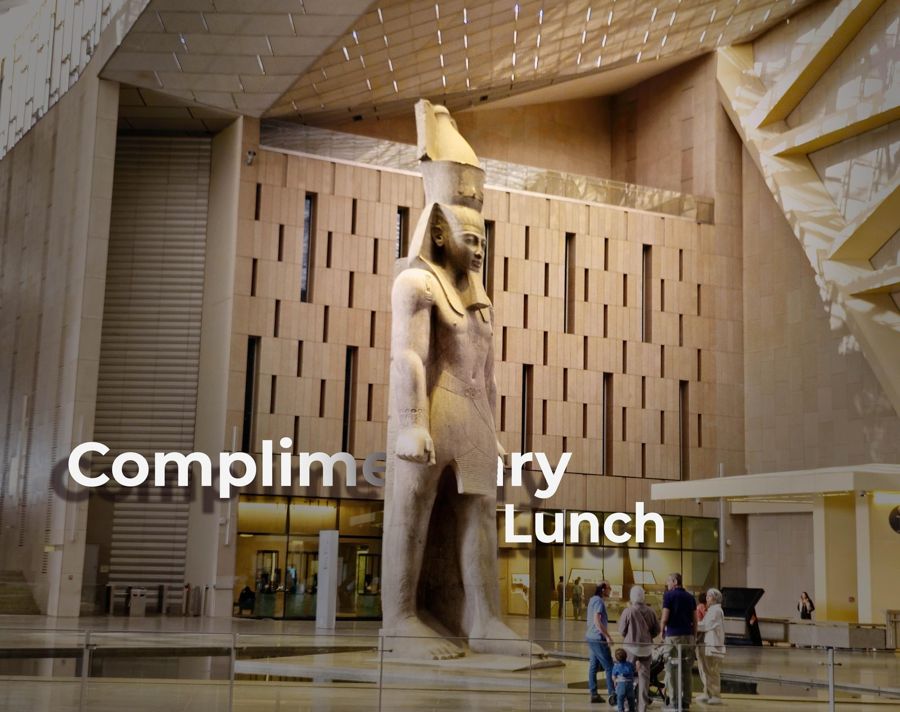

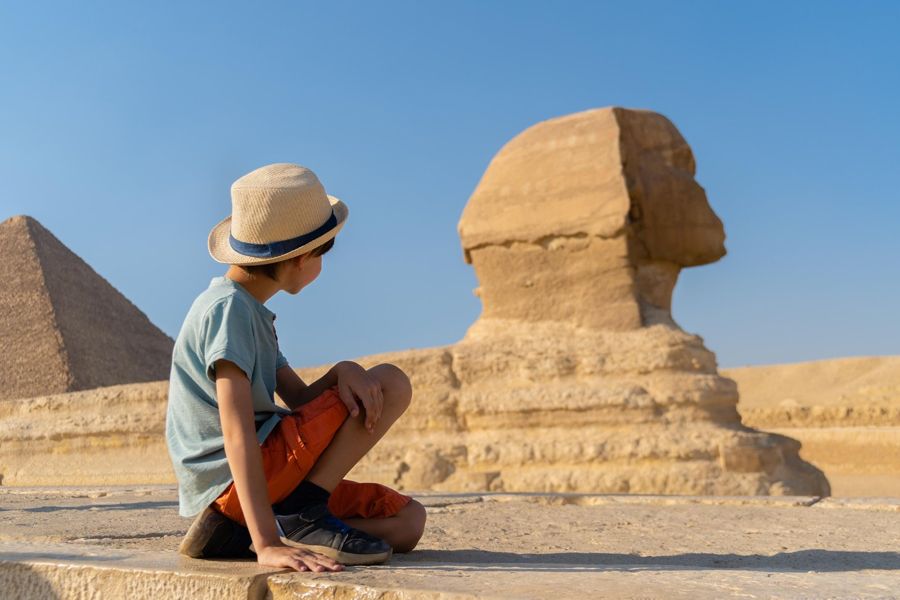
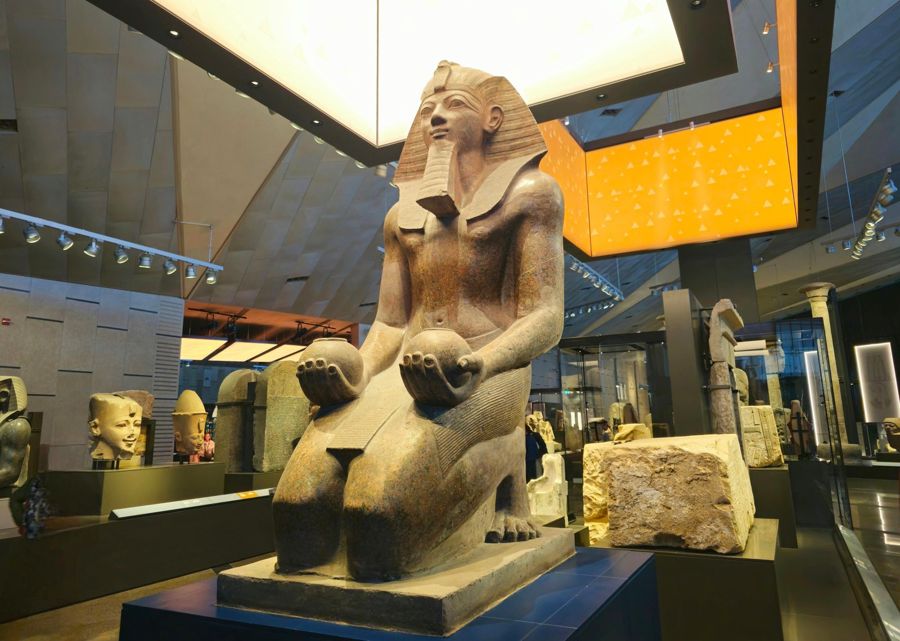
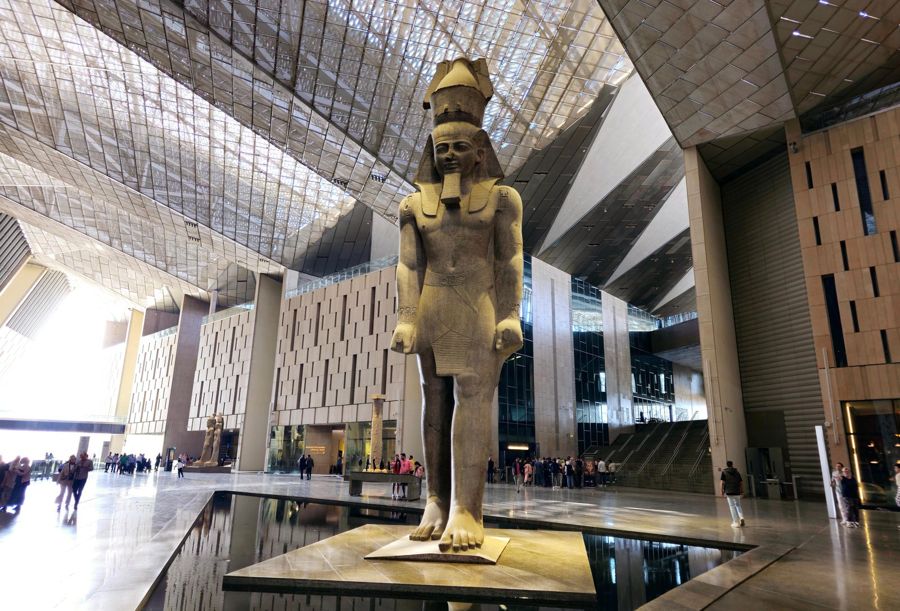
Day Tour to the Grand Egyptian Museum and the Plateau
- The artifacts from the pyramids are in the museum, not in the chambers
- Plateau and museum in one day, without having to organize two trips yourself
- Entry fees, German-speaking guide, pickup, and lunch included
- Free cancellation up to 24 hours before the start