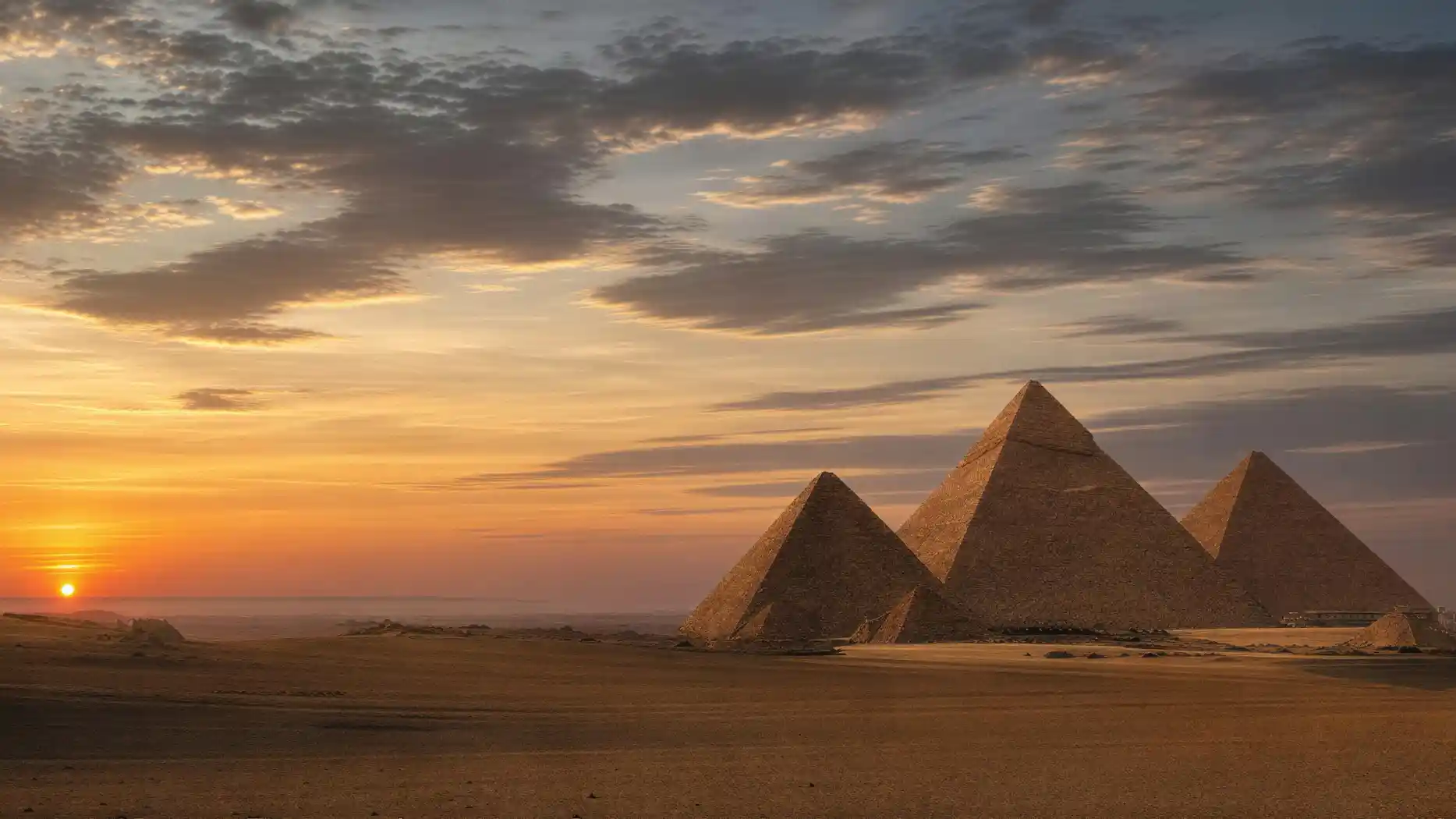
The best time to visit the Pyramids of Giza is actually two questions, and the smaller of the two has the bigger answer.
The first question is: in which month? There is a solid, boring answer to that, having to do with temperatures, and you probably already know it. If you want both questions answered together, there is a dedicated planner that calculates two metrics from month and time.
The second question is: at what time? There is an answer to that which changes your visit more than any choice of month. Between eight and ten o'clock on any given day lies a bigger difference than between January and July.
That sounds exaggerated, but it isn't. The month determines how warm it is and how much you pay for flights and accommodation. The time determines whether you have the site almost to yourself or share it with the entire daily influx that arrives all at once between nine and ten. This page covers both, in that order, and closes with a third factor that hardly anyone thinks of: the Islamic calendar.
The Year at the Plateau
Temperatures according to the monthly averages of the Egyptian Meteorological Authority, crowds and price levels according to the usual season.
| Period | Daily Average | Crowds | Price Level | Verdict |
|---|---|---|---|---|
| December to February | around 20°C | Peak, February strongest | High | Pleasant, but crowded and expensive |
| March to May | 23 to 32°C, rising | Decreasing | Moderate | Good, with the caveat of Khamsin and dust |
| June to September | 33 to 35°C | Low | Low | Only worthwhile with an early start |
| October and November | 24 to 28°C, falling | Rising, still moderate | Moderate | The best ratio of the whole year |
- Daily Average
- around 20°C
- Crowds
- Peak, February strongest
- Price Level
- High
- Verdict
- Pleasant, but crowded and expensive
- Daily Average
- 23 to 32°C, rising
- Crowds
- Decreasing
- Price Level
- Moderate
- Verdict
- Good, with the caveat of Khamsin and dust
- Daily Average
- 33 to 35°C
- Crowds
- Low
- Price Level
- Low
- Verdict
- Only worthwhile with an early start
- Daily Average
- 24 to 28°C, falling
- Crowds
- Rising, still moderate
- Price Level
- Moderate
- Verdict
- The best ratio of the whole year
The monthly averages are detailed on the climate page. An average of 34.8°C in July means that roughly half of July days are above that; if you plan with the table value, you plan with the better half.
The Best Season Lies at the Edges
The best season for Giza is thus essentially decided, and the common answer is only half right.
Common is: October to April. That is correct for temperature. For everything else, it is incomplete, because exactly these months are also the most expensive and crowded. February is considered the strongest travel month of the country overall, and you notice that on the site.
The more precise answer lies at the edges of this range. October and November bring falling temperatures with still moderate crowds; November is statistically the friendliest month of the year, with around 25°C during the day and just under 15 at night. March to May is the opposite direction: rising warmth, decreasing visitor numbers, but also the dustiest time of the year, because into these weeks falls the hot, dry, dust-laden desert wind that can obscure visibility for days.
On price, a clarification is worthwhile because it shifts the calculation. Egypt's off-season arises not from nobody wanting to come, but simply from the heat. The monuments are the same, the site is the same, operations run unchanged, and yet flight and accommodation prices drop significantly. If you avoid the heat by choosing the right time of day, you buy the same experience cheaper in summer.
High summer is not excluded, just conditional. With averages above thirty degrees, an afternoon on shadowless sand is not a good idea, but a morning from eight to eleven is perfectly feasible. If you come in July or August, you get low prices and an empty site, and you just have to adjust your daily schedule, not cancel the trip.
Accommodations within walking distance of the site. In the shoulder months, the price-performance ratio is best, and that also applies to accommodation. Three properties that cover this:
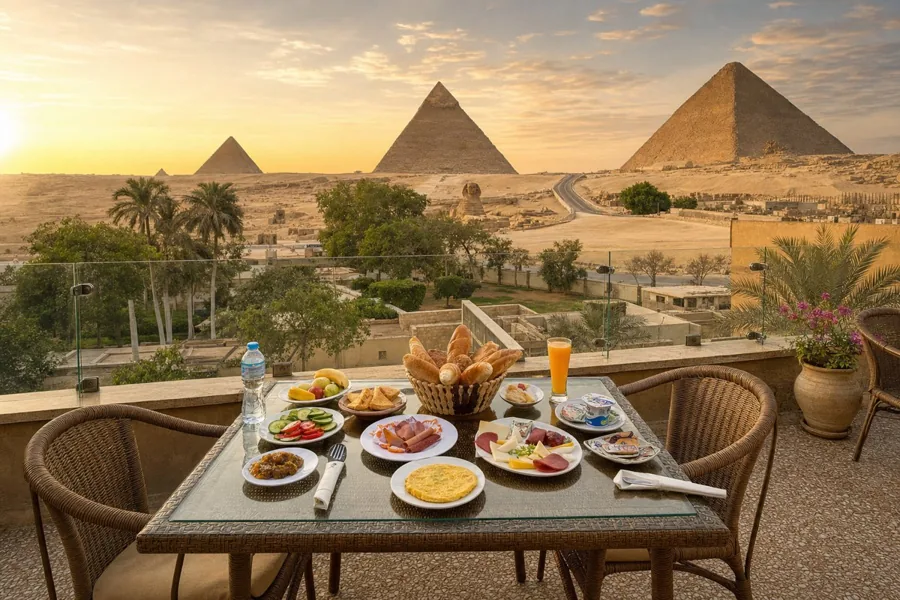 At the Sphinx
Giza Pyramids View Inn
- Good breakfast
- Airport shuttle
- Two restaurants
- 24-hour reception
- Free Wi-Fi
For those who want to see the Sphinx from their breakfast chair
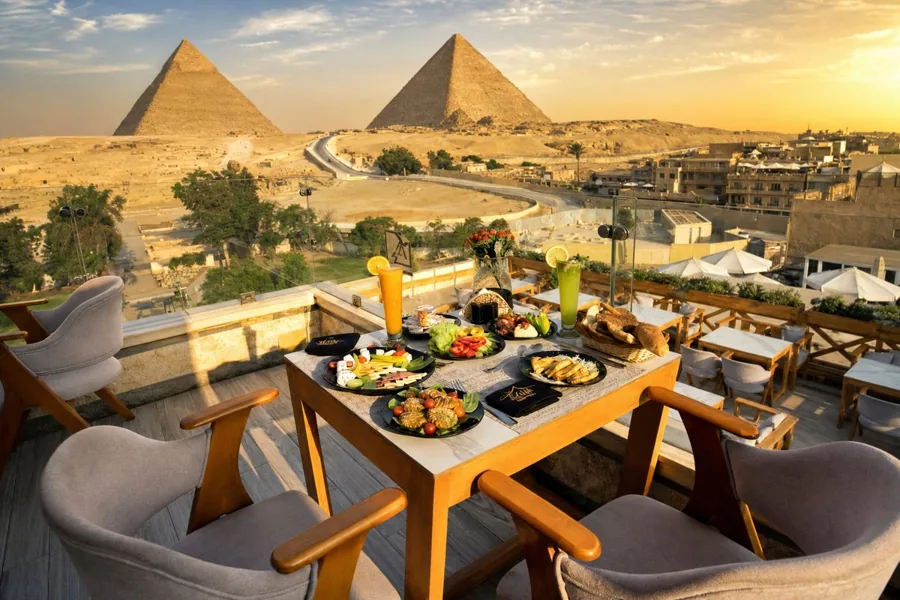 Most reviewed
Great Pyramid Inn
- Fabulous breakfast
- Rooftop terrace restaurant
- Bar
- Airport shuttle
- 24-hour reception
Most who want to stay in the neighborhood
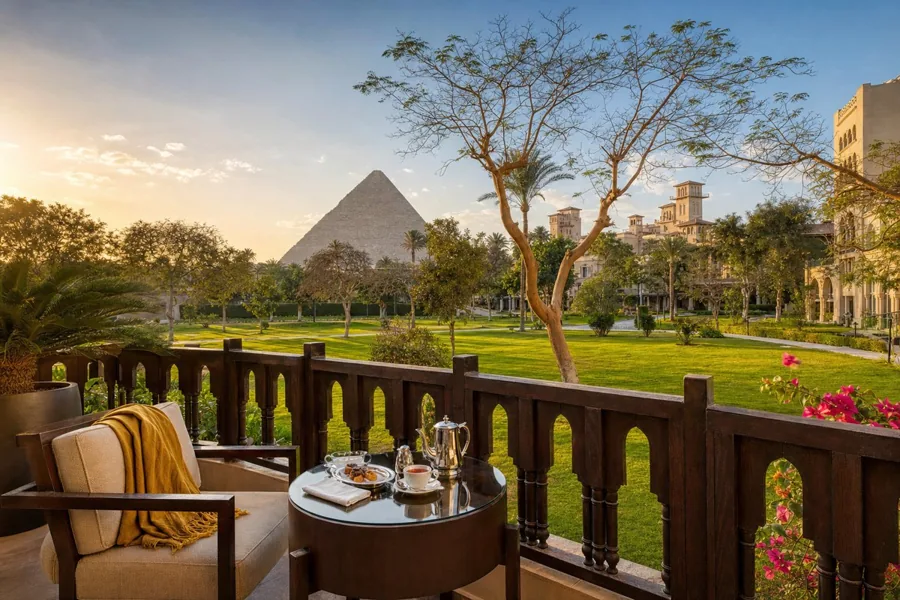 Garden & pool
Marriott Mena House
- Excellent breakfast
- Outdoor pool
- Spa and wellness center
- Three restaurants
- Fitness center
For those who want space, garden, and pool instead of a rooftop terrace
Three Time Windows Compared
Winter Peak, December to February
Mild weather, crowded paths, high prices. The period most people mean when they talk about the best time to travel.
- Good for
- Those who avoid heat and accept a surcharge
- Watch out
- Mornings can be noticeably cool; a jacket is essential
Shoulder, October and November or March to May
Warm but not hot, noticeably fewer people, moderate price level. In spring, dust is added.
- Good for
- Almost everyone, and especially for shots with clear visibility in autumn
- Watch out
- In spring, a desert wind situation can ruin visibility for days
Summer, June to September
Hot, empty, and cheap. Works only with a morning plan and no outdoor afternoon program.
- Good for
- Those who get up early and prioritize price over comfort
- Watch out
- Nights stay warm too; the morning cool-down is brief
Ramadan and the Eid Festivals Move
Now to the third factor that is missing from most travel calendars: The Islamic calendar follows the moon and shifts forward by about eleven days each year relative to our calendar. Ramadan and the two Eid festivals thus slowly move through the seasons, and those who plan only by months overlook them.
For a visit to the plateau, the two periods have opposite effects, and that is the truly useful part.
During Ramadan, it gets quieter during the day. Local visitors tend to stay home in the mornings, social life shifts to the evening hours, and fewer international travelers come as well. Visiting hours are specially announced for this month, and contrary to a common assumption, the plateau in the last documented case did not close earlier than usual, but later than other sites. What changes is the rhythm around it: many restaurants do not open during the day.
Immediately after, the picture reverses. For the Feast of Breaking the Fast and equally for the Feast of Sacrifice, the sites fill with Egyptian families who are on holiday themselves. The plateau, the museum, and the transport are then as crowded as never otherwise, and accommodations in the country are booked out early.
The dates of the two festivals move every year and are also determined by moon sighting, so they shift by a day at short notice. As a rough guide for the near future: the fasting month in 2027 is expected to fall almost entirely in February, precisely in the month that is otherwise considered the busiest of the year.
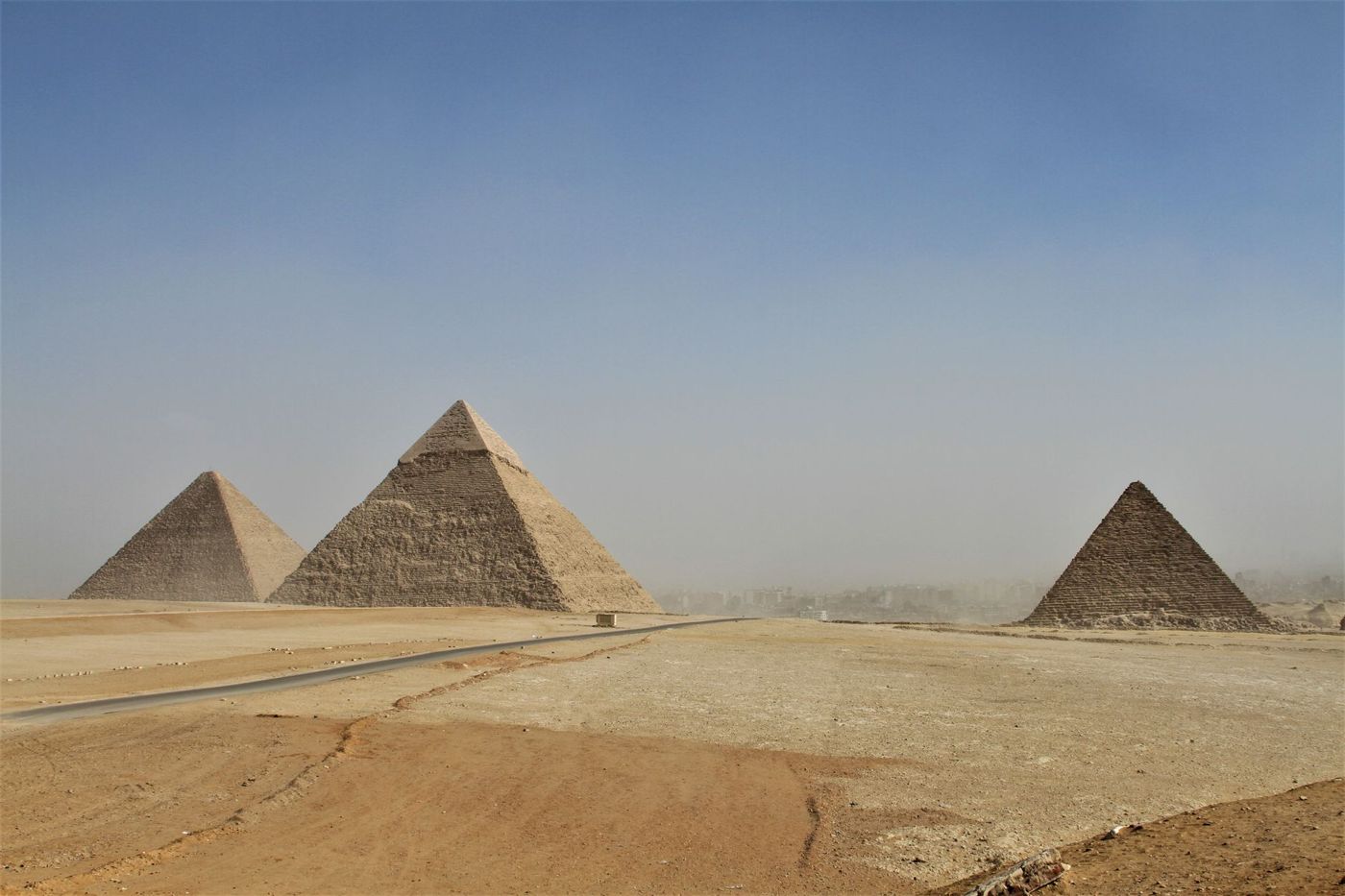
The Best Time of Day Is the First Hour
Now to the second question, and it is the more important one. The best time of day to visit the pyramids is the first hour after opening, and the gap to everything else is large.
The reasoning behind this is on the page about visitor numbers: on average, around 9,600 people come per day, but they do not come evenly. The majority arrives between nine and ten, because the buses from Cairo and the Red Sea are timed according to travel times. Those who are there at opening share the site with a fraction of that number.
Add to that the temperature. The first hour is also the coolest of the day, and in summer that is not a comfort issue but the difference between a morning and an abandoned visit. And the light is low, which benefits every photo.
Hence the claim from the beginning: a July day at eight o'clock is more pleasant than a February day at eleven. In July at that hour it is still under thirty degrees, the site is almost empty, and flight and hotel prices are at rock bottom. In February at eleven, you stand at the same spot as everyone else in the busiest week of the year, at a pleasant twenty degrees.
One objection regularly comes up here: if you are on a tour, you cannot determine the time because the bus goes when it goes. That is true, but there is a way out. The ticket is valid all day, and both gates are entrance and exit. If you spend a night within walking distance, you can go in alone in the morning before the group program and later come back regularly with the group.
If you have the choice between both, you naturally take the shoulder month plus the first hour. If you cannot choose, you should save on the date and not on the time.
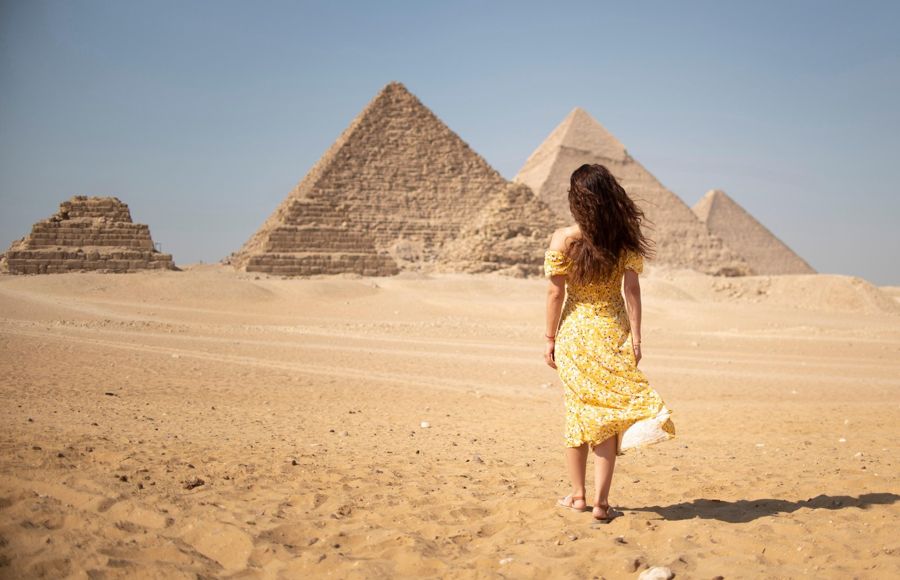
Guided half-day with morning pickup
Early arrival usually fails due to the journey, not the alarm clock. Five to six hours with a German-speaking guide, pickup at your accommodation, and entrance fee included; lunch as an add-on, interior not included.
Frequently asked questions
When is the best time to travel to Giza?
In October or November, when temperatures are falling and crowds are still moderate. If you are flexible, also take the first hour after opening.
Which month is the busiest?
February is considered the strongest travel month of the country. The mild weather attracts the most visitors.
Can you go in high summer?
Yes, with an adjusted daily schedule. Mornings from eight to eleven are feasible, afternoons on open sand are not.
Should you avoid Ramadan?
Not necessarily. It is actually quieter during the day, and visiting hours are specially announced. Expect many restaurants to be closed during the day.
And the holidays after that?
Those are the busiest period of all, because Egyptian families are on holiday themselves. If possible, schedule your visit around them.
What is more important, month or time?
The time. The difference between eight and ten o'clock is greater than between summer and winter.