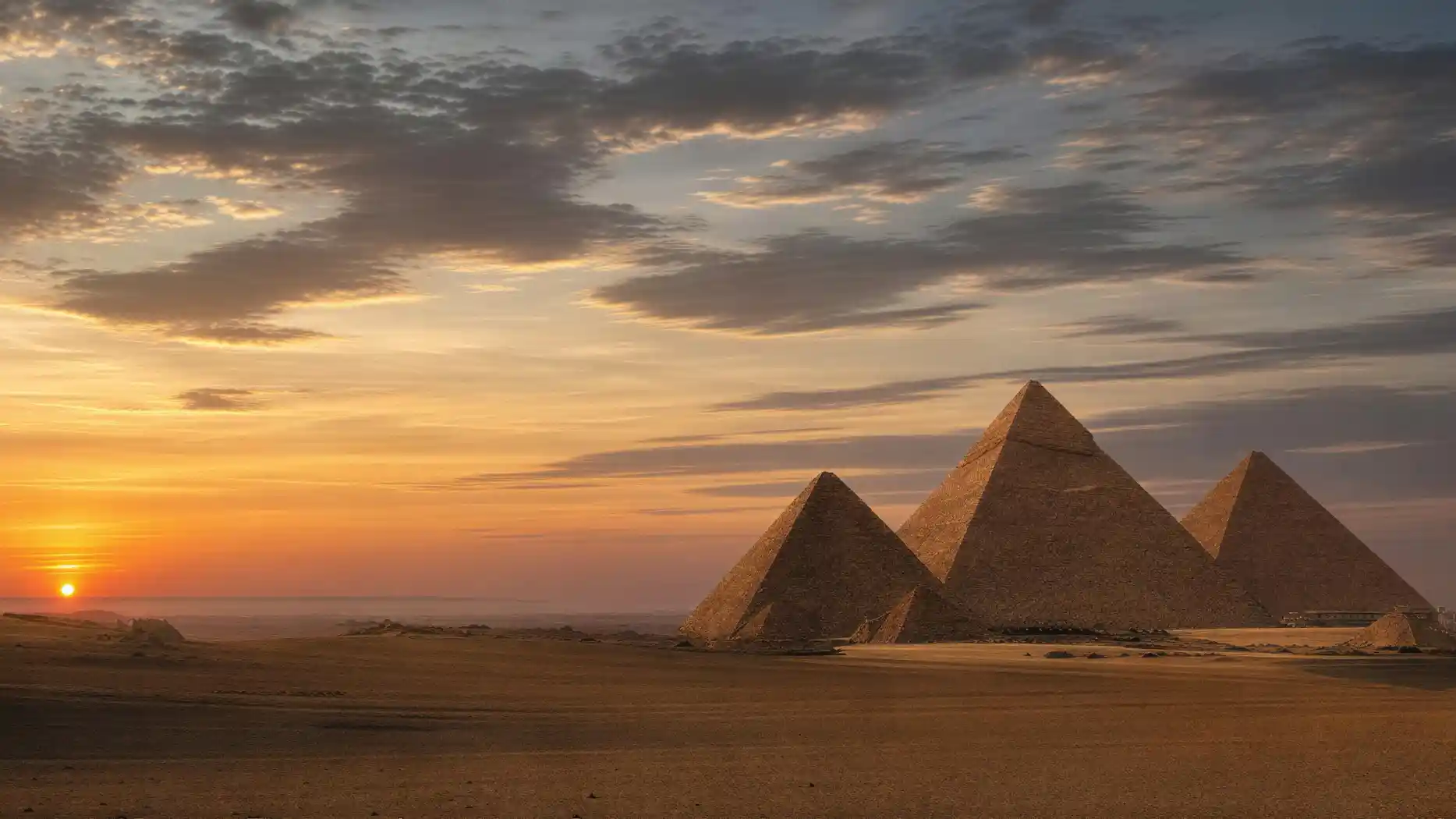
The Great Pyramid of Giza is the tallest pyramid in the world. But it is not the largest. This distinction is the foundation of this entire article and surprises most people.
Height and size are two vastly different things when it comes to pyramids. A pyramid can be flat-topped and yet immense if its base is large enough. This is exactly what happened in Mesoamerica on multiple occasions. There, structures were built with enormous bases and relatively low heights, resulting in a volume that exceeds the Egyptian pyramids.
So, anyone asking which is the largest must first define what they mean. In terms of height, Giza wins by a clear margin and held the record for forty-five hundred years. In terms of construction volume, Giza ranks third.
Adding to this is a category that appears surprisingly often in search queries: modern replicas. There are office buildings, hotels, and shopping malls shaped like pyramids, and for several of them, people wonder if they are bigger than the original. This article addresses that question too.
A preliminary note on comparability. The Mesoamerican structures are not tombs, but rather temple platforms. They support a sanctuary on top, had stairways on their sides, and were expanded over centuries in several layers, each on top of its predecessor. The Egyptian structures are tombs, built in one continuous effort and sealed upon completion. Ultimately, we are comparing structures that share only their geometric form.
All figures come with the same caveat common to this topic: volumes are calculated, not measured.
The Largest Pyramid in the World Stands in Mexico
The largest pyramid in the world stands in Mexico, and it doesn’t look like a pyramid.
The comparison of Cholula to Giza is the most striking case. The structure near Puebla is the largest pyramid in the world by volume, with roughly 4.45 million cubic meters compared to Giza's just under 2.6 million. This makes it almost twice as large.
At the same time, it is only 66 meters high, less than half. This is possible because of its base area: it covers around sixteen hectares, compared to just over five in Giza. A flat, very wide mountain contains more material than a tall, slender one.
And then comes the part that makes the situation truly confusing: the structure today is covered in earth and vegetation and looks like a natural hill. A 16th-century church sits on its summit. Anyone who travels there sees not a pyramid, but a hill with a house of worship on top.
What’s remarkable is how long this went unnoticed. The site was only recognized as a structure in the 20th century; before that, it was considered simply a hill. A construction containing almost twice the material of the largest Egyptian pyramid was thus, for centuries, simply part of the landscape. This says a great deal about how much visibility and size can diverge.
However, the comparison falters in one respect, and it’s an important part of the story: Cholula was built over centuries in several construction phases, each atop its predecessor. The Egyptian structures were built in one continuous effort.
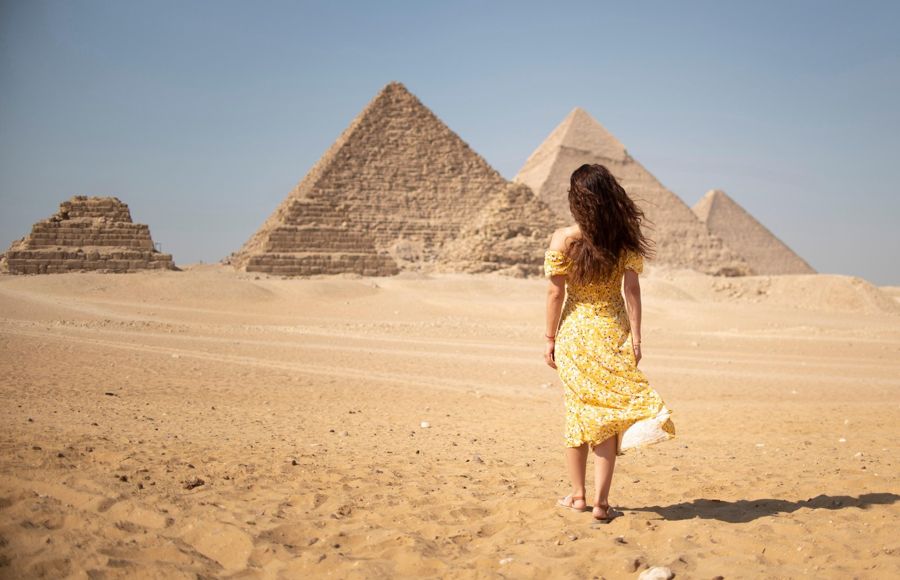
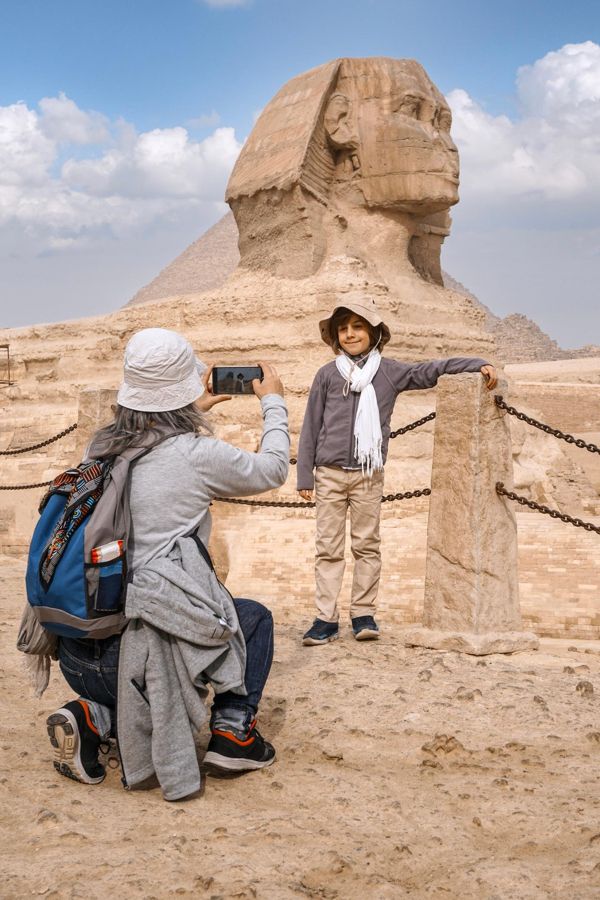
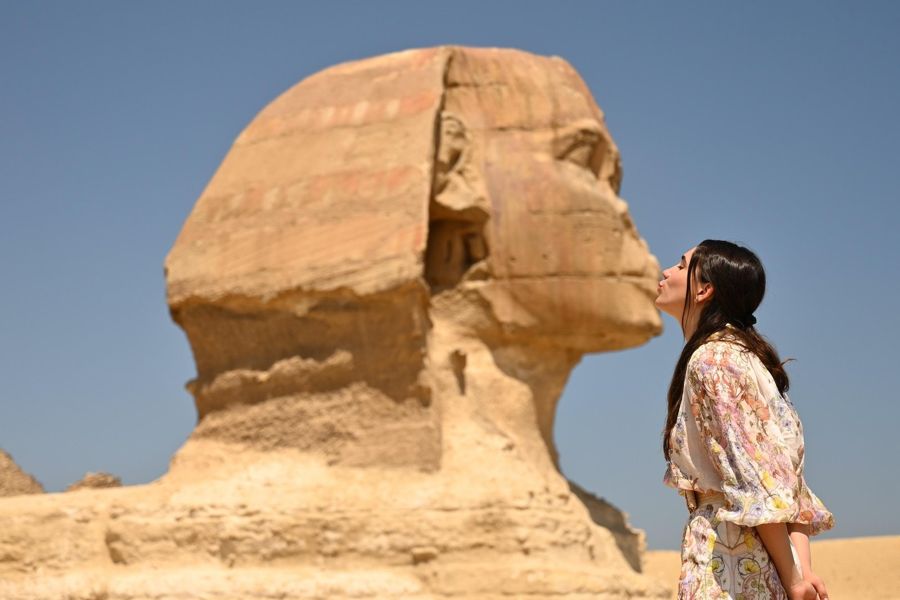

Half-Day Tour to the Pyramids of Giza and the Sphinx
- The scale only becomes clear on-site, with people as a reference point in view
- A licensed guide contextualizes the size ratios on the plateau
- Includes plateau entry, English-speaking guide, and hotel pickup
- Free cancellation up to 24 hours before the start
Height vs. Volume
- Great Pyramid of Giza
- La Danta
- Cholula
- Pyramid of the Sun
- El Castillo
Heights are measured or reconstructed from the structure; volumes are estimates and vary significantly by source. The ranking is more reliable than the individual values.
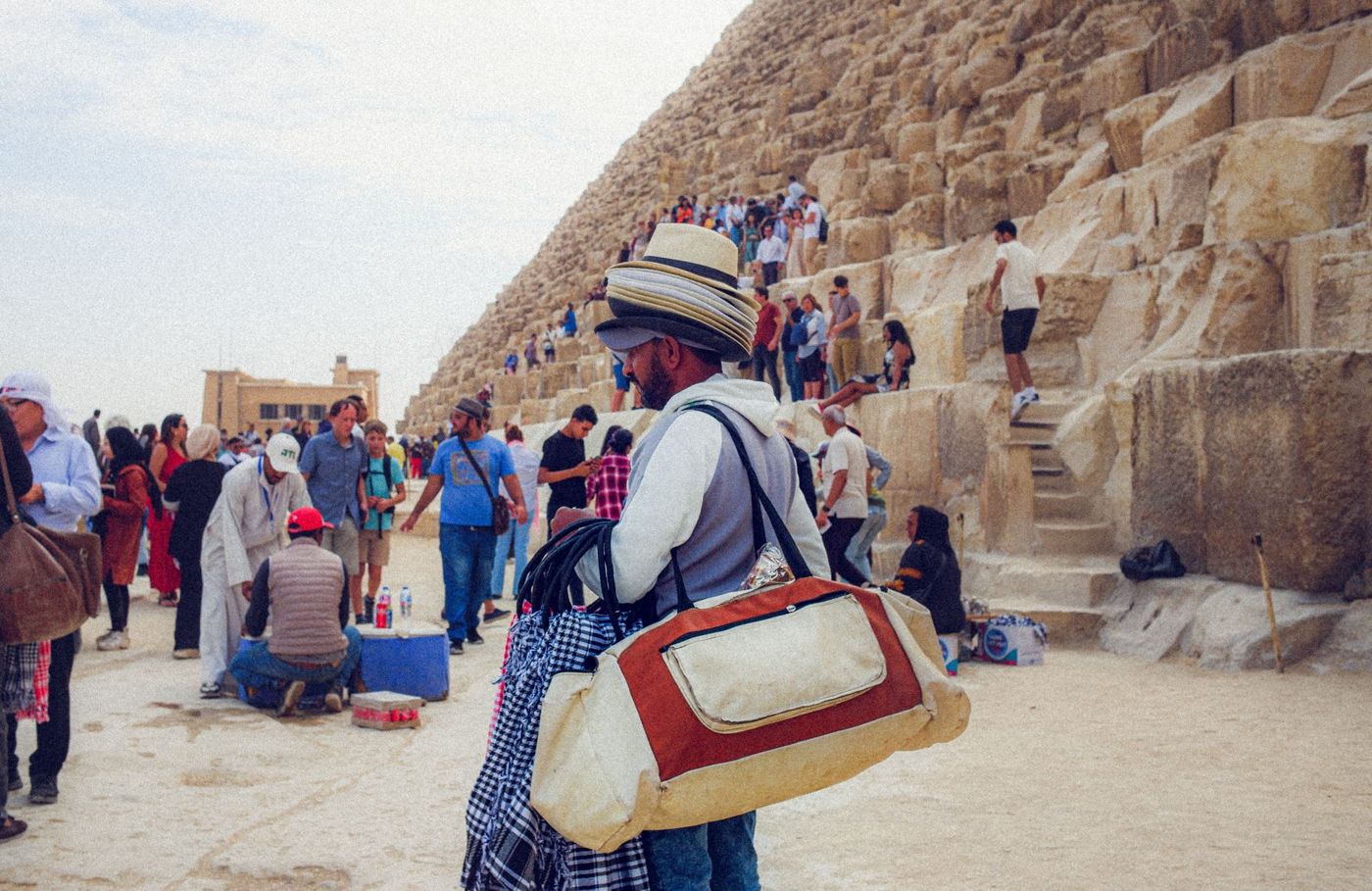
El Mirador, Teotihuacán, Chichén Itzá
Three other structures regularly appear in search queries, and all three are in Mesoamerica.
Regarding El Mirador compared to Giza, this concerns the La Danta complex in Guatemala, the largest Maya pyramid. It reaches about 72 meters in height with an estimated volume of around 2.8 million cubic meters, placing it slightly above Giza in volume but far below it in height. This estimate is disputed, however, because a massive platform on which the actual structure stands is factored into the volume.
The comparison with Teotihuacán is clearer. The Pyramid of the Sun has a base side of about 225 meters, nearly the same as in Giza, but reaches only about 65 meters in height. It is thus similarly wide but less than half as high, and its volume is significantly lower.
The case of Chichén Itzá compared to Giza is the clearest. The well-known step pyramid there measures about 30 meters in height and 55 meters at the base. It is thus roughly the size of one of the small subsidiary pyramids on the edge of the Giza Plateau.
The volume figures for these structures are consistently more uncertain than the Egyptian ones. They are based on surveys of complexes that are partly overgrown, partly only partially excavated, and almost always grew in multiple construction phases. Where the outline of an Egyptian pyramid is clear, with a Mesoamerican temple mound, one must first decide where the structure ends and the platform begins.
It is important for all three: they are not tombs in the Egyptian sense, but temple platforms with stairways and a sanctuary on top. What's being compared here are forms, not functions.
Four Size Claims
- Kısmen
The Great Pyramid of Giza is the largest pyramid in the world.
It is the tallest, by a clear margin. However, in construction volume, Cholula and, by common estimate, La Danta rank ahead.
- Yanlış
A shopping mall in Memphis is larger than the Great Pyramid of Giza.
The building reaches about 98 meters in height with a base side of about 180 meters. Both figures are below Giza's dimensions.
- Doğru
No structure was taller before the modern era.
For about 3,800 years, the Great Pyramid of Giza held the height record, until Gothic cathedral spires surpassed it.
- Kısmen
Stonehenge is older than the pyramids.
The oldest earthworks of the complex are older. The large stone circle one usually refers to was built around the same time as the pyramids.
The Bass Pro Pyramid in Memphis
The Bass Pro Pyramid compared to Giza is the most curious search query for this article, yet it still has a clear answer.
This refers to a structure in Memphis, Tennessee, USA. It was built as an arena in 1991 and has been a shopping mall with a hotel since 2015. It measures about 98 meters in height and about 180 meters at the base. This makes it smaller than the original in both dimensions: roughly two-thirds of the height and about three-quarters of the base side.
It remains impressive nonetheless. It is one of the largest pyramid-shaped buildings ever constructed, and the city’s name is no coincidence: it is named after the ancient Egyptian capital located a few kilometers south of Giza.
What is noteworthy is the reason for its shape. None of these modern buildings is a pyramid because the form is technically practical; it's because it is instantly recognizable. A pyramid needs no sign to function as a landmark. That is the true achievement of the original: it imbued a basic geometric shape with a meaning that has lasted for forty-five hundred years.
Similar cases exist several times over. Las Vegas has a pyramid-shaped hotel about 110 meters tall, and Paris has a glass pyramid just over 21 meters high. None of these structures reaches Giza's dimensions, and none is solid: they are shells with interiors, while the Egyptian structures are made almost entirely of stone.
There is another entirely different category rarely found in such comparisons: earthworks. Burial mounds and ramparts in Europe, North America, and Asia can achieve considerable volumes, but they are made of piled-up material rather than cut stone. Placing them on the same list would be misleading because the effort per cubic meter is orders of magnitude lower. Anyone comparing structures should therefore consider not only the quantity but also what had to be done with the material.
That is the real difference. A modern building of this height probably contains one percent of the material amount.
Plateau entry as a QR code on your phone
For walking around and between the structures, the basic ticket is sufficient. The impression of scale is created by walking, not by looking.
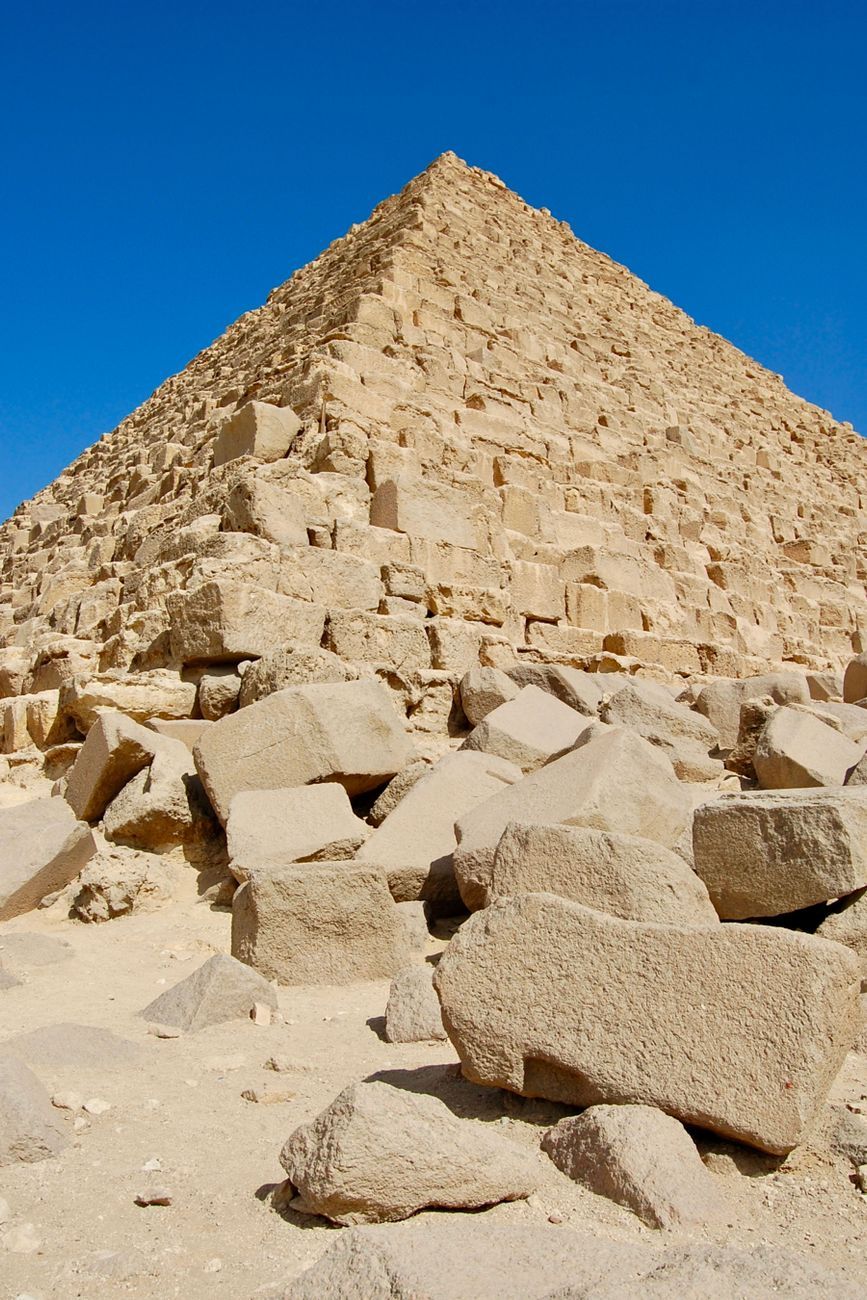
In comparison to a person
The pyramids of Giza compared to a person produce the most illustrative of all numbers, and it needs no conversion.
An average core block reaches about hip height on an adult. Around two hundred layers of these sit on top of each other. Anyone standing at the base sees, in the lowest layers, stones they could not move, and above that, ninety-nine percent of the structure.
In terms of area, it becomes even clearer. A standing person takes up just under half a square meter. This means that, theoretically, over one hundred thousand people could fit onto the base area of the largest pyramid, packed tightly. This corresponds roughly to the attendance capacity of the world's largest stadiums.
A third approach works with time. Walking the perimeter of the largest pyramid's base covers just over nine hundred meters and takes about twenty minutes. In that same time, one can walk around an average football stadium twice. The difference becomes tangible the moment you walk it rather than read it, and that is precisely why photos so consistently fail here.
What is taller than the Great Pyramid of Giza? Today, quite a lot: any major office skyscraper, many church spires, and all television towers. The height record fell during the Middle Ages to Gothic cathedrals. What is rarely surpassed even today is not the height, but the mass in one place.
The entire landscape has been protected as a World Heritage Site since 1979, together with the pyramid fields as far as Dahshur.
Sık Sorulan Sorular
Is the Great Pyramid of Giza the largest in the world?
It is the tallest, yes. In terms of construction volume, the Pyramid of Cholula in Mexico is significantly larger, at roughly 4.45 million cubic meters.
Is Stonehenge older than the pyramids of Giza?
The oldest phases of the complex are older. The large stone circle most people mean was built around the same time as the pyramids.
Is the pyramid in Memphis bigger?
No. It reaches about 98 meters in height and a base side of about 180 meters, placing it below the original in both dimensions.
Which pyramid has the largest base area?
Cholula, with about sixteen hectares. The largest pyramid in Giza covers just over five.
Why does the Great Pyramid of Giza often look smaller in photos?
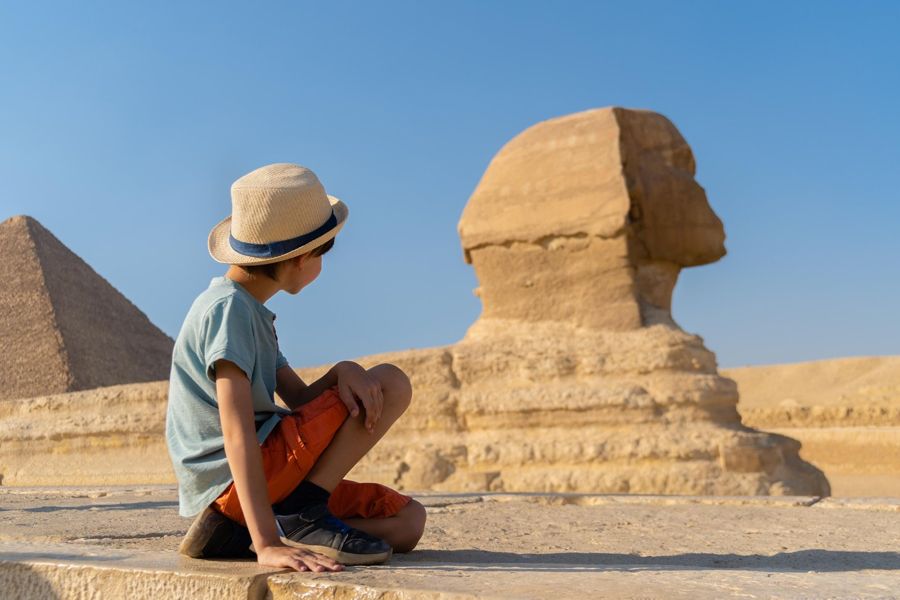
Because a reference point is missing. Without people or vehicles in the image, the eye systematically underestimates its size.
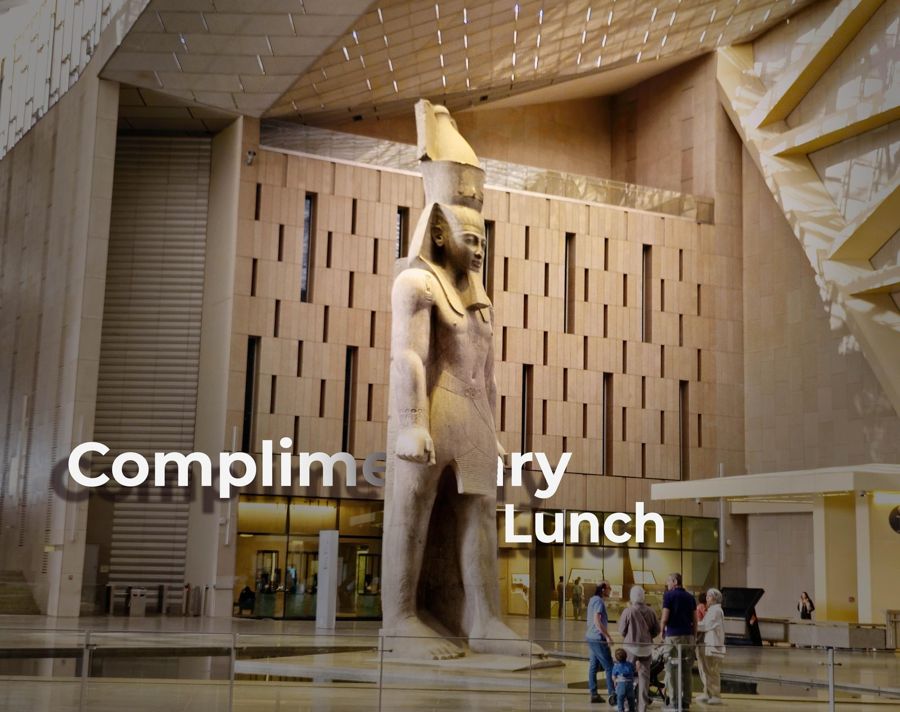

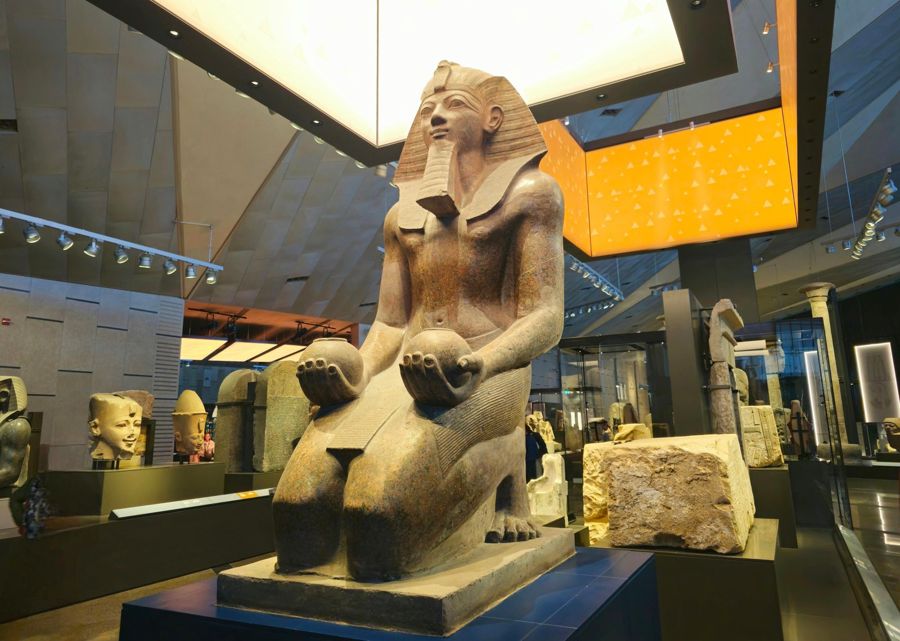
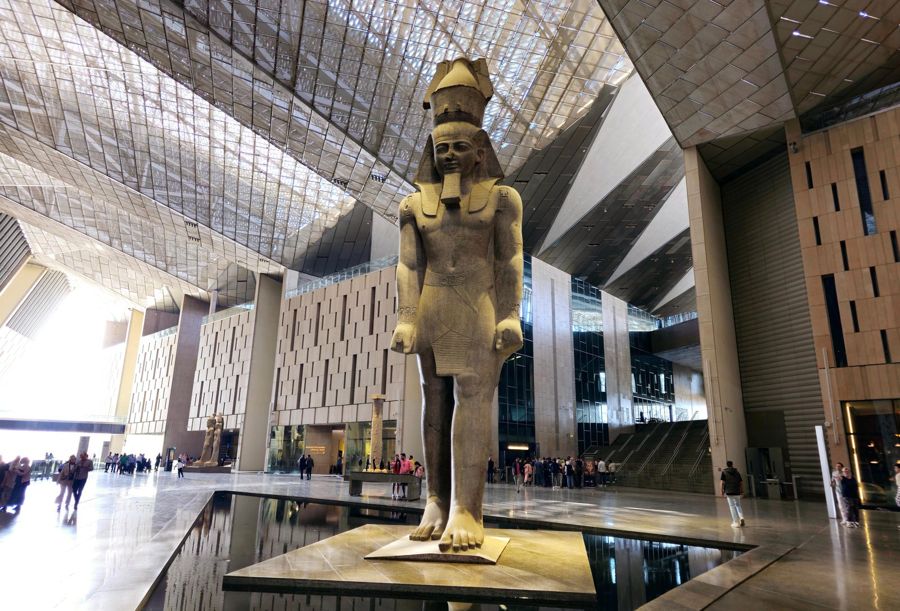
Day Tour to the Grand Egyptian Museum and the Plateau
- Models in the museum make the scale comprehensible without any conversion
- Plateau and museum in one day, without organizing two separate trips
- Entry fees, English-speaking guide, pickup, and lunch are included
- Free cancellation up to 24 hours before the start